
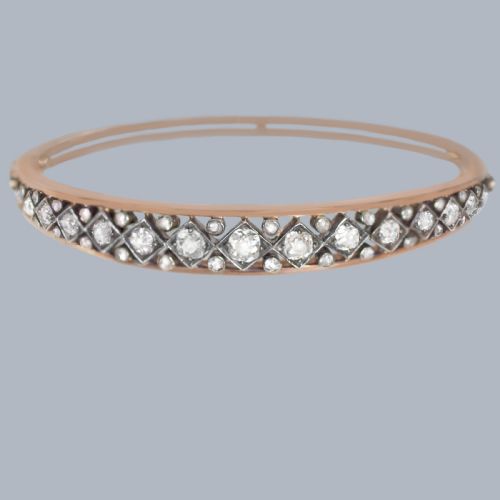


Gold Diamond Bangle
A gold diamond bangle combines precious metal and faceted stones into a rigid wrist ornament that spans Victorian, Edwardian, and mid-century designs.
Gold Diamond Bangle
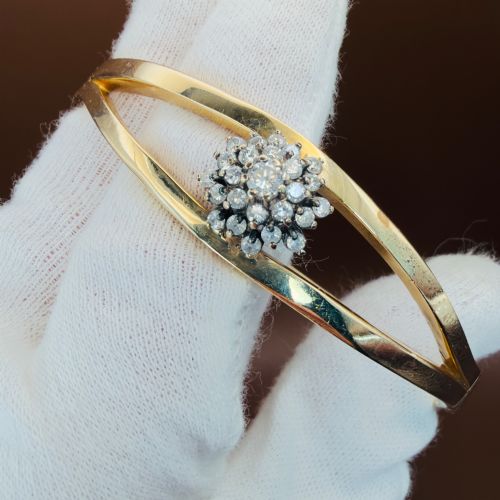
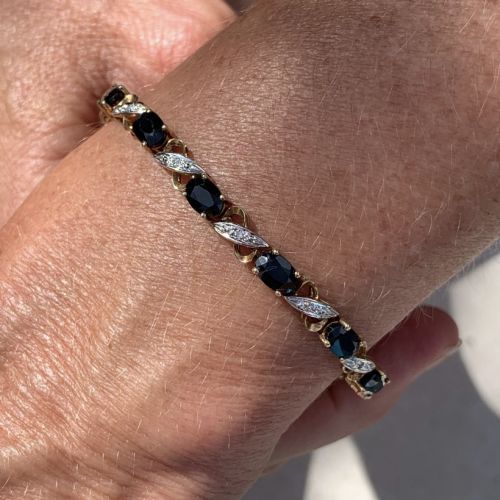
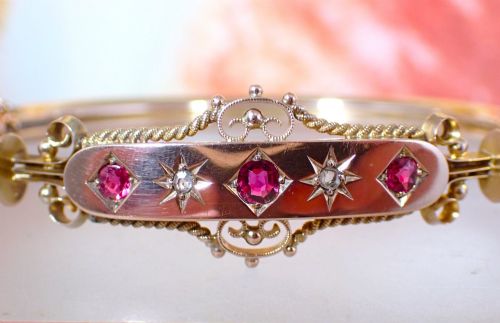
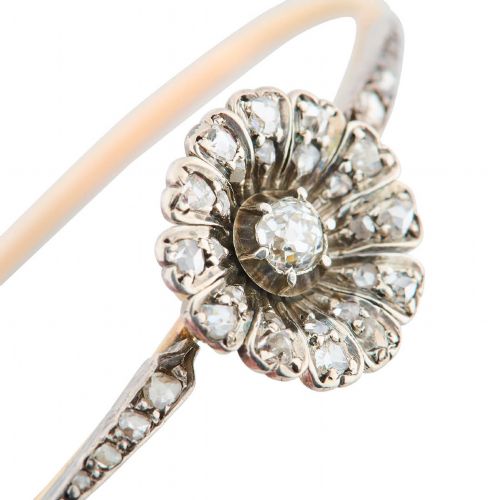
A gold diamond bangle is a rigid circular or oval wrist ornament incorporating precious stones, frequently encountered in Victorian, Edwardian, and mid-century iterations. These pieces range from substantial hinged bands set with multiple gems to delicate floral cluster designs created in yellow, rose, or white gold. Alongside diamonds, many incorporate sapphires, rubies, pearls, or emeralds to create contrasting colour.
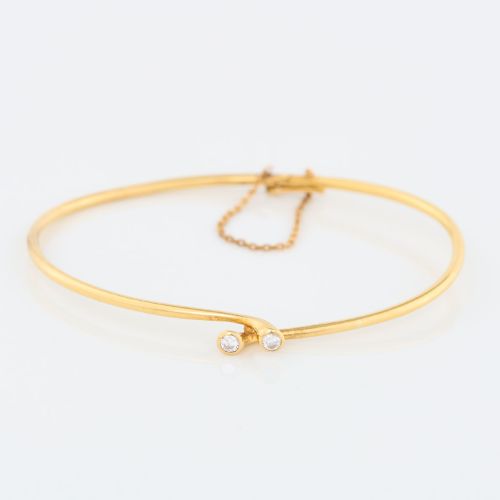
The selection includes closed rigid bands and hinged styles designed to fit securely around the wrist. Makers across the nineteenth and twentieth centuries utilised various gold purities, alongside platinum and silver settings, to showcase their stones. Buyers find both simple cross-over motifs and elaborate multi-stone arrangements spanning decades of jewellery production.
How they were made
Goldsmiths worked with varying purities of yellow, rose, and white gold, alongside platinum and silver, to construct the rigid bands and intricate settings of a gold diamond bangle. Stones were secured using techniques such as collet, bezel, or prong settings, occasionally backed with silver in earlier periods to enhance the brilliance of old mine and rose cut diamonds. Hinges and hidden clasps were integrated into the metalwork to allow the rigid circles to open and secure comfortably around the wrist.
Gemstones including sapphires, rubies, and pearls were hand-selected and arranged alongside diamonds in floral, star, or geometric formations. Metal was cast, drawn into wire, or hammered into chunky profiles depending on the prevailing style of the decade, from Victorian romanticism to Art Deco abstraction and mid-century modernism.
Materials paired with diamonds across these items include natural and cultured pearls, deep blue sapphires, vibrant rubies, and occasionally garnet and peridot.
What varies in quality
The quality of a gold diamond bangle depends on the precision of the stone setting, the clarity and cut of the diamonds, and the structural integrity of the metalwork. Master jewellers ensured that stones were matched uniformly in colour and size, using hand-cut gems that maximised internal light reflection rather than relying solely on total carat weight.
The durability of the hinge mechanism and the thickness of the gold band determine longevity and daily wearability. Superior examples display crisp chasing, secure claw or flush settings, and balanced proportions that distribute the weight of the gems evenly around the wrist.
Ilias Lalaounis·Baume And Mercier·Chauvet
The Gold Diamond Bangle Glossary
- Bangle
- A rigid bracelet that slips over the hand or opens with a hinged clasp to encircle the wrist.
- Old Mine Cut
- An early diamond cut characterised by a cushion shape, high crown, small table, and large culet, typical of nineteenth-century jewellery.
- Rose Cut
- A vintage diamond cut featuring a flat base and a domed top covered in triangular facets, resembling an unopened rosebud.
- Collet Setting
- A collar of metal that encircles the girdle of a gemstone to hold it securely in place.
- Cluster
- An arrangement of smaller gemstones clustered closely around a central stone to create the visual impact of a larger single gem.
Gold Diamond Bangle: Frequently Asked Questions
How do I care for my bangle?
Clean your gold diamond bangle gently using warm soapy water and a soft brush to remove oils and debris from behind the stone settings. Avoid exposing pearls or softer gems to harsh chemicals or ultrasonic cleaners.
Store the piece individually in a lined box or pouch to prevent the metal and diamonds from scratching other items in your collection.
Can I wear a bangle daily?
Many historical gold diamond bangles were built for regular wear, featuring sturdy hinges and robust gold or platinum bands. However, pieces set with delicate pearls or antique stones require greater care and are better reserved for special occasions.
Check the security of the clasp and settings periodically to ensure the gemstones remain firmly anchored during wear.
How do I determine the period?
Dating relies on stylistic clues, metal types, and gemstone cutting techniques characteristic of specific eras like the Victorian or Edwardian periods. Old mine and rose cut diamonds typically indicate nineteenth or early twentieth-century origins, while platinum settings and geometric lines point towards the Art Deco era.
Hallmarks stamped on the inner band often provide direct evidence of the assay office, metal purity, and year of manufacture.
What is a hinged bangle?
A hinged bangle incorporates a mechanical joint and a secure clasp, allowing the rigid band to open wide and fit snugly around the wrist. This design became popular in the Victorian era because it permitted a tighter, more tailored fit than solid slip-on bangles.
The integration of the hinge often reveals the craftsmanship of the maker, as high-quality mechanisms blend seamlessly into the profile of the piece.