


Gold Curb Bracelet
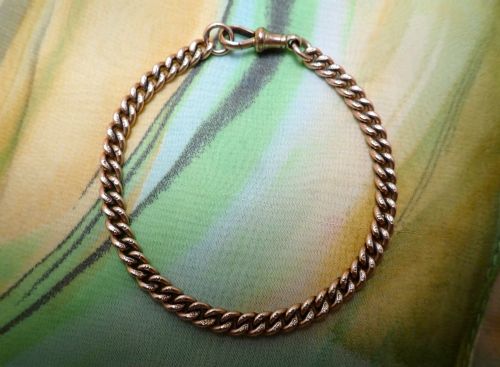
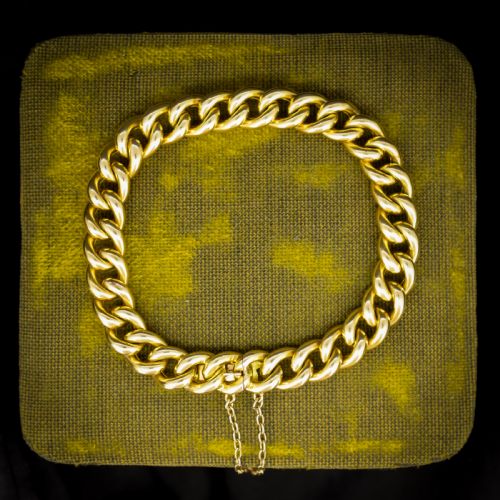
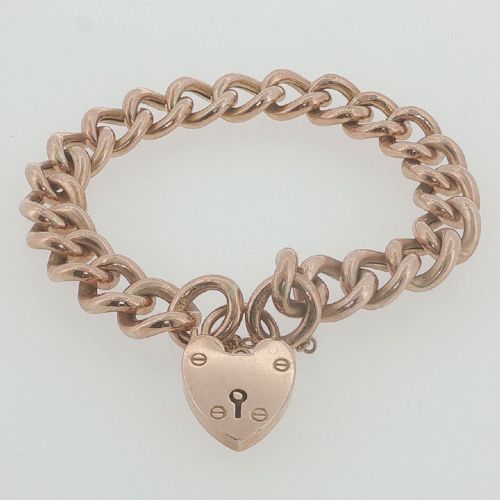
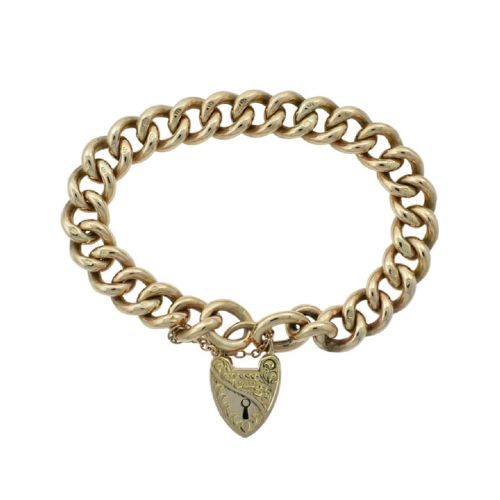
A gold curb bracelet brings interlocking links and secure padlock or dog clip fastenings from the Victorian and Edwardian eras directly to the wrist.
Gold Curb Bracelet
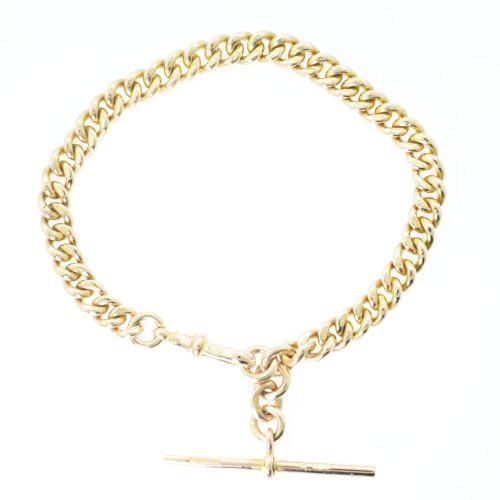
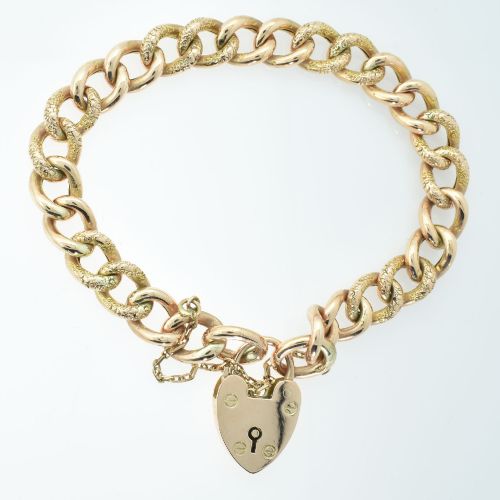
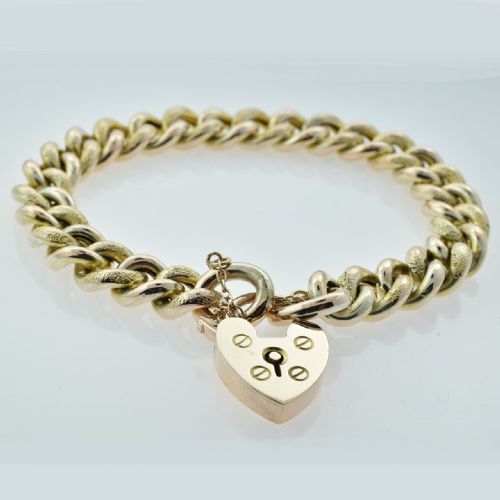
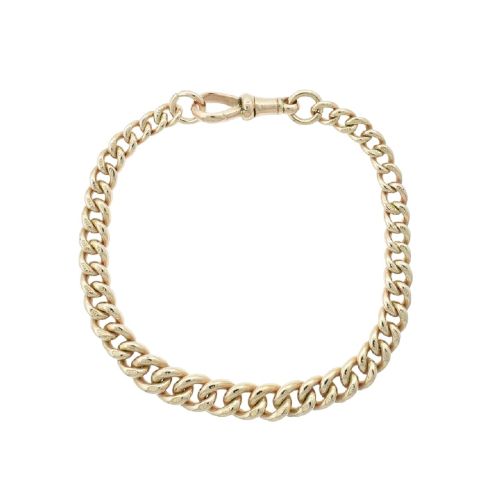
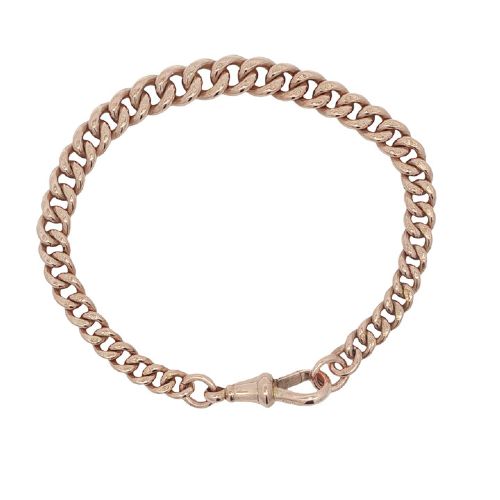
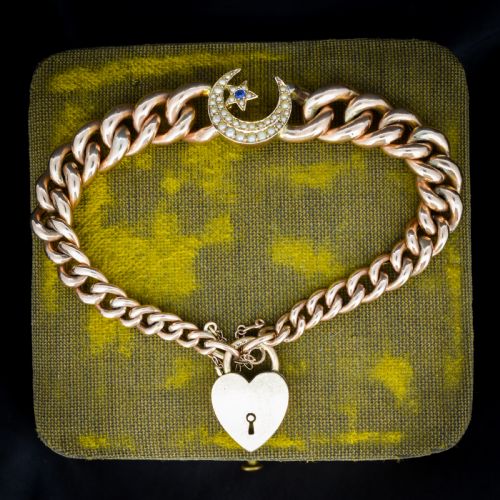
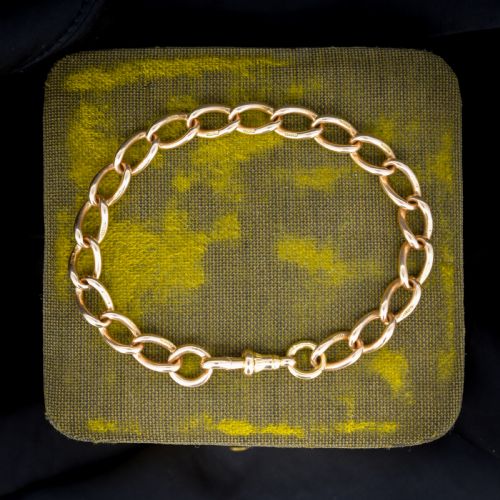
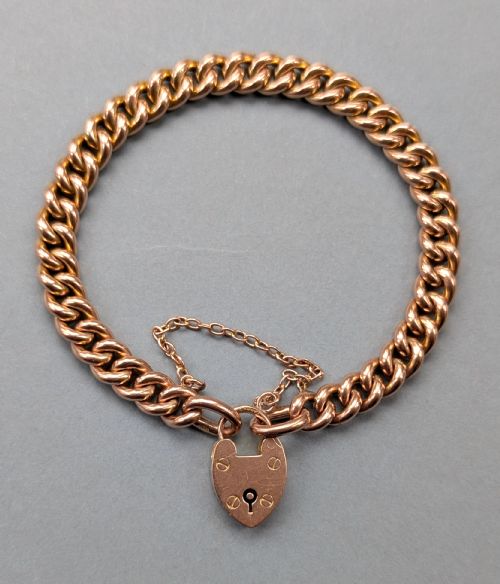
A gold curb bracelet consists of uniform, interlocking links that lie flat against the skin, creating a fluid and flexible band. These pieces emerge primarily from the Victorian and Edwardian periods, stretching from the late nineteenth century into the early decades of the twentieth century. Most examples found here take the form of heavy rose or yellow gold chains secured with heart padlocks, dog clips, or concealed clasps.
The format encompasses both simple daily wear and elaborate presentation pieces adorned with gemstones like turquoise, seed pearls, and sapphires. Many incorporate traditional elements such as safety chains, T-bars, or graduated links that increase in size towards the fastening. While standard curb chains dominate the selection, variations occasionally include fancy links, lovers knots, or matching jewellery sets.
Materials and construction techniques
Goldsmiths of the nineteenth and early twentieth centuries constructed these chains predominantly in nine carat, fifteen carat, and eighteen carat gold, with rose gold hues appearing frequently alongside traditional yellow gold. Links were formed, joined, and soldered by hand, frequently accompanied by hollow or solid manufacturing methods that influenced the overall heft of the piece. Gemstones such as turquoise and seed pearls were then set by hand into decorative padlocks or accompanying cluster motifs.
Engraving served as a primary ornamentation technique, with artisans cutting half-engraved patterns or foliate scrolls across the surface of individual links or heart padlocks. Hallmarks stamped directly onto the metal record assay offices, towns, and dates of manufacture, providing a reliable record of origin. Secure fastenings like spring-loaded dog clips and functional heart padlocks required precise mechanical skill to ensure longevity during daily wear.
Listings feature items from the Victorian and Edwardian eras, incorporating nine, fifteen, and eighteen carat gold.
Assessing quality in historical chains
Quality in a gold curb bracelet relies heavily on the gauge of the gold and whether the links are solid or hollow. Heavier, solid constructions provide greater resistance to daily wear and maintain their structural integrity over generations, whereas hollow variants depend entirely on the initial thickness of the metal sheet. The precision of the link assembly and the snugness of the interlocking joints dictate how smoothly the chain drapes against the wrist.
The artistry of the hand engraving and the security of the clasp mechanism further distinguish finer examples. Original components, including matching safety chains, engraved padlocks, and legible hallmarks, elevate the integrity of the piece. Finer stones, such as well-matched turquoise cabochons and secure seed pearls, indicate a higher grade of original production.
Theo Fennell
The Gold Curb Bracelet Glossary
- Curb link
- A type of jewellery chain formed of oval interlocking links that have been twisted and flattened to lie uniformly against the skin.
- Heart padlock
- A heart-shaped clasp mechanism commonly utilised on Victorian and Edwardian bracelets to secure the two ends of the chain together.
- Dog clip
- A spring-loaded swivel fastening that hooks onto a jump ring or loop, frequently found on Albert chains and heavy bracelets.
- Graduated
- Describing a chain where the links increase progressively in size from the ends towards the centre or the clasp.
- T-bar
- A short transverse bar attached by a short length of chain, originally designed to secure a pocket watch through a waistcoat buttonhole but retained as a decorative element.
Gold Curb Bracelet: Frequently Asked Questions
How do I secure a heart padlock?
Heart padlocks on these bracelets generally operate with a small internal spring mechanism opened by pressing a tiny lever or pulling the shackle. Once aligned with the designated ring, the spring snaps shut to hold the bracelet firmly in place.
Many period pieces also feature an accompanying safety chain that loops around the wrist independently, providing extra security just in case the primary clasp loosens during wear.
What is an Albert bracelet?
An Albert bracelet originates from pocket watch chains named after Prince Albert, adapted by jewellers into wristwear by shortening the length and adding a secure clasp. These pieces typically incorporate larger graduated links and retain the signature T-bar.
Such designs offer a substantially heavier feel on the wrist compared to standard chains, reflecting their utilitarian origins in nineteenth-century tailoring and accessories.
How can I tell the gold carat?
British hallmarks stamped onto the metal provide the most reliable indication of the gold carat, showing specific numbers such as nine, fifteen, or eighteen alongside crown or anchor assay office symbols. Rose and yellow gold variations reflect the specific alloy mixtures used during the Victorian and Edwardian eras.
Unmarked pieces occasionally rely on professional testing or visual patination, though legible stamps remain the gold standard for verifying period authenticity and composition.
Can I wear a curb bracelet daily?
Solid gold curb bracelets withstand daily wear remarkably well due to their sturdy interlocking link construction and robust fastenings. However, hollow variations require a gentler approach to avoid denting or crushing the lighter metal tubes.
Checking the security of the padlock spring and ensuring any set gemstones remain firmly seated will help preserve the bracelet for continuous long-term enjoyment.