

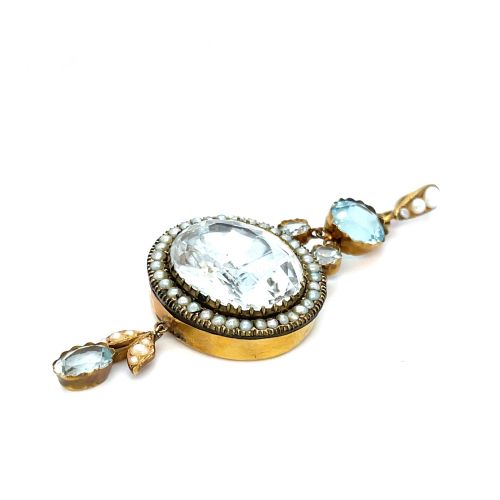


Gold Crystal Jewellery
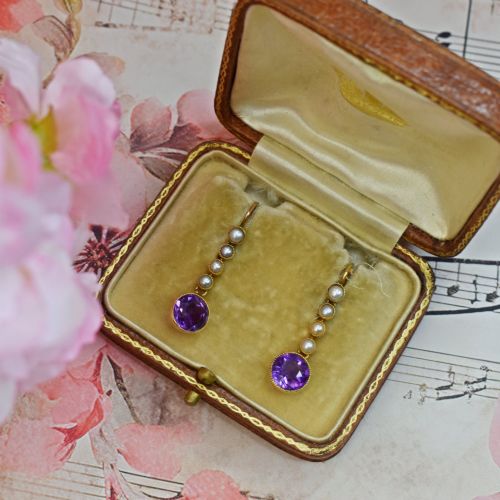
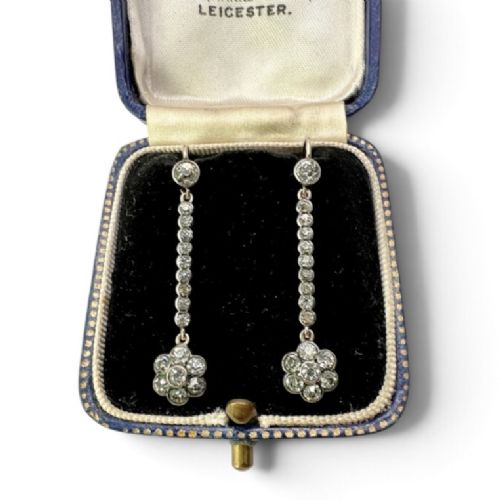
Gold crystal jewellery brings together bright metal and clear or faceted stones in drop earrings, pendants, and brooches spanning the Victorian era to the mid-twentieth century.
Gold Crystal Jewellery
Gold crystal jewellery encompasses items made from gold, silver, and transparent stones like rock crystal, paste, and quartz across multiple historical periods. Pieces range from early Victorian brooches and pendants to Edwardian drop earrings and Art Deco necklaces.
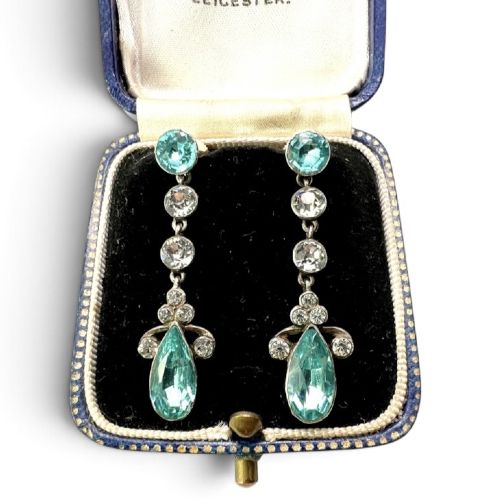
The most common items found in this selection are drop earrings and pendant necklaces, frequently combining 9ct gold with silver settings for stones. These designs often feature faceted cut crystals or paste stones that mimic the brilliance of diamonds.
Makers and designers from the Georgian period through the 1960s utilised these materials to create intricate items, including fob seals, bracelets, and boxed cufflinks. Each era introduced distinct geometric or naturalistic motifs, from star bursts to floral drops.
Materials and Construction
Craftsmen built these pieces using 9ct gold, 15ct gold, and silver, frequently combining metals to support and frame the stones securely. Silver was often deployed in settings to enhance the brightness of paste and diamond elements against yellow gold mounts.
Rock crystal, quartz, and glass paste were shaped into facets, baguettes, and cabochons to catch the light within pendants and earrings. Techniques such as foil backing were applied behind stones to deepen colour and increase internal reflection.
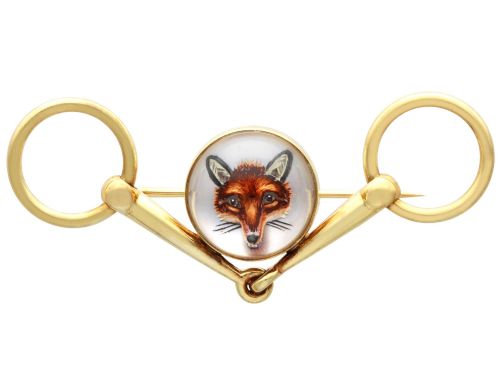
Specialised lapidary methods produced Essex crystals and intaglios, carved and painted with minute details like portraits or emblems before being mounted in gold brooches and cufflinks.
Gold Crystal Jewellery Retail Price Guide 2026
Typical asking prices for gold crystal jewellery among the pieces listed under this phrase on Sellingantiques today, from the lower quarter to the upper quarter. They describe what is for sale here now, not the wider market.
The inventory includes specialised forms such as Essex crystal cufflinks, intaglio ring seals, and hinged drop earrings.
Assessing Quality and Craftsmanship
Quality rests upon the precision of stone cutting and the integrity of the metalwork, whether in delicate Edwardian chain drops or substantial Art Deco brooches. Superior items display sharp faceting in crystals and secure, even settings that hold each stone firmly without excess adhesive.
The sophistication of the design dictates the upper range of these pieces, distinguishing standard manufactured items from fine pieces featuring complex materials like black onyx, chrysoprase, and diamonds alongside rock crystal.
The Gold Crystal Jewellery Glossary
- Rock crystal
- Colourless, transparent quartz used as a gemstone. It is hand-cut and faceted into drops, beads, and pendants.
- Paste
- Hand-cut glass used to imitate diamonds and coloured gemstones. It is frequently set in silver over gold in antique pieces.
- Essex crystal
- A reverse-carved and painted intaglio made from rock crystal. The three-dimensional miniature painting appears magnified from the front.
- Foil back
- A thin sheet of coloured or reflective metal placed beneath a transparent stone. This technique enhances the brilliance and colour of quartz and paste.
Gold Crystal Jewellery: Frequently Asked Questions
How do I care for antique gold crystal pieces?
Clean these items gently with a soft, dry cloth to remove dust and oils from the metal and stones. Avoid harsh chemical dips or ultrasonic cleaners, particularly on foil-backed stones or glued Essex crystals.
Store each piece individually in a lined box or pouch to prevent scratching between the gold settings and harder gems.
What is the difference between paste and rock crystal?
Paste is a heavy, lead-rich glass that is moulded and hand-faceted to imitate genuine gemstones. It appears frequently in Georgian and Victorian jewellery.
Rock crystal is a natural, transparent form of quartz. It offers greater hardness and durability than glass paste.
How can I date my gold crystal jewellery?
Examine the metal purity marks, stone cuts, and overall design style to establish a period. Victorian and Edwardian pieces often utilise mixed gold and silver settings with floral or star motifs.
Later items from the 1920s onward show geometric Art Deco influences or streamlined mid-century settings in solid 9ct gold.
Can I wear these earrings every day?
Many drop earrings and studs are robust enough for regular wear if handled with care. Take them off before swimming, bathing, or engaging in strenuous physical activity.
Antique drop earrings with delicate screwbacks or lever backs require gentle handling when fastening and removing.