
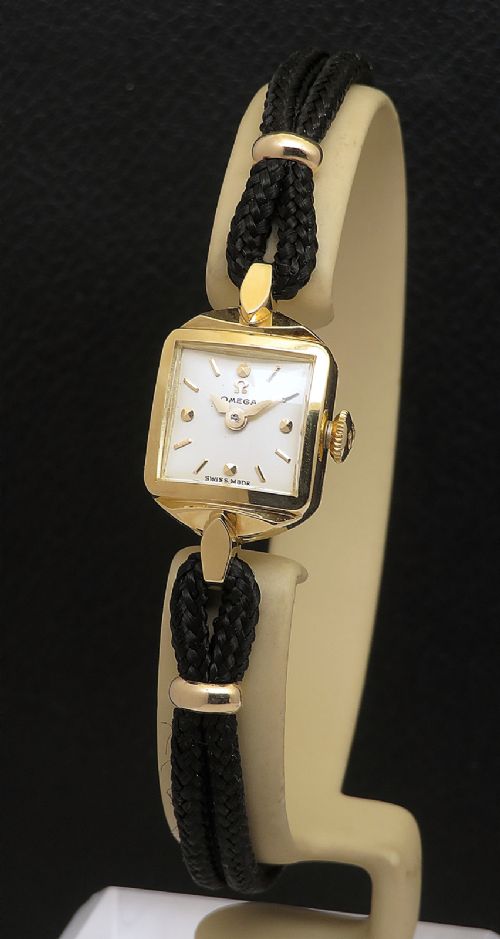
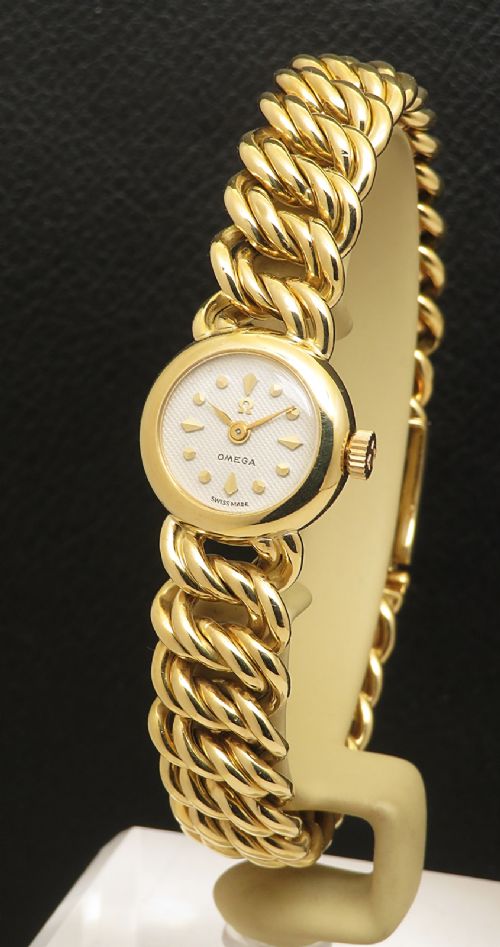
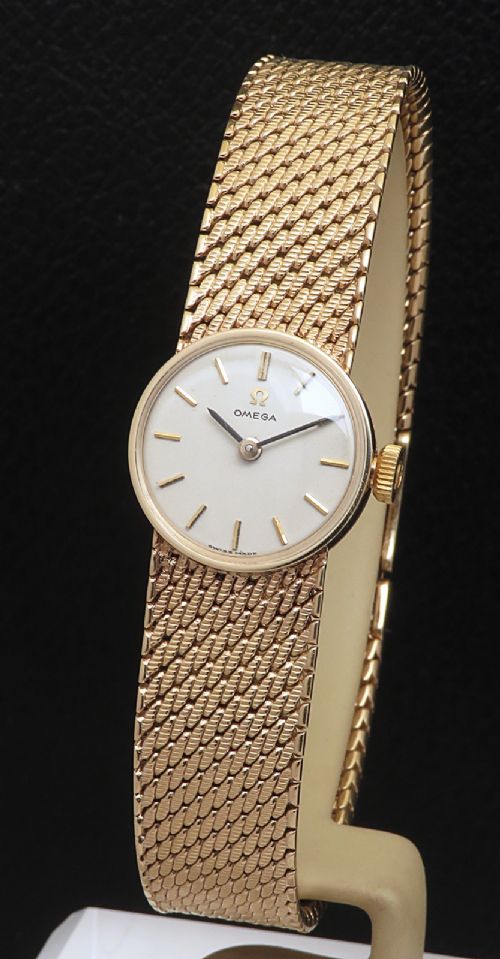
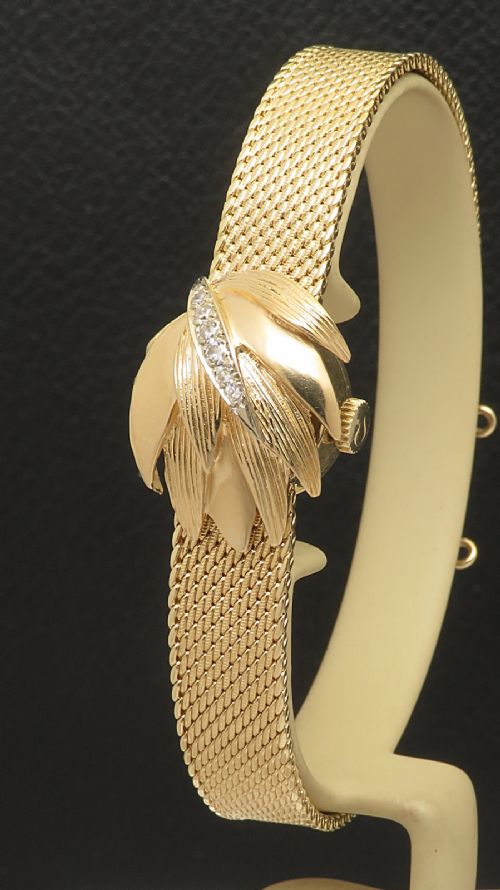





Gold Cocktail Watch
When you handle a gold cocktail watch, you touch an intricate piece of horology designed to double as evening jewellery.
Gold Cocktail Watch
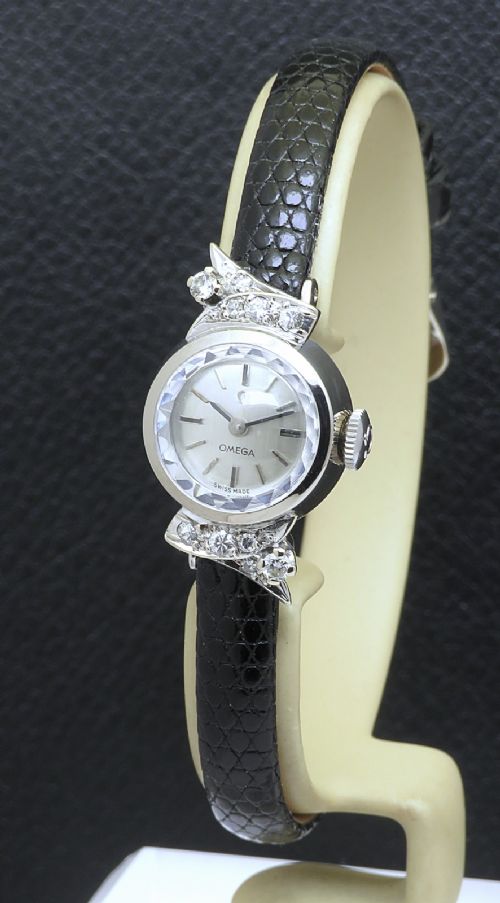
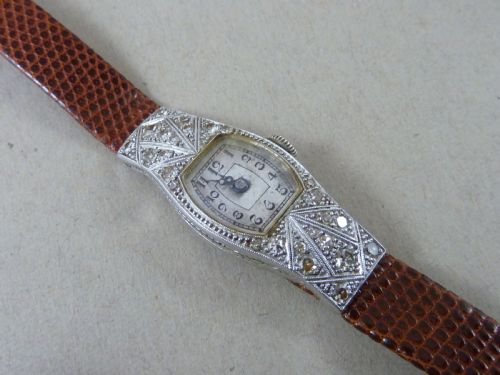
A gold cocktail watch is a small ladies wristwatch created for formal evening wear, originating across several decades from the nineteen-twenties to the nineteen-sixties. On this page, you will frequently encounter pieces from the Art Deco period alongside mid-century designs.
The form spans various silhouettes, from geometric platinum and white gold wristwatches set with diamonds to heavier solid nine-carat and eighteen-carat yellow or rose gold models. These items function primarily as wearable ornaments where telling the time is secondary to the craftsmanship of the case and bracelet.
Makers utilised precious metals combined with gemstones such as diamonds and sapphires to transform practical timekeepers into luxury accessories. Many examples integrate the watch face seamlessly into a mesh bracelet or a diamond-studded bezel.
Materials and construction
Watchmakers shaped cases from nine-carat, fourteen-carat, and eighteen-carat gold, alongside platinum and white gold, often pairing them with leather or fabric straps and metal mesh bracelets. The structural integrity relies on manual wind movements housed securely within these miniature precious metal housings.
Gemstone setting defined the high-end production, with diamonds flush-set or pavé-set into bezels, hoods, and articulated straps. Artisans also incorporated decorative elements like black enamel work and sapphire accents to enhance the visual depth of the watch head.
Listings feature gold cocktail watches spanning the decades from the nineteen-twenties through to the nineteen-sixties.
Distinctions in quality
Quality rests on the weight and purity of the gold or platinum, the precision of the diamond work, and the reputation of the maker. Heavier solid metal cases and integrated mesh bracelets demonstrate a higher initial investment in materials.
The presence of original boxes, papers, and factory documentation elevates an example, as does the complexity of the manual wind movement and the integration of precious stones like diamonds and sapphires into the design.
Omega·Rolex·Movado·Longines·Bucherer·Tissot·Benrus·Vertex·Jaeger-LeCoultre·Girard Perregaux·IWC·Elgin·Mappin and Webb·Certina
The Gold Cocktail Watch Glossary
- Art Deco
- A design style from the nineteen-twenties and nineteen-thirties characterised by geometric symmetry, stylised motifs, and clean lines. Pieces from this era often feature platinum or white gold set with diamonds.
- Manual wind
- A mechanical watch movement that requires the wearer to manually turn the crown to tension the mainspring. This mechanism allowed watchmakers to construct extremely slim cases suitable for evening wear.
- Bezel
- The ring of metal that surrounds and holds the watch glass or crystal in place. On these items, the bezel is frequently encrusted with diamonds.
- Mesh bracelet
- A flexible watch strap woven from fine metal wire, offering a fluid texture against the wrist. These bracelets are often cast in solid white or yellow gold.
- Platinum
- A dense, durable, and naturally white precious metal used for setting diamonds securely in vintage wristwatches. Its strength permitted delicate claw and channel settings.
Gold Cocktail Watch: Frequently Asked Questions
Can I wear my watch daily?
These delicate pieces were engineered for evening occasions rather than rough daily tasks. Take care around water and impacts.
Storing them safely when not worn preserves the precious metal case and keeps the mechanical movement protected.
How do I identify Art Deco pieces?
Look for geometric case shapes, stepped rectangular profiles, and symmetrical diamond arrangements. White gold and platinum are typical for this period.
Numbers on the dial often feature stylised typography distinct from later mid-century minimalist layouts.
What is a cocktail watch?
It is a small ladies dress watch designed to resemble a bracelet, worn to social gatherings in the evening. The dial is often concealed beneath a decorative cover or integrated into gems.
Timekeeping was secondary to the elegance of the jewellery piece itself during social events.