


Gold Chain Wristlet
A gold chain wristlet spans eras from Victorian curb links to Edwardian padlocks, offering solid gold workmanship set with pearls, turquoise, and diamonds.
Gold Chain Wristlet
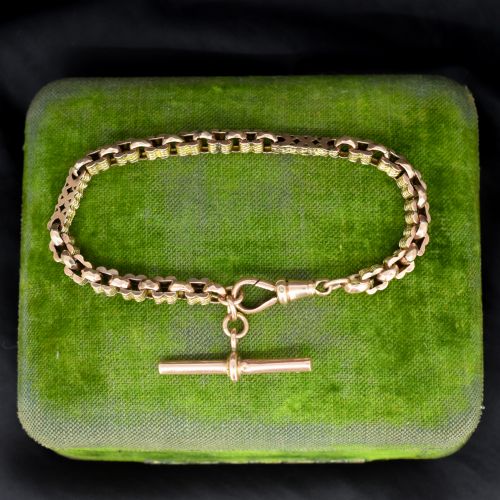
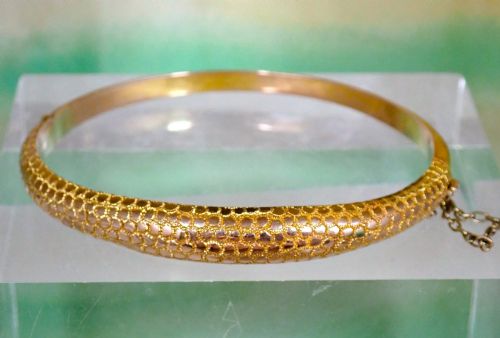
A gold chain wristlet takes the form of flexible curb links, gate bracelets, and solid bangles worn close to the arm. You encounter pieces spanning the Victorian, Edwardian, and Art Deco periods, extending into mid-century designs.
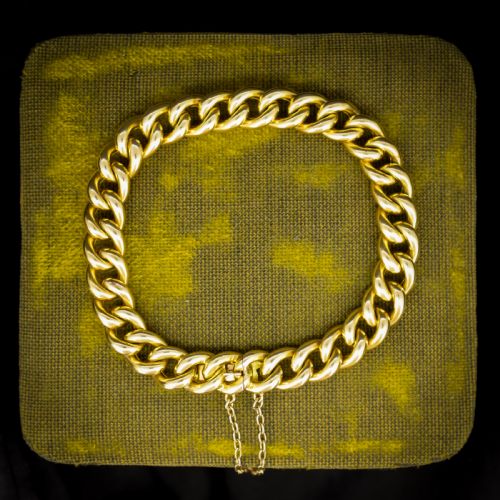
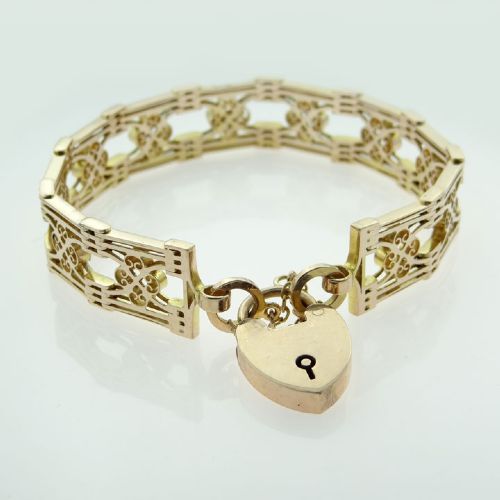
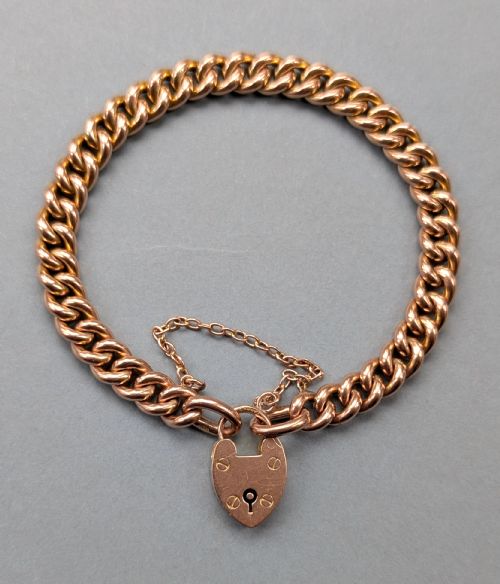
The most common examples on this page are 9ct rose gold and yellow gold curb chain bracelets fitted with safety chains and padlocks. These items combine everyday durability with period charm, often incorporating natural stones.
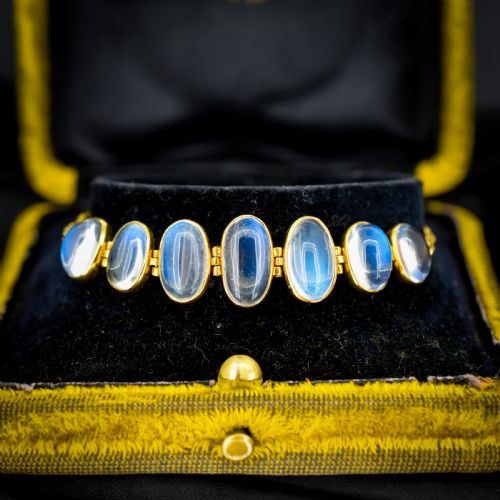
More elaborate versions feature graduated links, concealed clasps, and high-carat yellow gold set with diamonds, sapphires, opals, and pearls. These heavier pieces reflect the formal jewellery tastes of the late nineteenth and early twentieth centuries.
Materials and construction
The foundation of these pieces relies on yellow and rose gold, predominantly in 9ct and 15ct or 18ct purities, shaped into hollow or solid curb links and fancy gate patterns. Goldsmiths joined these links securely, frequently adding heavy padlocks and spring ring clasps.
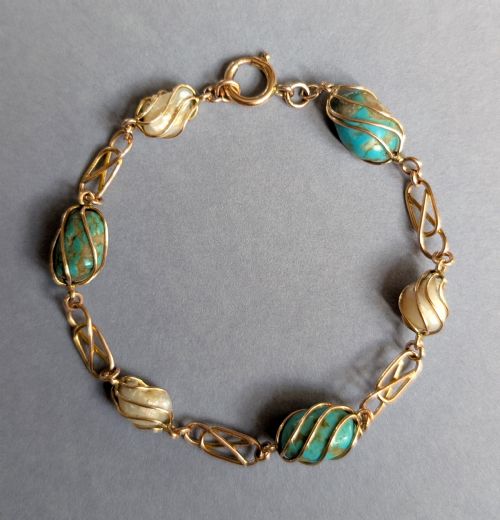
Gemstones including turquoise, pearls, diamonds, sapphires, and moonstones are flush set, grain set, or mounted in claw settings along the chain or clustered around central motifs like lovers' knots and snakes.
Victorian snake bracelets coil around the wrist with turquoise eyes, symbolising eternal love and wisdom while keeping a tight grip on your sleeve.
Evaluating the work
Quality rests in the weight of the gold and the integrity of the individual links, where solid construction outlasts hollow stamped alternatives. Heavier chains maintain their structural rigidity and resist denting.
The finesse of the gemstone setting and the matching of natural pearls or turquoise cabochons dictate the level of craftsmanship. Secure mounting of stones and intact safety chains indicate superior original manufacture.
The Gold Chain Wristlet Glossary
- Curb link
- A type of jewellery chain formed by interlocking, often flattened, identical links that lie flat against the wrist. This style provides flexibility and enduring strength for daily wear.
- Padlock clasp
- A small padlock-shaped fastening commonly utilised on Victorian and Edwardian charm bracelets and curb chains. It acts both as a secure lock and a decorative centrepiece.
- Gate bracelet
- A wide design composed of parallel vertical metal bars linked together, inspired by traditional farm gates. These pieces frequently feature engraved central panels and padlock fastenings.
- Split pearl
- A small pearl that has been sliced in half and glued onto a backing rather than set in a traditional metal mount. This technique was popular in Victorian cluster and floral designs.
Gold Chain Wristlet: Frequently Asked Questions
Are these bracelets suitable for daily wear?
Solid gold curb links and bangles handle regular daily use well. Pieces featuring soft gemstones like turquoise or natural pearls require greater care.
Remove your jewellery before swimming, gardening, or heavy lifting to protect delicate stone settings and ancient claws.
How do I date an antique gold chain?
Examine the style of the links, the clasp mechanism, and any accompanying hallmarks stamped on the metal. Chester and Birmingham assay offices used specific date letters.
Stylistic cues such as Edwardian garland motifs or Victorian snake designs help narrow the manufacturing period.
What is rolled gold?
Rolled gold involves a sheet of gold mechanically bonded to a base metal core under heat and pressure. This layer is substantially thicker than standard electroplate.
Items made this way offer the appearance and durability of solid gold at a different weight and price point.