


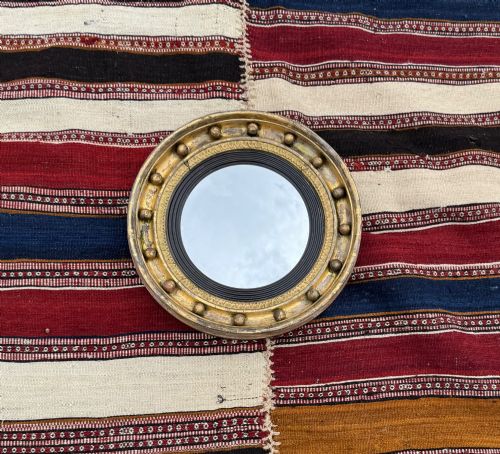


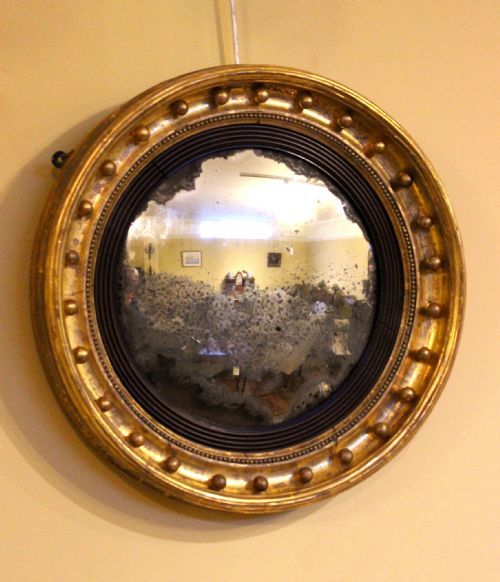
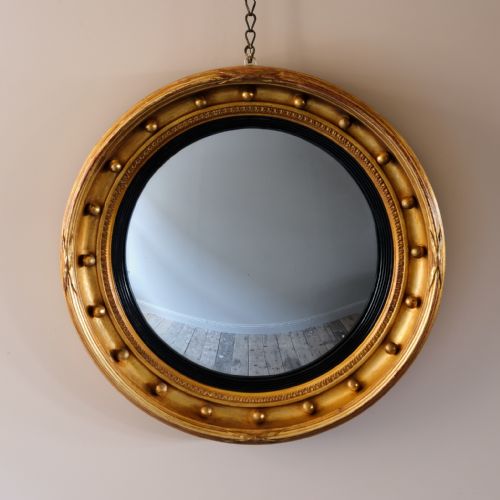


Gold Bullseye Mirror
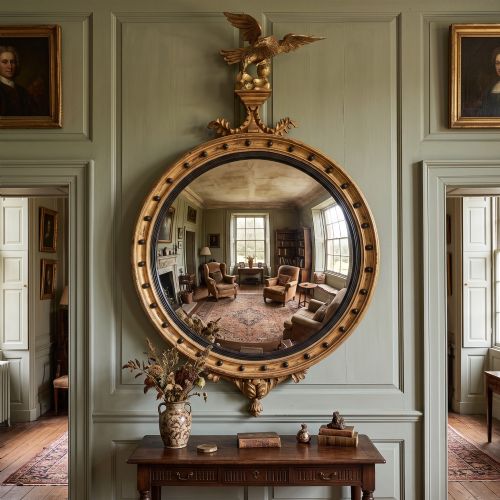
A gold bullseye mirror brings theatrical light and a distorted, panoramic view into a room, making it one of the most striking wall pieces of the Regency period.
Gold Bullseye Mirror
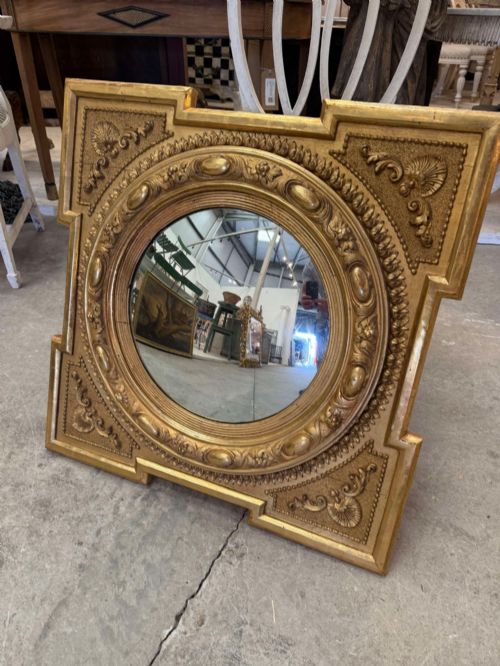
When you search for a gold bullseye mirror, you encounter circular convex wall mirrors that reflect a wide, curved angle of an interior space. These pieces dominate the Regency period, though later revivals and Victorian examples also appear on this page.
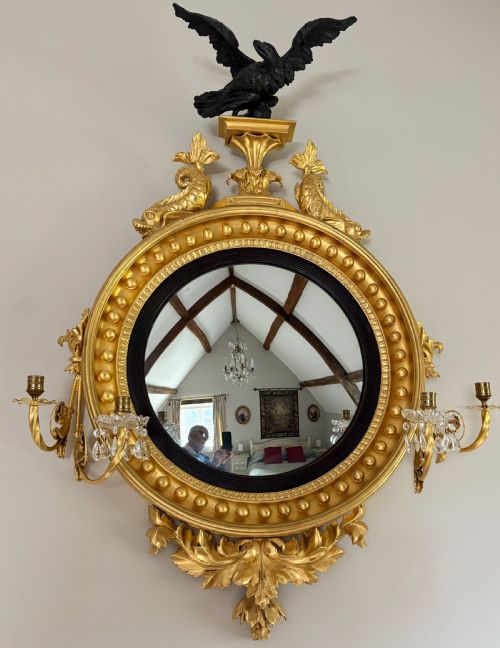
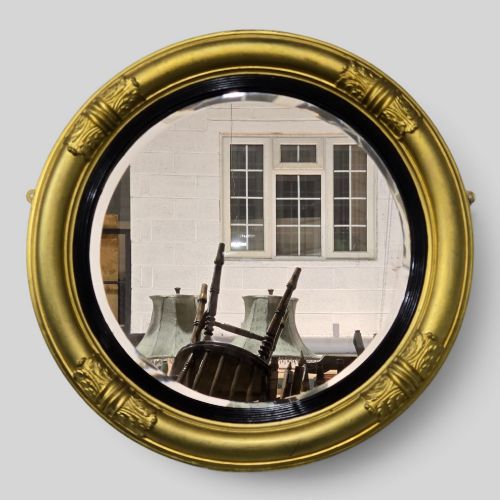
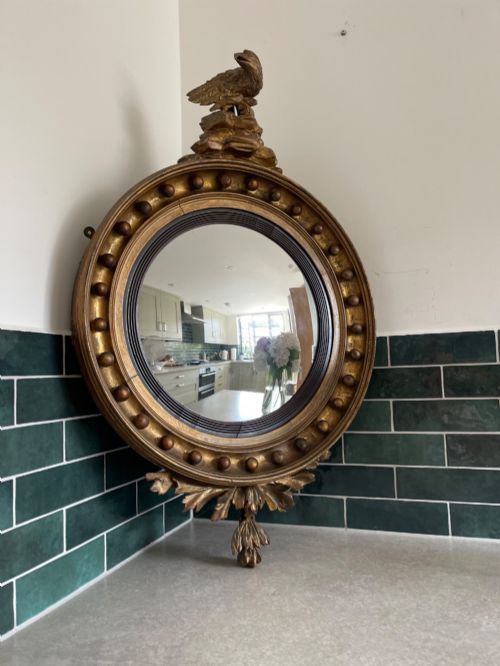
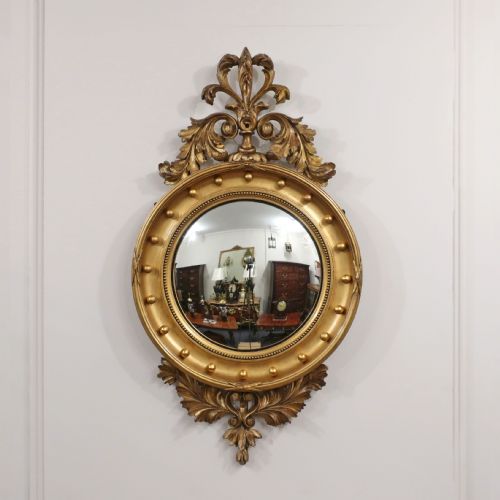
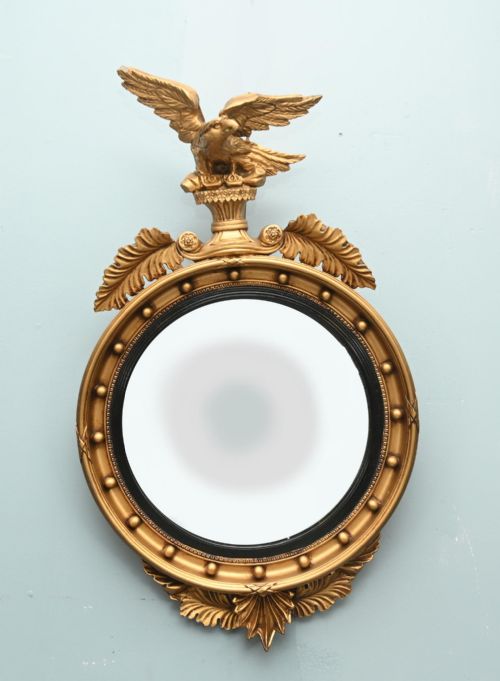
The most common version you meet here is the Regency giltwood convex mirror, frequently featuring carved details such as an eagle surmount or ebonised reeded inner rings. Pieces range from small domestic examples to large wall centrepieces dating across the nineteenth and early twentieth centuries.
Originating primarily from British workshops of the early nineteenth century, these mirrors serve both decorative and optical functions. They catch light from every corner and concentrate it into a single, glowing focal point on the wall.
Materials and Construction
Carved wood provides the primary structural foundation for traditional frames, often built from pine or other softwoods. Artisans shaped these timbers before applying decorative surface layers.
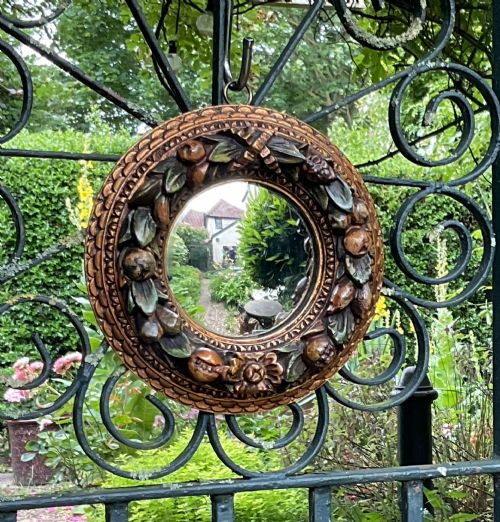
Gesso and composition ornaments are moulded and applied over the wooden base to create intricate relief work, including decorative spheres and floral motifs. Giltwood and gold leaf finish the surface, providing a brilliant metallic sheen that catches natural and candlelight alike.
Gold Bullseye Mirror Retail Price Guide 2026
Typical asking prices for gold bullseye mirror among the pieces listed under this phrase on Sellingantiques today, from the lower quarter to the upper quarter. They describe what is for sale here now, not the wider market.
Frames utilise giltwood, carved wood, ebonised wood, gesso, and composition, paired with traditional convex glass.
Assessing Quality and Craftsmanship
The depth and crispness of the carved woodwork separate standard production pieces from superior examples. Finely modelled eagle crests, delicate acanthus leaves, and precise reeding demonstrate the hand of a skilled carver rather than mass-produced composition moulding.
The quality of the mercury or silvered convex glass dictates the clarity and depth of the reflection. Superior mirrors maintain a brilliant, even silvering that projects a sharp, spherical image without distracting distortion or dark spots.
The Gold Bullseye Mirror Glossary
- Convex mirror
- A round mirror with an outward-curving glass surface that reflects a wide-angle, miniature view of the entire room. This optical design was originally intended to allow servants to monitor activity across a dining room.
- Giltwood
- Timber that has been coated with a thin layer of gold leaf over a prepared gesso ground. It provides a warm, durable metallic finish typical of fine antique frames.
- Composition
- A moulded mixture of whiting, resin, glue, and oil pressed into ornamental shapes while pliable. It allowed makers to create elaborate decorative details more quickly than hand carving.
- Ebonised wood
- Timber stained or painted to imitate ebony, commonly used for the inner reeded slip ring found on many Regency frames. This dark border creates a striking visual contrast against the surrounding gold leaf.
- Eagle surmount
- A carved wooden eagle perched atop the upper frame, a frequent decorative motif on Regency convex mirrors. The bird often holds a chain or ball in its beak.
Gold Bullseye Mirror: Frequently Asked Questions
How do I hang a heavy convex mirror?
Because these pieces carry substantial weight from their solid wood frames and heavy glass, secure wall fixings are essential. Use a sturdy picture hook rated for heavy loads, anchored directly into wall studs or masonry.
Avoid relying solely on decorative plaster hooks or lightweight picture wire attached to older rings. Inspect the original hanging hardware on the reverse to ensure the structure remains stable before mounting.
Where should I place a convex mirror?
Position the piece opposite a window or a light source to maximise the reflection of natural daylight into the room. Placing it at eye level in a hallway, drawing room, or dining space allows viewers to appreciate the panoramic perspective.
Keep the mirror away from direct, harsh sunlight and damp areas to protect the delicate gold leaf and historical frame materials from gradual deterioration.
How can I tell a Regency original from a revival?
Examine the construction of the wooden backboards, the type of joinery used on the frame, and the ageing characteristics of the gesso and gilding. Original Regency pieces show appropriate wear, hand-forged fixings, and traditional timber preparation.
Revival pieces from later periods often utilise machine-sawn timber and more uniform composition details, reflecting the manufacturing techniques of their respective decades.