
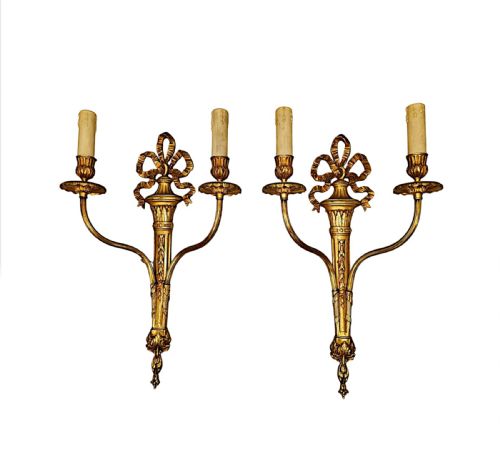
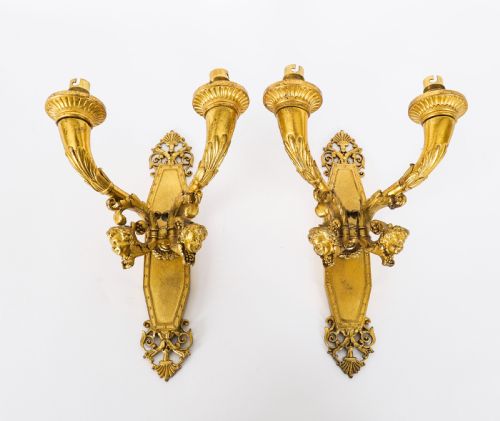
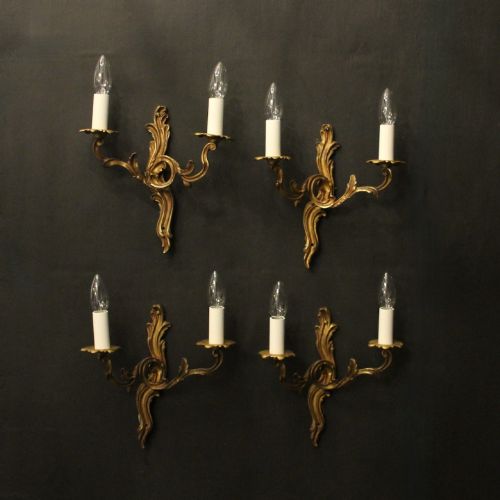

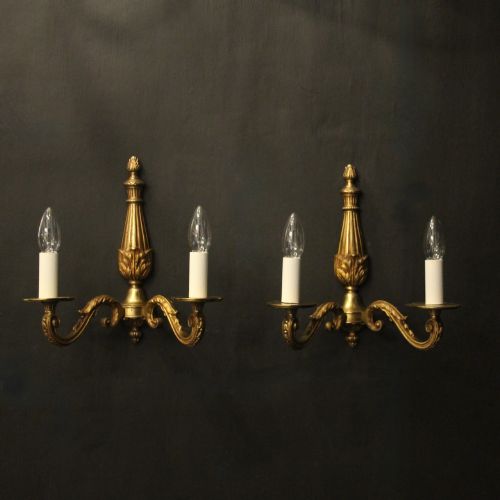
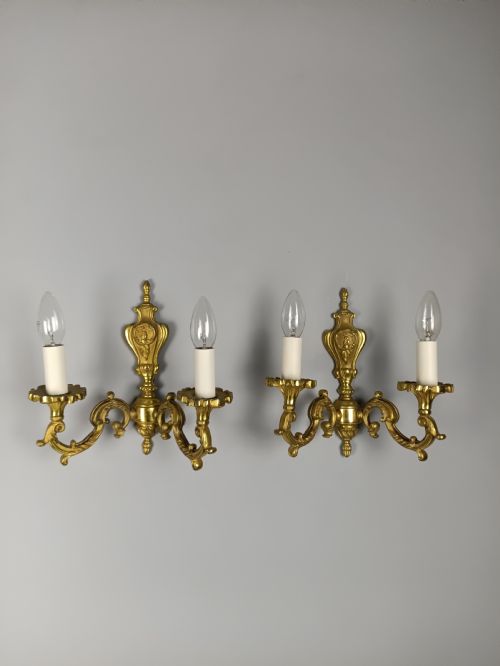
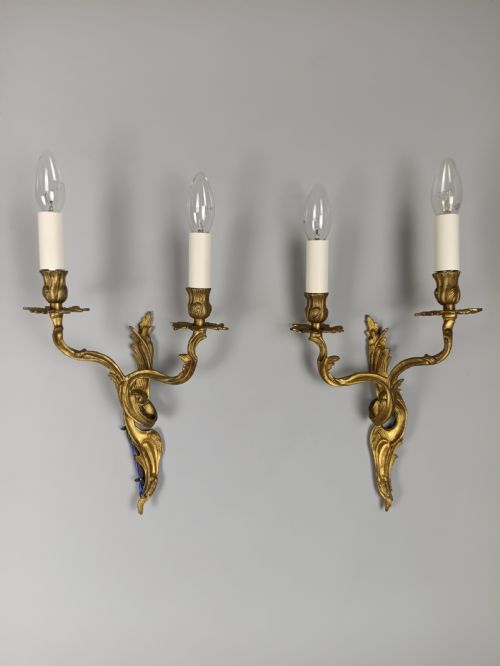
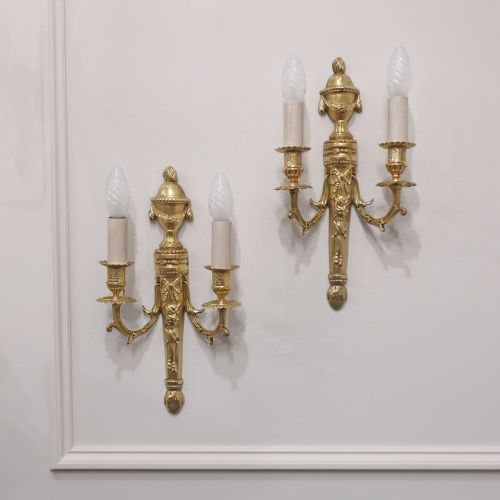
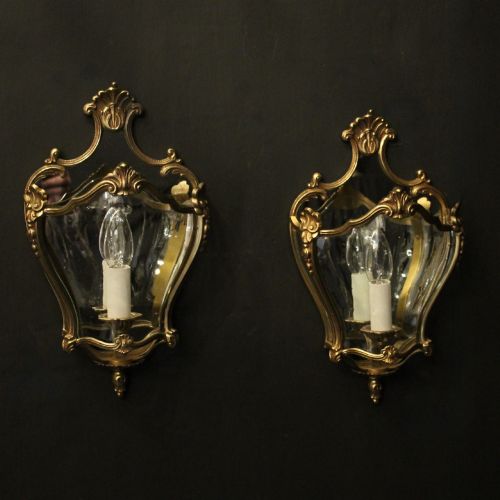
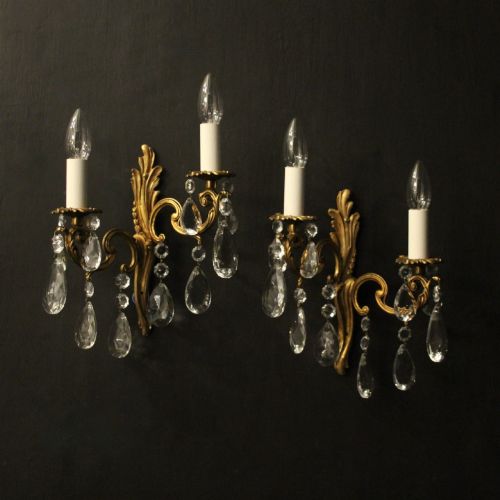
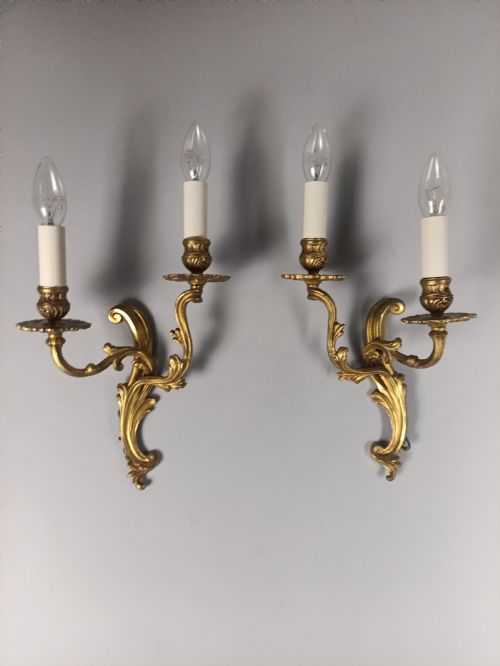
Gold Bronze Sconce Pair
A gold bronze sconce pair brings architectural warmth to a wall, illuminating rooms through cast metal and gilded detail.
Gold Bronze Sconce Pair
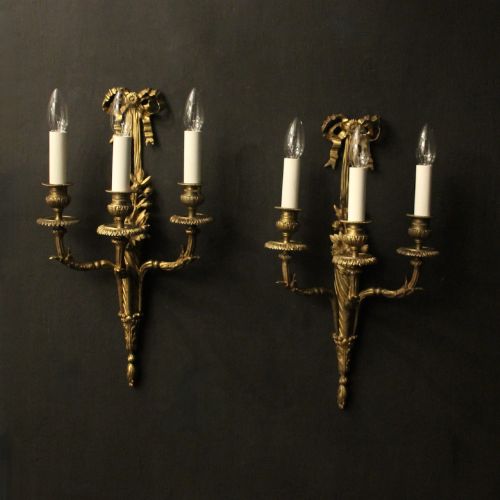
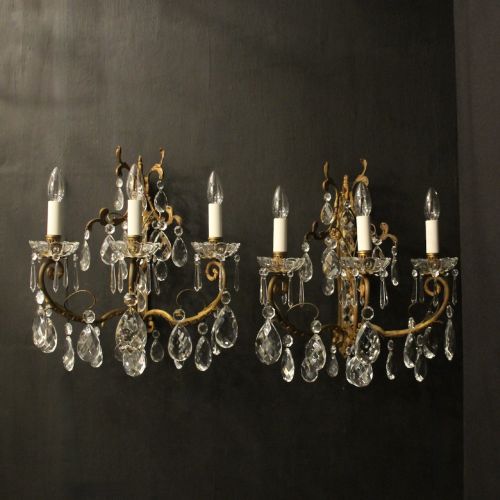
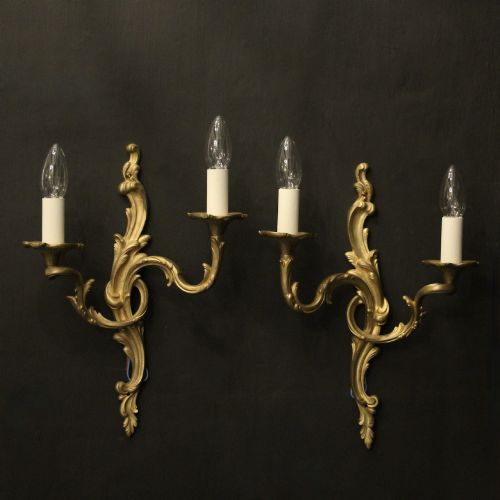
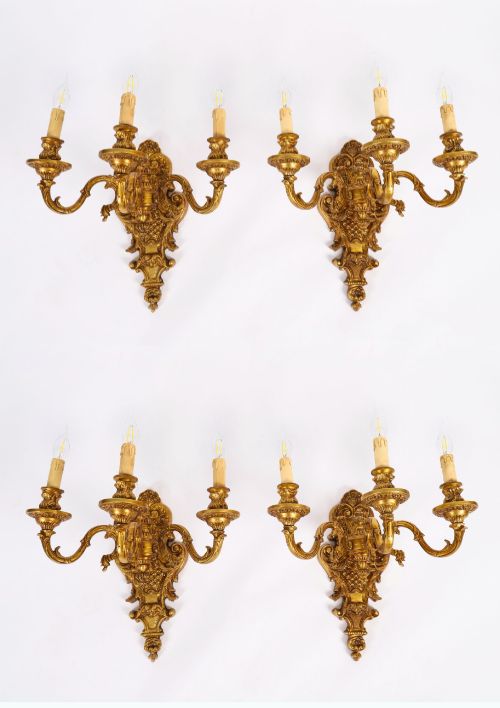
A gold bronze sconce pair comprises matching wall-mounted light fittings designed to hold candles or electric lamps. These fixtures emerge frequently in French designs spanning the nineteenth and early twentieth centuries.
Most examples found here present twin or triple arms branching from a backplate. Styles lean heavily towards Rococo, Louis XVI, and Neoclassical revivals, reflecting classical motifs and ornate scrollwork.
Makers produced these lights for formal salons and chambers using heavy cast metals. Surviving sets often retain their original configuration or have been adapted safely for modern interiors.
How they were made
Foundry workers cast these fixtures in bronze, brass, or ormolu using traditional techniques. Artisans then applied fine gilding to the metal surface to achieve a bright, reflective finish.
Complex designs incorporated crystals, glass drops, or marble bases to enhance the visual weight of the piece. Details were hand-chased after casting to sharpen the foliage, ribbons, and caryatids.
Periods represented span from the early nineteenth century through to the art deco era of 1930.
What varies in quality
The crispness of the casting separates standard production from finer workshop output. Sharp relief work on acanthus leaves and ribbons indicates superior hand-chasing by skilled artisans.
Weight and metal composition also define the tier of the piece. Substantial gilt bronze or ormolu retains its lustre far better than lighter brass alternatives.
Casier
The Gold Bronze Sconce Pair Glossary
- Ormolu
- High-purity gold applied to a bronze base through a mercury amalgamation process. This technique creates a rich, enduring metallic golden sheen.
- Applique
- A wall-mounted light fitting designed to hold candles or electric lamps. These fixtures sit flat against wall panelling or plaster.
- Caryatid
- A sculpted female figure serving as an architectural support. These figures frequently appear on Neoclassical and Louis XVI style stems.
- Campana
- An inverted bell-shaped vessel form used as the cup or drip pan on a sconce. It derives from ancient Roman bronze shapes.
- Rococo
- An ornate artistic style characterised by asymmetric scrolls, shell motifs, and natural curves. It heavily influences nineteenth-century revival wall lights.
Gold Bronze Sconce Pair: Frequently Asked Questions
How do I hang a heavy bronze sconce pair?
Wall lights cast from bronze and ormolu carry significant weight and require secure fixing into solid masonry or adequate wall studs. Using appropriate heavy-duty screws ensures the backplate remains flush and stable against the surface.
Professional installation is recommended, particularly when wiring older fixtures into modern electrical circuits. Electricians can check internal cabling while mounting the heavy metal brackets safely.
Were these sconces originally for candles or electricity?
Many nineteenth-century examples began life holding candles before being converted for electric bulbs later in their history. The presence of drip pans and hollow arms often indicates an original candle configuration.
Modern buyers frequently find sets that have already been rewired for contemporary use. This adaptation allows period fixtures to function safely as primary or accent wall lighting.
How do I clean gilded bronze safely?
Dusting gently with a soft, dry cloth prevents the accumulation of grime without disturbing the delicate metallic surface. Avoid commercial metal polishes, as abrasive compounds can strip away the fine layer of gold leaf or ormolu.
Conservative maintenance preserves the natural ageing and patina accumulated over decades. Professional conservation is advised if deeper cleaning becomes necessary.
How can I tell a Louis XVI style from Rococo?
Louis XVI pieces rely on symmetry, straight lines, classical urns, ribbons, and architectural rigour. The decorative vocabulary draws heavily from excavated classical antiquity.
By contrast, Rococo designs embrace asymmetry, organic curves, C-scrolls, and exuberant foliage. These pieces avoid rigid geometry in favour of fluid, dynamic movement.