




Gold Brass Trinket Casket
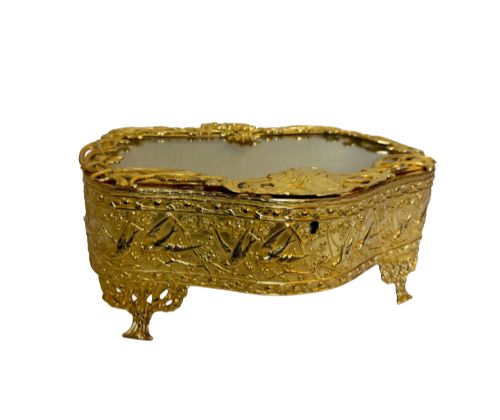
These gold brass trinket casket pieces offer charming storage for small valuables, bringing period elegance and craftsmanship straight to a dressing table or desk.
Gold Brass Trinket Casket
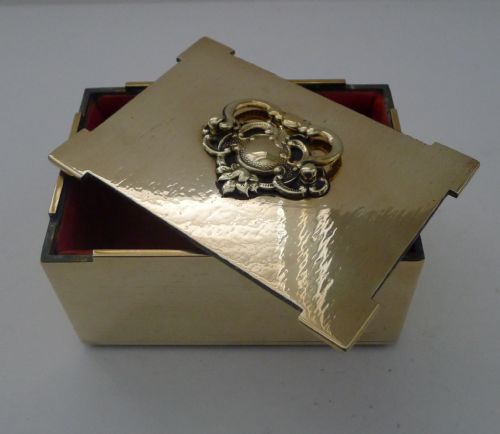
A gold brass trinket casket brings together functional storage and decorative metalwork, serving as a secure container for jewellery and small keepsakes. These items frequently appear as jewellery boxes, jewellery caskets, and trinket boxes across the selection.
The pieces on this page span several distinct periods including the Victorian era, 1800, 1890, 1900, and 1910, reflecting the tastes of the nineteenth and early twentieth centuries. Stylistic influences range from Art Nouveau and Jugendstil to Rococo Revival, French Napoleon III, and French Belle Epoque.
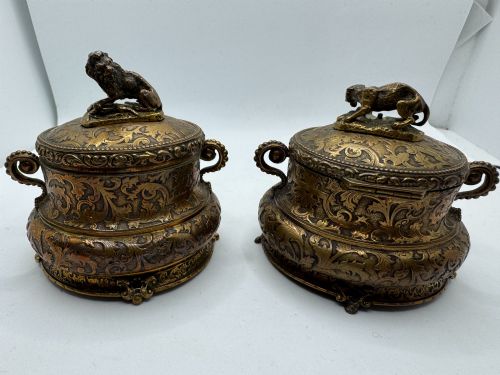
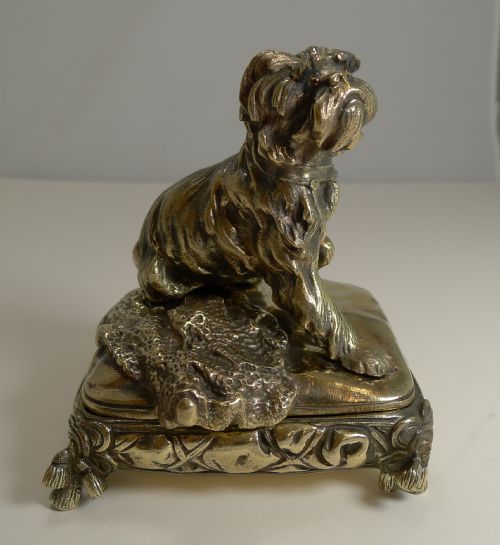
Buyers will encounter various forms such as glass and ormolu containers, cast brass boxes, and caskets adorned with figurative finials like dogs. Origin points and design inspirations frequently trace back to French workshops as well as English makers.
How they were made
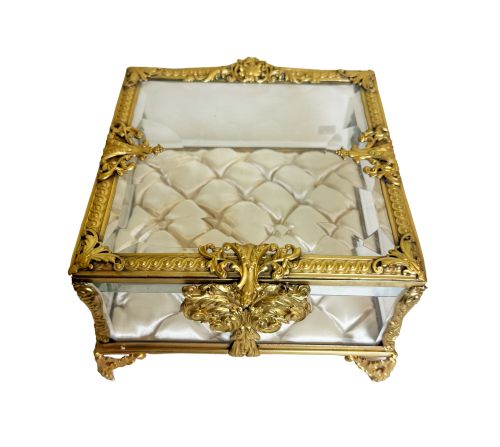
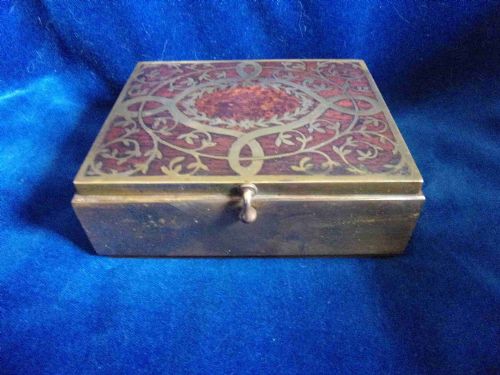
Craftsmen utilised metals such as brass, gilt metal, gilt bronze, ormolu, and gilded copper, often shaping them through casting and electro-forming techniques. Frames and bodies frequently incorporate bevelled glass panels to display the contents within.
Interiors were typically lined with delicate textiles such as silk and velvet to protect precious items from scratches. Decorative elements like inlaid details and animal finials were meticulously applied to finish the exterior.
Listings feature items spanning the Victorian era through to 1910, encompassing Art Nouveau, Jugendstil, and French Napoleon III design styles.
What varies in quality
The refinement of the metalwork distinguishes standard containers from superior examples, particularly where chasing, casting crispness, and fire gilding or ormolu finish are concerned. Heavier gauge brass and solid bronze frameworks indicate a higher grade of manufacture.
The condition and thickness of the internal silk or velvet lining affect the integrity of the piece, as do the clarity and bevelling of inserted glass panels. Original hinges, working clasps, and well-fitted lids preserve both utility and authenticity.
Erhard and Sohne
The Gold Brass Trinket Casket Glossary
- Ormolu
- A gilded bronze technique popular in French decorative arts, creating a bright golden finish on metal mounts. It provides a luxurious surface texture on many nineteenth-century caskets.
- Bevelled glass
- Glass with edges cut and polished at an angle, commonly fitted into the walls and lids of display caskets. This technique adds depth and catches light from multiple angles.
- Jugendstil
- The German and Austrian manifestation of Art Nouveau, characterised by flowing organic lines. Pieces in this style often feature stylised floral and geometric motifs.
- Electro-form
- A manufacturing process using electroplating to grow metal shells over a mould. This method allowed makers to create intricate and lightweight decorative metal objects.
- Finial
- A decorative ornament fixed to the top of a lid or box. On these caskets, they frequently take the form of animals such as dogs.
Gold Brass Trinket Casket: Frequently Asked Questions
What were these caskets used for?
These boxes served primarily on dressing tables and boudoirs to hold rings, brooches, and other small personal valuables out of sight.
They also functioned as decorative objects in their own right, displayed prominently in parlours to signal taste and refinement.
How do I care for the lining?
Original silk and velvet linings require gentle dusting with a soft, dry brush to remove accumulated debris over time.
Avoid moisture and chemical cleaners entirely, as liquids will stain delicate historic textiles and corrode the surrounding metal frame.
How can I tell French styles apart?
French Napoleon III and Rococo Revival pieces often display ornate, flowing scrollwork and heavy cast ornamentation influenced by earlier monarchical periods.
Later French Belle Epoque designs lean towards lighter, more elegant proportions with refined ormolu and clear glass display panels.
What is the difference between brass and ormolu?
Brass is a base alloy of copper and zinc used for the structural body and casting of many utilitarian boxes.
Ormolu specifically refers to a high-status gilded bronze finish applied to decorative mounts, offering a richer golden lustre than standard brass.