


Gold Brass Lions
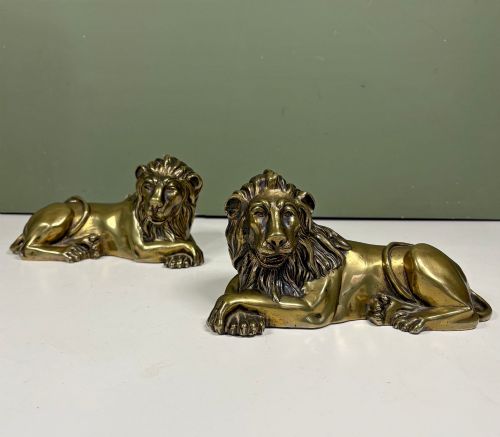
Gold brass lions bring sculptural presence to a room, appearing in forms from heavy doorstops to French ormolu mantel clocks.
Gold Brass Lions
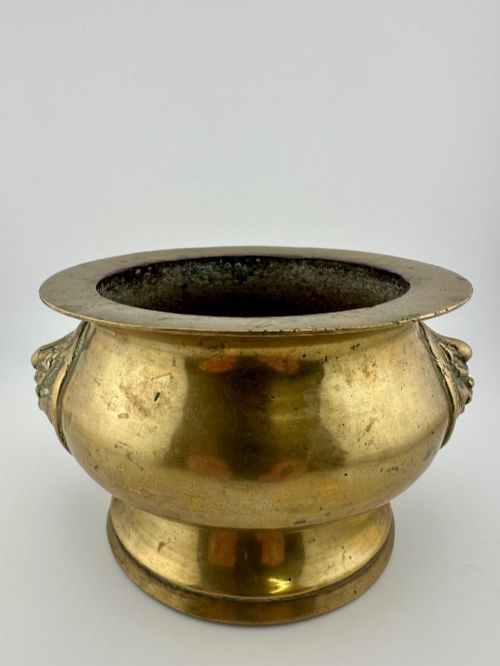
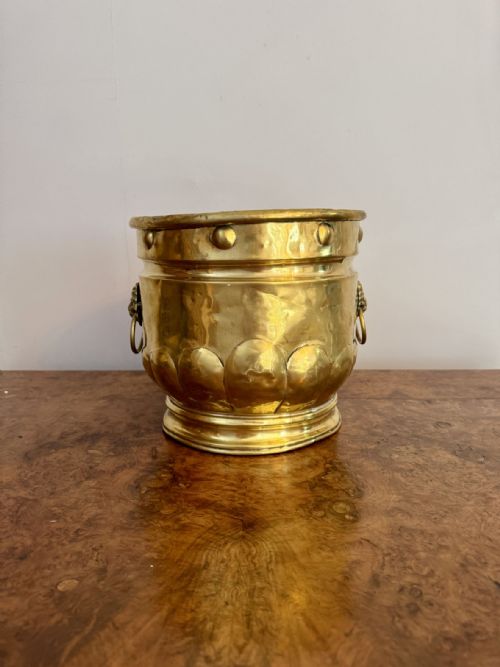
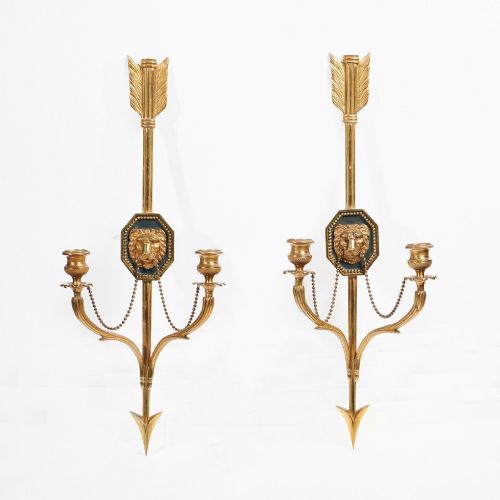
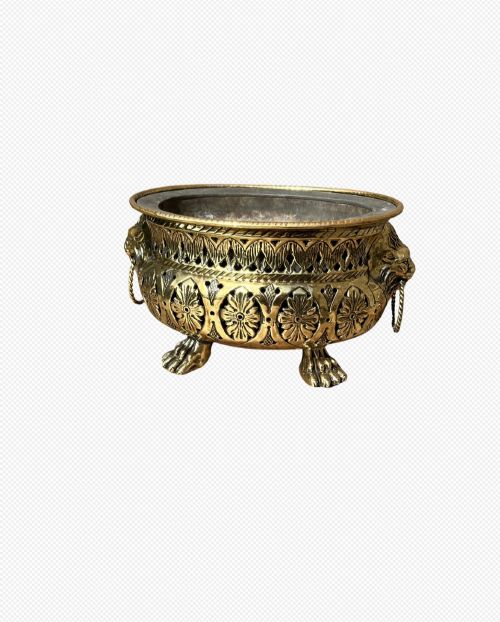
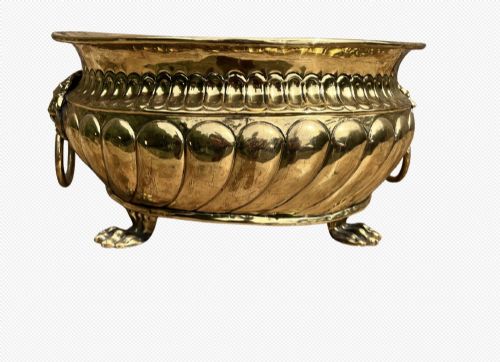
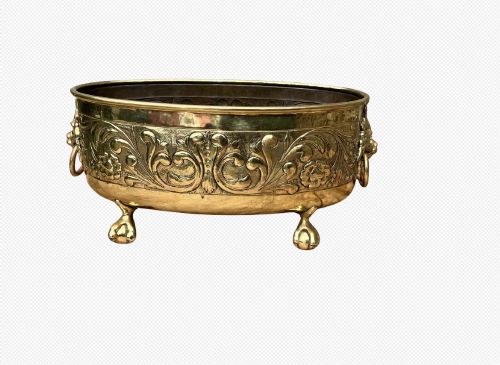
When you search for gold brass lions, you encounter decorative objects and furnishings spanning the nineteenth and early twentieth centuries. These pieces encompass domestic items such as heavy doorstops, jardiniere planters with lion mask handles, wall lights, and sculptural mantel clocks.
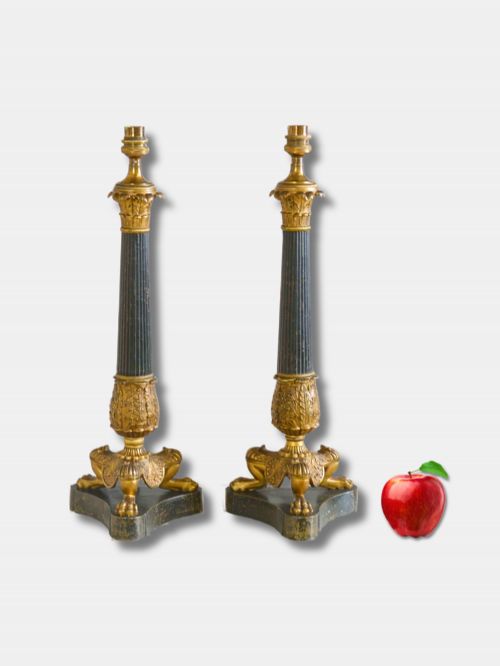
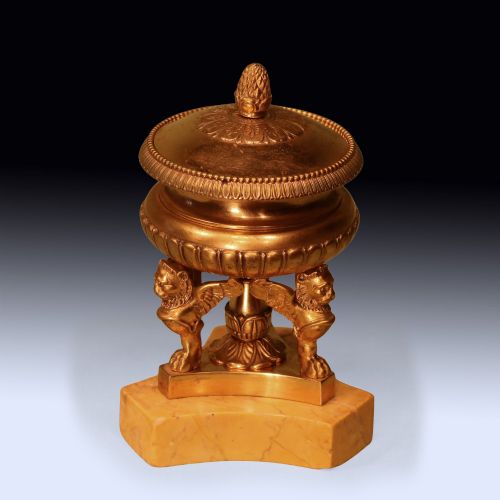
The selections on this page lean heavily toward nineteenth-century Victorian pieces and French works executed in ormolu and gilt bronze. You will frequently find pairs of candlesticks, table lamps, and desk inkstands incorporating cast feline mounts and paw feet.
Originating largely from English and French workshops, these items serve functional roles alongside their decorative qualities. A buyer selects them to introduce classical dignity or period character into an interior space through established ornamental motifs.
Materials and Construction
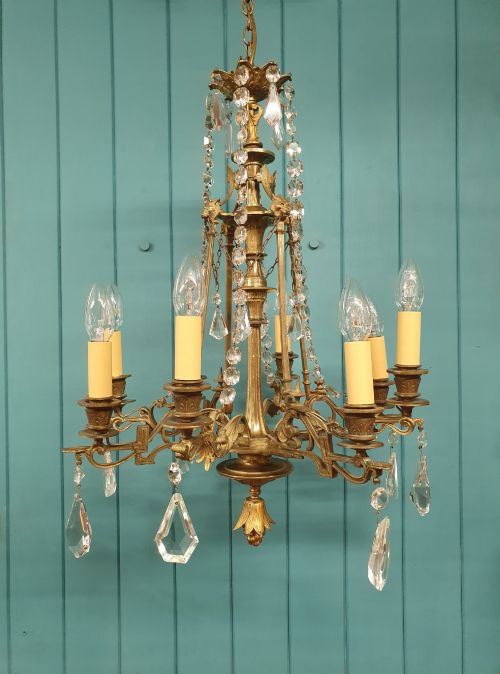
Many ornamental pieces combine these metallic elements with contrasting stones and glass. Inkwells and clock bases incorporate polished Sienna marble, while chandeliers pair cast brass frameworks with cut glass crystals.
Surface decoration often involves repoussé work, where sheets of brass are hammered from behind to raise floral or animal motifs in relief. Pierced brass techniques also appear on planters, creating openwork patterns across the body of the vessel.
Object forms span functional items including jardiniere planters, mantel clocks, and doorstops.
Assessing Quality and Execution
The distinction between ordinary production and superior work lies entirely in the crispness of the casting and the depth of the chasing. Finer examples retain sharp facial expressions on lion masks and cleanly articulated claws, whereas lesser pieces suffer from softened contours due to worn moulds.
Gilding technique divides the range significantly, particularly between genuine mercurial ormolu and later electroplated finishes. High-grade French ormolu displays a warm, subdued gold lustre that interacts richly with light, maintaining its tone across recessed areas.
The Gold Brass Lions Glossary
- Ormolu
- A technique of applying finely ground high-carat gold amalgam to a bronze or brass object. This historic process yields a distinctive golden surface finish that resists tarnishing.
- Repoussé
- A method of metalworking where a malleable sheet of brass or copper is hammered from the reverse side. This creates a raised design on the front.
- Jardiniere
- An ornamental pot or stand designed to hold plants or floral arrangements. They frequently feature cast handles or decorative animal mounts.
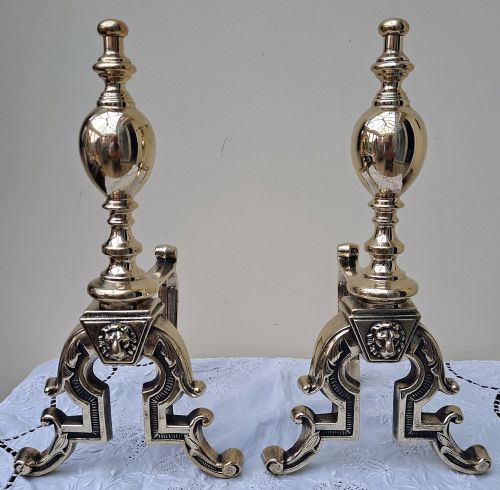
- Andirons
- Iron or brass supports used in a fireplace to hold burning logs. Elaborate pairs often incorporate decorative cast brass figures or animal terminals.
Gold Brass Lions: Frequently Asked Questions
How were these brass lions used?
Many of these items served practical household functions while displaying decorative motifs. Heavy cast figures operated as doorstops or door porters to keep heavy interior doors stationary.
Other objects combined utility with ornamentation, such as inkstands for writing desks, planters for greenery, and timepieces for mantelpieces.
What is French ormolu?
French ormolu refers to gilded bronze or brass created through a mercury amalgamation process popular in the eighteenth and nineteenth centuries. Artisans applied gold leaf and mercury to the metal base before heating it.
The intense heat vaporised the mercury, leaving a durable and luminous gold coating bonded to the underlying bronze or brass.
How do I date these pieces?
Dating relies upon stylistic markers and manufacturing techniques visible on the object. Nineteenth-century Victorian and French Empire pieces often exhibit heavy cast construction with hand-chased details.
Earlier items from the Regency period or around eighteen hundred typically feature neoclassical restraint, whereas pieces from nineteen hundred often show lighter mass production methods.
Where should I place them?
These decorative items suit spaces where metallic accents and classical motifs can be appreciated up close. Smaller pieces like inkstands or clocks sit well on desks, sideboards, or mantelpieces.
Larger items such as brass jardiniere planters and wall lights anchor larger rooms, functioning as focal points within period interiors.