



Gold Bracket Shelf
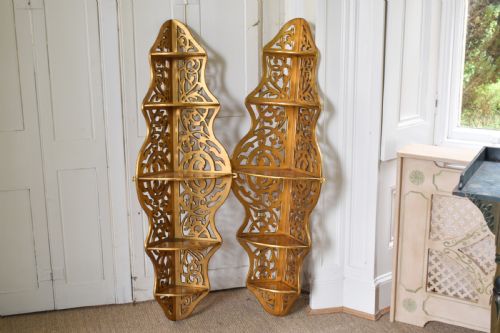
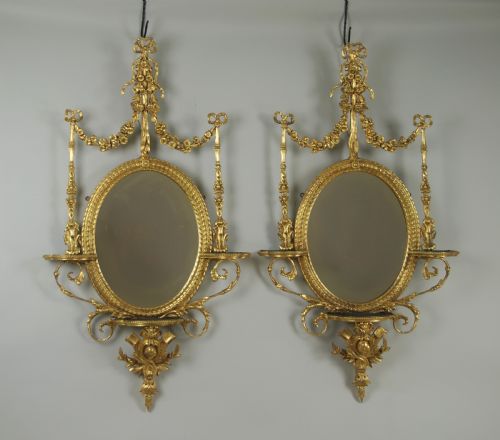
These gold bracket shelf pieces bring gilded display space to interior walls, combining ornate support with classical form.
Gold Bracket Shelf
A gold bracket shelf offers a compact surface mounted directly to the wall, designed to display small ornaments, clocks, or figures. These architectural elements serve as focal points in a room, raising decorative objects into the line of sight.
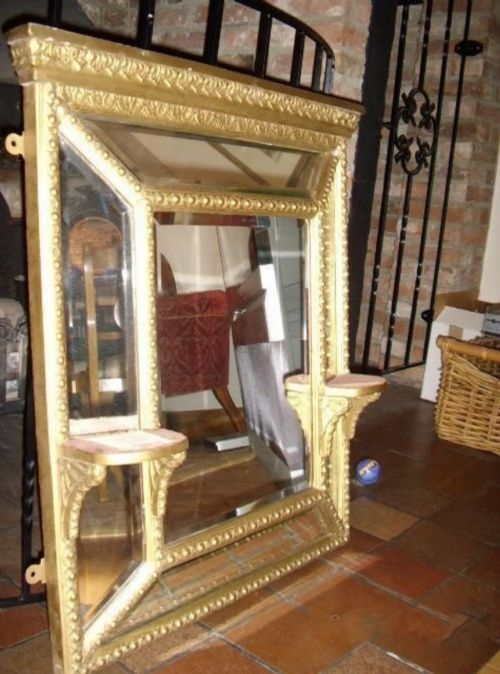
The pieces appearing on this page span the eighteenth through the twentieth centuries, with nineteenth-century examples forming the core of the selection. Victorian iterations frequently incorporate mirrors or carved supports alongside the shelf platform.
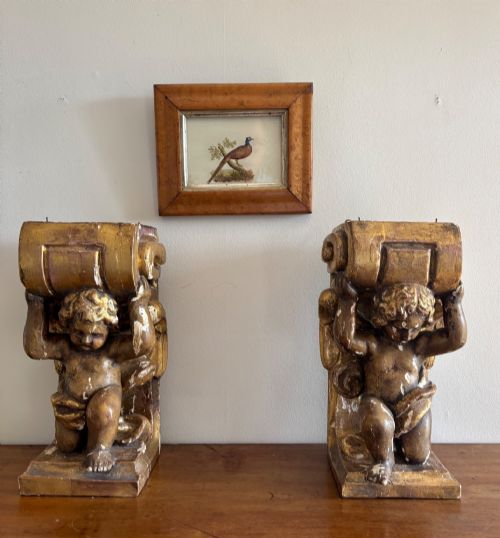
Origin points vary across the listings, showing distinct English, French, and Italian craft traditions. Buyers encounter single brackets, symmetrical pairs, and larger console forms that integrate a shelf surface.
Materials and construction methods
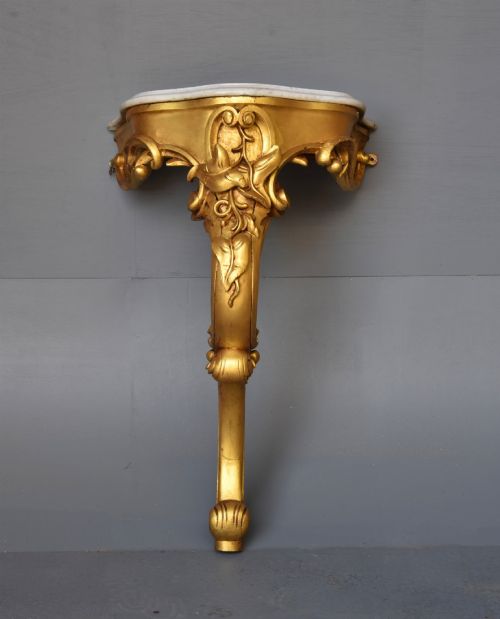
Carved wood provides the structural base for many items, shaped into scrolls, foliage, and figurative motifs before receiving a layer of gesso. Artisans then apply gold leaf or liquid gilding over the prepared surface to achieve a brilliant reflective finish.
Cast metals such as ormolu, bronze, and brass appear on clock brackets and heavier wall mounts, offering crisp detail through foundry work. Plaster and terracotta also serve as core materials in selected pieces, finished with surface gilding or paint.
Gold Bracket Shelf Retail Price Guide 2026
Typical asking prices for gold bracket shelf among the pieces listed under this phrase on Sellingantiques today, from the lower quarter to the upper quarter. They describe what is for sale here now, not the wider market.
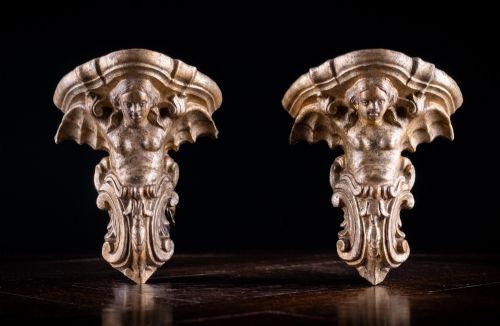
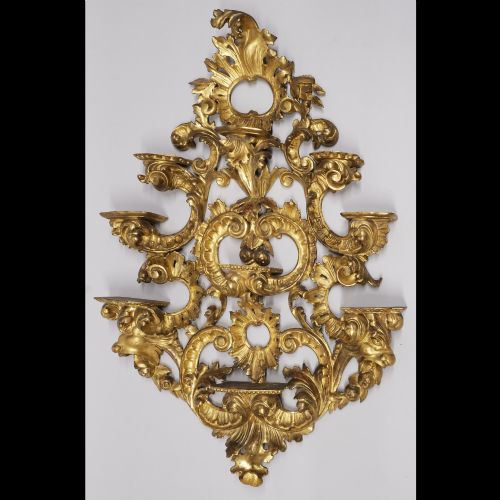
A winged siren holds up one bracket, reminding everyone that ancient myths make surprisingly good furniture.
Markers of distinction and make
Depth and sharpness of the carved detail separate standard production from superior work. Hand-carved wooden acanthus leaves and figural elements show crisp undercut edges and individualized chisel marks, whereas massed composition ornament appears softer.
The integrity of the gilded surface dictates the visual impact of the piece. Intact gold leaf with subtle burnished highlights indicates careful preservation and superior original application, while heavy overpainting flattens the underlying relief.
Strahan of Dublin·Henri Dasson
The Gold Bracket Shelf Glossary
- Giltwood
- Wood that has been coated with gold leaf. This finish creates a luminous metallic surface across carved architectural elements and furniture.
- Gesso
- A plaster mixture applied to wood surfaces as a preparation for gilding. It provides a smooth base that carvers can tool into fine details before leaf application.
- Ormolu
- Finely ground high-carat gold mercury-gilded to a bronze object. This French technique produces a rich golden lustre on decorative mounts and clock cases.
- Console
- A side table or bracket supported by wall-fixed legs or scrolls. These items project outward from the wall surface to hold ornaments or mirrors.
- Cartouche
- An ornamental tablet or panel resembling a rolled-up scroll. This motif frequently centres the apron of a wall bracket or mirror frame.
Gold Bracket Shelf: Frequently Asked Questions
What is a gold bracket shelf used for?
These shelves project from the wall to hold small decorative objects, pocket watches, or urns. They lift items off flat furniture surfaces to create vertical interest in a room.
Historically, they also served as decorative brackets beneath overmantel mirrors or clocks, extending the functional display area of the wall.
How do I hang a wall bracket safely?
Wall brackets require secure fixing into wall studs or solid masonry using appropriate screws and rawl plugs. The weight of the gilded wood or metal demands robust load-bearing support.
Professional installation is recommended for heavier carved wooden or cast bronze pieces to prevent detachment under load.
How do I tell Victorian pieces apart from earlier ones?
Nineteenth-century items often draw heavily on earlier Rococo or Neoclassical revivals, utilising machine-prepared gesso or denser timber cores. Eighteenth-century examples display hand-wrought joinery characteristics and deeper, more organic carving rhythms.
Examination of the backplates, fixings, and underlying wood grain helps confirm the manufacturing era.
How should I clean gilded wooden surfaces?
Dusting requires a very soft, dry brush or feather duster to avoid abrasion of the delicate gold leaf layer. Moisture and chemical cleaning agents must be avoided entirely.
Professional conservation assessment is necessary if the gesso or gilding shows signs of flaking or detachment.