



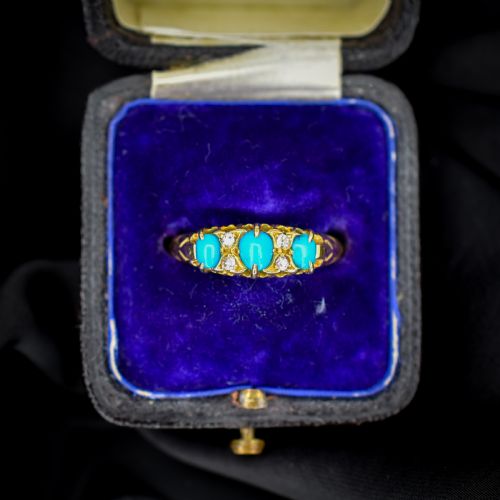
Gold Boat Ring
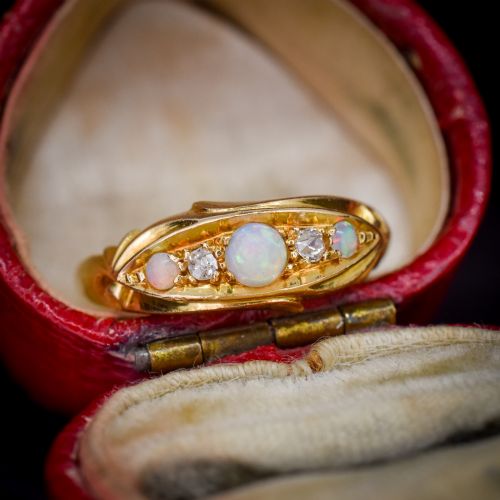
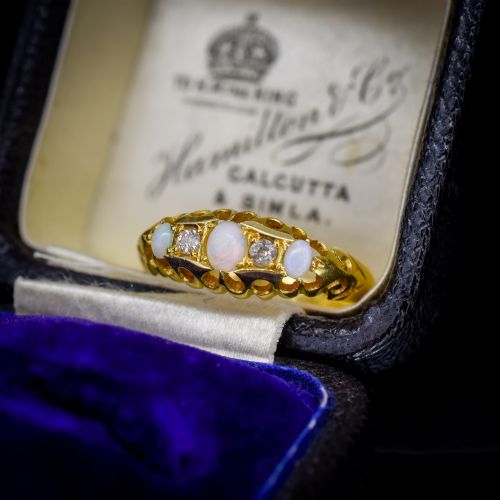
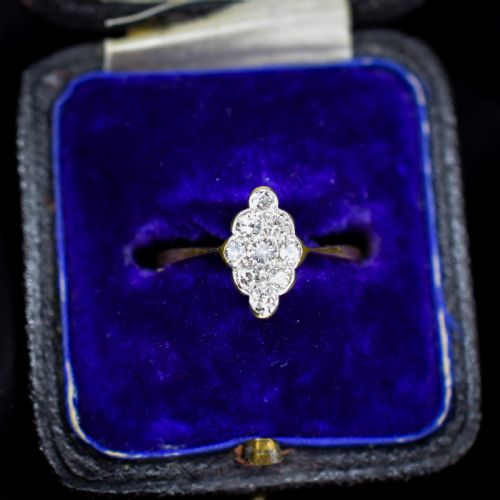
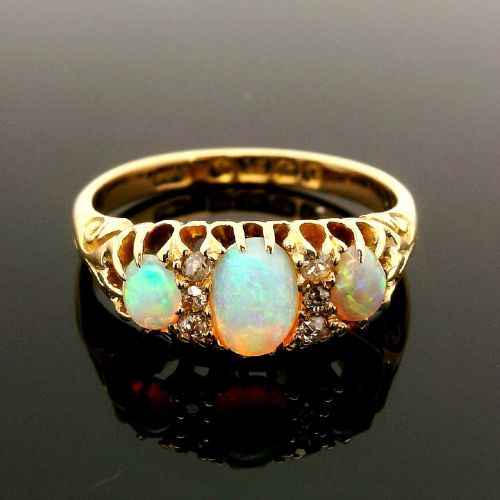
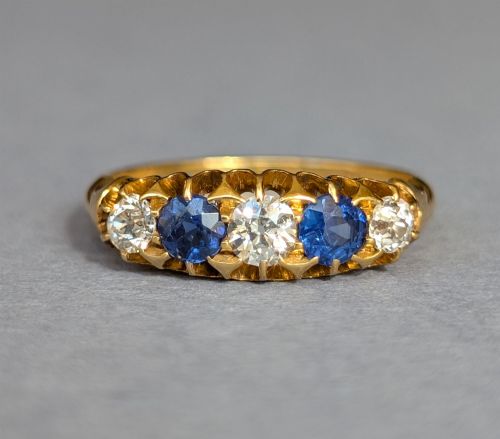
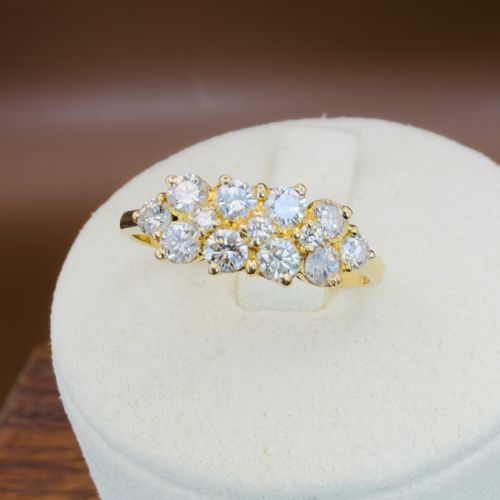
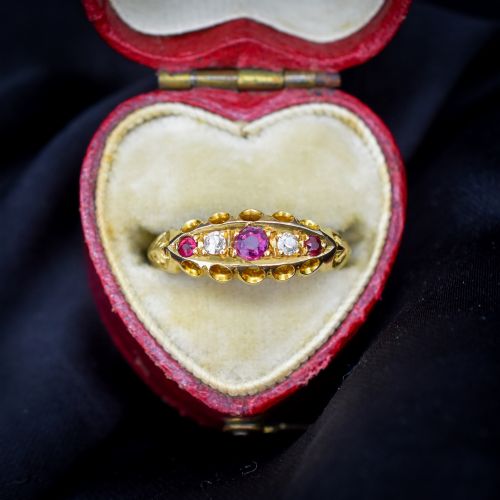
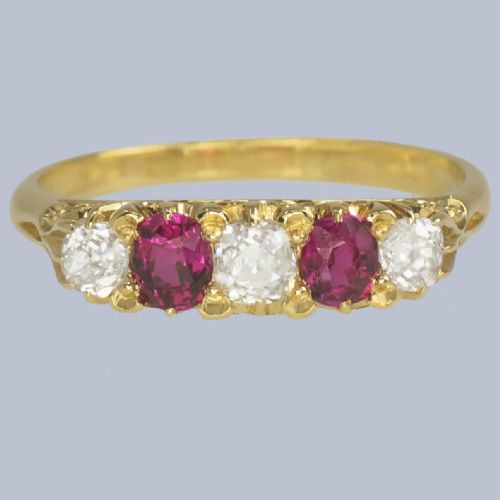
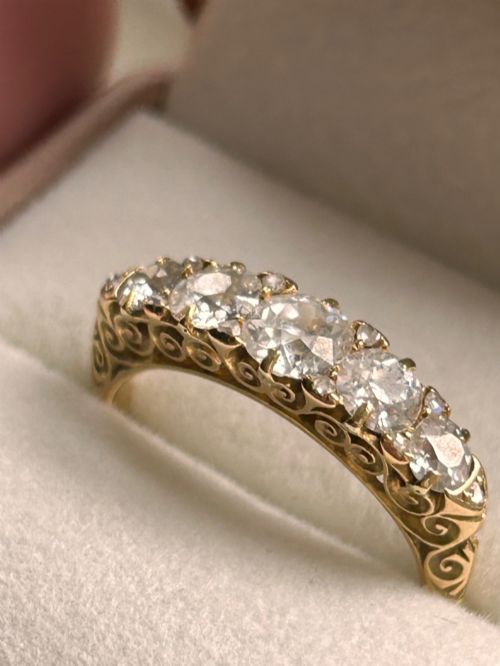
A gold boat ring brings together curved rows of gems in long, slender mountings spanning the finger from the late Victorian and Edwardian eras.
Gold Boat Ring
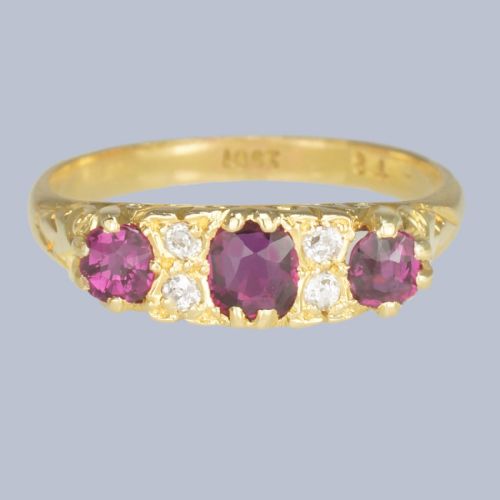
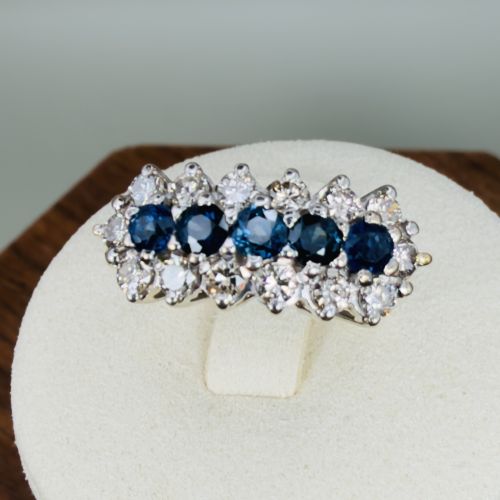
The selections recorded here highlight Victorian, Edwardian, and George V examples, where rows of diamonds, sapphires, rubies, or opals are set within eighteen-carat gold mountings.
Most pieces meeting this description date from the late nineteenth century through the early decades of the twentieth century, often bearing full British hallmarks from offices such as Chester and Birmingham.
How they were made
Goldsmiths worked primarily with eighteen-carat yellow gold and occasionally platinum to construct the elongated navette or boat-shaped settings that house the stones.
Gemstones including old cut diamonds, natural opals, sapphires, and rubies were secured in close-set clusters or graduated rows following the sweeping contours of the metal.
Listings draw heavily from the Victorian and Edwardian eras, utilising eighteen-carat gold, old cut diamonds, sapphires, and rubies.
What varies in quality
The distinction between tiers rests upon the choice and match of the central gemstones, particularly the weight and cut of old mine diamonds or the vibrancy of untreated rubies and sapphires.
Subtlety of proportion in the metalwork and the clarity of maker marks and provincial hallmarks distinguish standard production from finer workshop output.
The Gold Boat Ring Glossary
- Boat ring
- A finger ring featuring a curved, boat-shaped mounting that tapers towards the ends. This sweeping silhouette accommodates multiple stones in a graded row.
- Navette
- A boat-shaped or eye-shaped cluster setting originating in the eighteenth century. The term shares a French root with small little ships.
- Old cut
- A diamond cut characterised by a smaller table, higher crown, and open culet, fashioned by hand before modern machinery. These stones display distinctive broad flash patterns under candlelight.
- Hallmark
- An official stamp struck into precious metals to guarantee purity and origin. British marks typically include assay office symbols, date letters, and standard fineness marks.
Gold Boat Ring: Frequently Asked Questions
How do I wear a boat ring?
These pieces sit flat along the finger, making them comfortable for daily wear alongside plain bands. Their elongated shape creates a distinct horizontal line on the hand.
Because the mounting tapers at the shoulders, they pair easily with stacking rings from the same periods without catching on fabrics.
What stones appear in these rings?
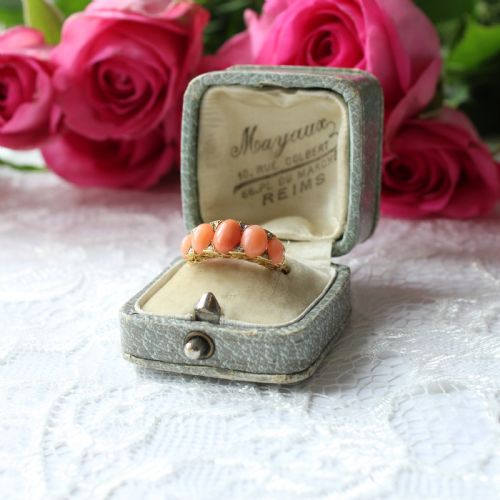
Diamonds form the core of most designs, frequently paired with deep blue sapphires or rich red rubies. Natural opals and turquoise also feature prominently in Victorian and Edwardian examples.
The metal ground is almost exclusively eighteen-carat yellow gold, sometimes paired with platinum heads to brighten the diamond settings.
How do I date a gold boat ring?
British hallmarks stamped inside the shank provide the exact year of assay and the town office where the metal was tested. Chester and Birmingham marks appear frequently across the surviving records.
Stylistic shifts, such as the transition from heavy Victorian goldwork to lighter Edwardian open wirework, offer further clues to the decade of manufacture.
Are these rings fragile?
Constructed from solid eighteen-carat gold, these mountings offer robust housing for the stones they carry. Regular checks by a jeweller keep the claw and bezel settings secure.
Care should be taken with softer organic gems like opal when exposed to harsh chemicals or ultrasonic cleaning.