



Gold and Blue Clock
A gold and blue clock brings together gleaming metallic framing and rich ceramic or enamel panels to anchor a mantelpiece or desk.
Gold and Blue Clock
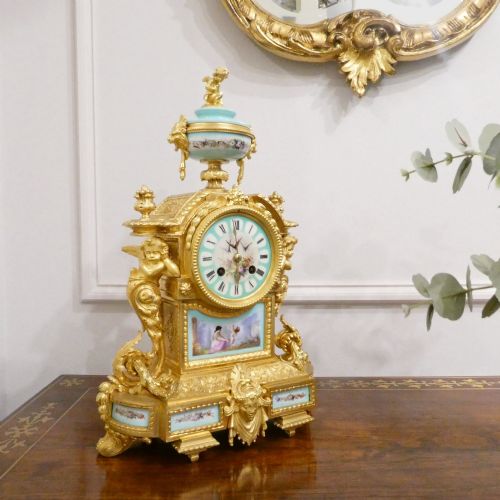
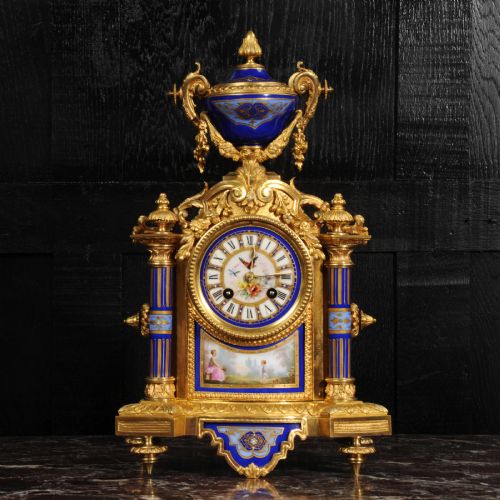
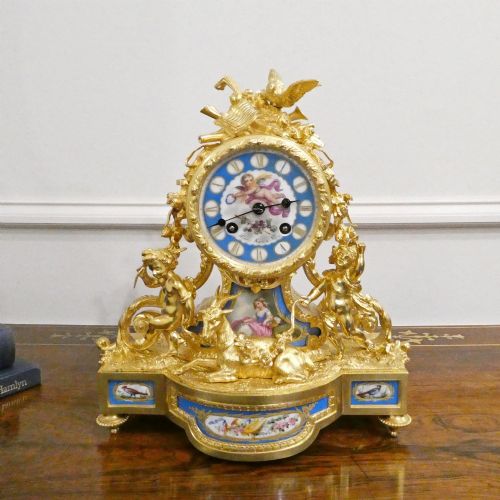
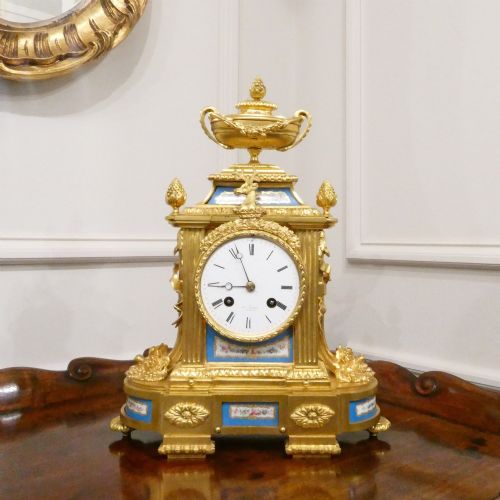
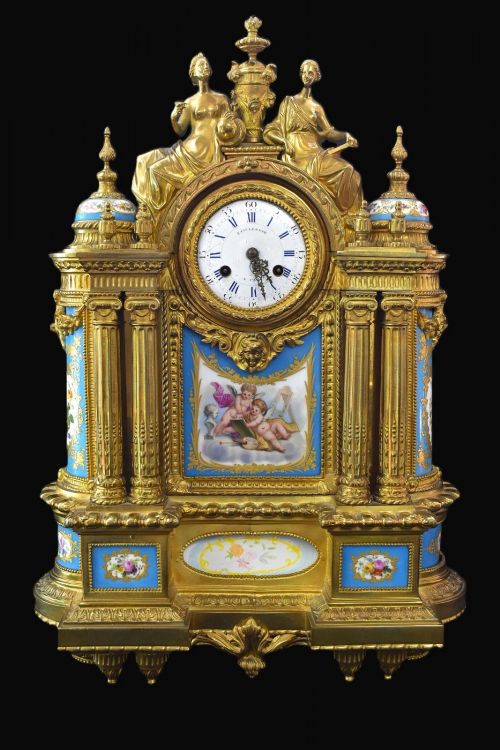
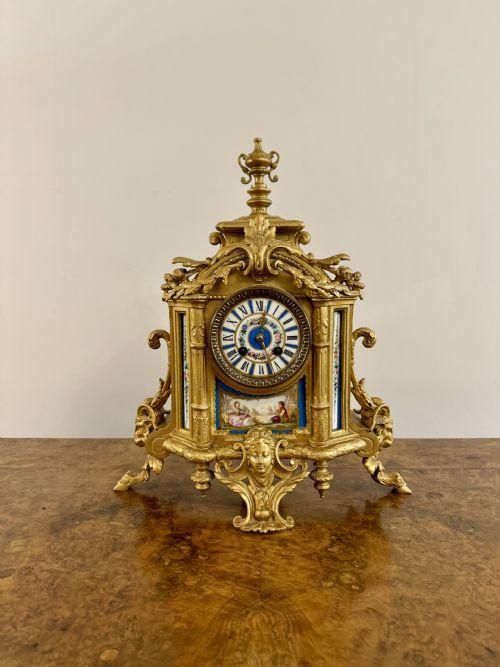
When you search for a gold and blue clock, you encounter French mantel clocks and smaller bedside pieces dating across the nineteenth century. These items take forms such as drum head models, cartel clocks, and architectural cases featuring ceramic plaques.
The versions most common on this page stem from the Victorian era and the decades around eighteen eighty. Makers from this period drew heavily on earlier French design repertoires like Louis XVI Revival and Napoleon III styles.
Alongside French mantelpieces, variations include Swiss miniature strut clocks and English wall dials with dark blue and gold faces. The decorative language relies on combining gilt surfaces with painted or enamelled blue details.
Materials and construction methods
Makers constructed these clocks using cast bronze, brass, or gilt metal finished with mercury or electroplated gilding to create the characteristic golden sheen. Ormolu and gilt bronze components were frequently chased by hand to sharpen the decorative details after casting.
Porcelain plaques and dials, often associated with Sevres factories, provide the contrasting blue elements through hand-painted floral or figural cobalt decoration. Enamel work, including champleve techniques, also adds vibrant blue accents to smaller brass and gilt frames.
Gold and Blue Clock Retail Price Guide 2026
Typical asking prices for gold and blue clock among the pieces listed under this phrase on Sellingantiques today, from the lower quarter to the upper quarter. They describe what is for sale here now, not the wider market.
Listings feature porcelain, gilt bronze, enamel, ormolu, glass, brass, gilt metal, and gilt brass across the nineteenth century.
Assessing craftsmanship and execution
Quality in these pieces rests upon the crispness of the bronze or ormolu casting and the depth of the subsequent chasing. Finer examples display sharp relief in ornamental motifs and cherubs, whereas simpler items show softer, cast-as-found surfaces.
The standard of painting on the porcelain plaques and enamel dials separates standard production from superior output. Hand-painted ceramic elements with finely detailed cobalt panels and precise gilding indicate higher workshop standards.
Japy Freres·Henry Marc·Etienne Lenoir·Leroy and Fils·JP Delettrez
The Gold and Blue Clock Glossary
- Ormolu
- Gilt bronze produced by applying a mercury and gold amalgam to a bronze base and heating it to drive off the mercury. This technique creates a durable, rich golden surface characteristic of nineteenth-century French luxury goods.
- Champleve
- An enamelling technique where troughs or cells are hollowed out in the metal surface and filled with vitreous enamel paste before firing. The resulting blue enamel sits flush with the surrounding metal borders.
- Cartel clock
- A wall-mounted clock housed in an ornate, asymmetrical frame typically made of gilt bronze or ormolu. These decorative timepieces became popular during the Rococo revival periods.
- Drum head clock
- A clock featuring a circular dial case mounted atop a sculptural or architectural base. This silhouette frequently appears in nineteenth-century French porcelain-mounted designs.
- Fusee
- A conical pulley used in clock movements to maintain an even pull on the gear train as the mainspring unwinds. This mechanism improves timekeeping accuracy across the power reserve.
Gold and Blue Clock: Frequently Asked Questions
Where were most of these clocks made?
The majority of the pieces originate from French workshops and factories operating during the nineteenth century. Makers in Paris produced elaborate gilt bronze and porcelain-mounted designs for an international clientele.
Alongside French production, Swiss workshops created miniature travel and easel pieces, while English makers contributed regional wall dials with painted faces.
How do I identify a Sevres plaque?
Sevres-style porcelain plaques on these clocks feature rich cobalt blue grounds often decorated with hand-painted pastoral scenes or portraits. They are framed directly within the gilt metal or bronze cases.
While some bear factory marks, many nineteenth-century revival pieces utilise porcelain painted in the manner of Sevres rather than originating from the royal French manufactory itself.
What is champleve enamel?
Champleve enamel involves carving recesses into a brass or bronze foundation and filling those hollows with powdered glass paste. The piece is then fired until the enamel melts into a smooth, coloured layer.
In these clocks, this technique frequently produces rich blue borders and geometric patterns surrounding the dial or framing the outer case.
How should I care for an ormolu finish?
Gilt metal and ormolu surfaces require gentle dusting with a soft, dry brush to prevent the accumulation of dirt in recessed chasing. Avoid liquid cleaners, polishes, or abrasive cloths that can strip the delicate gold layer.
Maintaining a stable indoor environment away from direct sunlight and dampness protects both the metal gilding and the underlying ceramic components.