
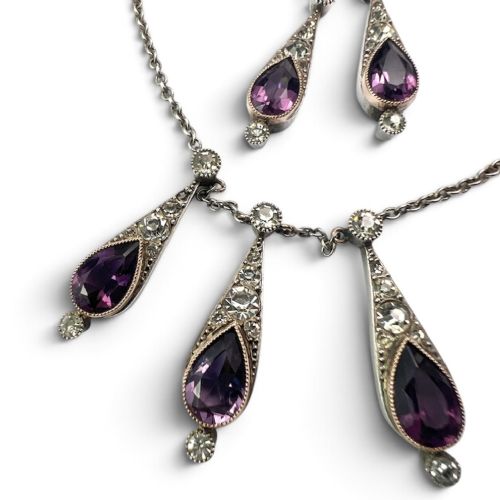
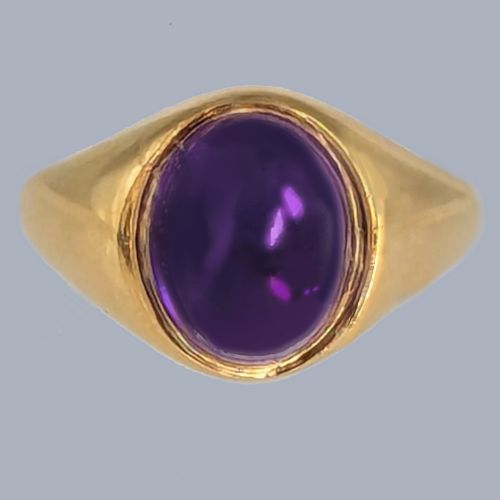
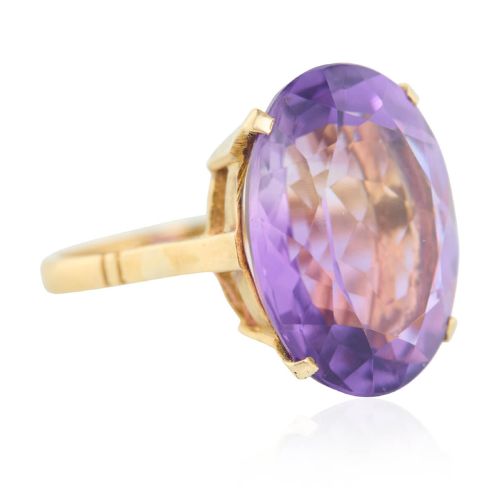
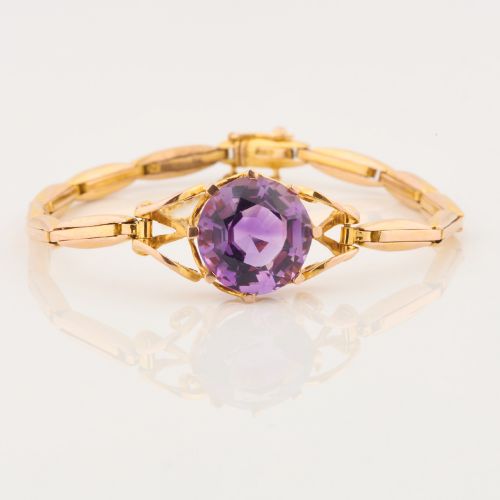
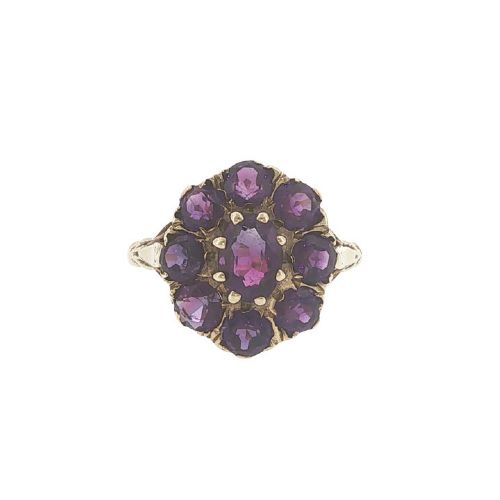
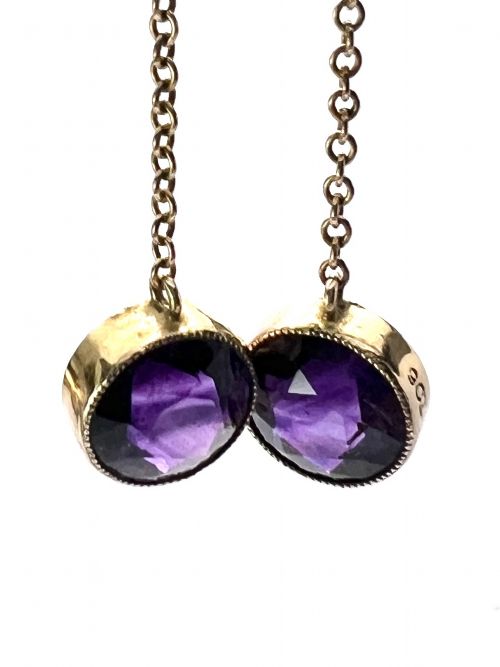


Gold Amethyst Jewellery Set
A gold amethyst jewellery set brings together warm precious metals and deep purple quartz in coordinated pieces that collectors prize for period elegance.
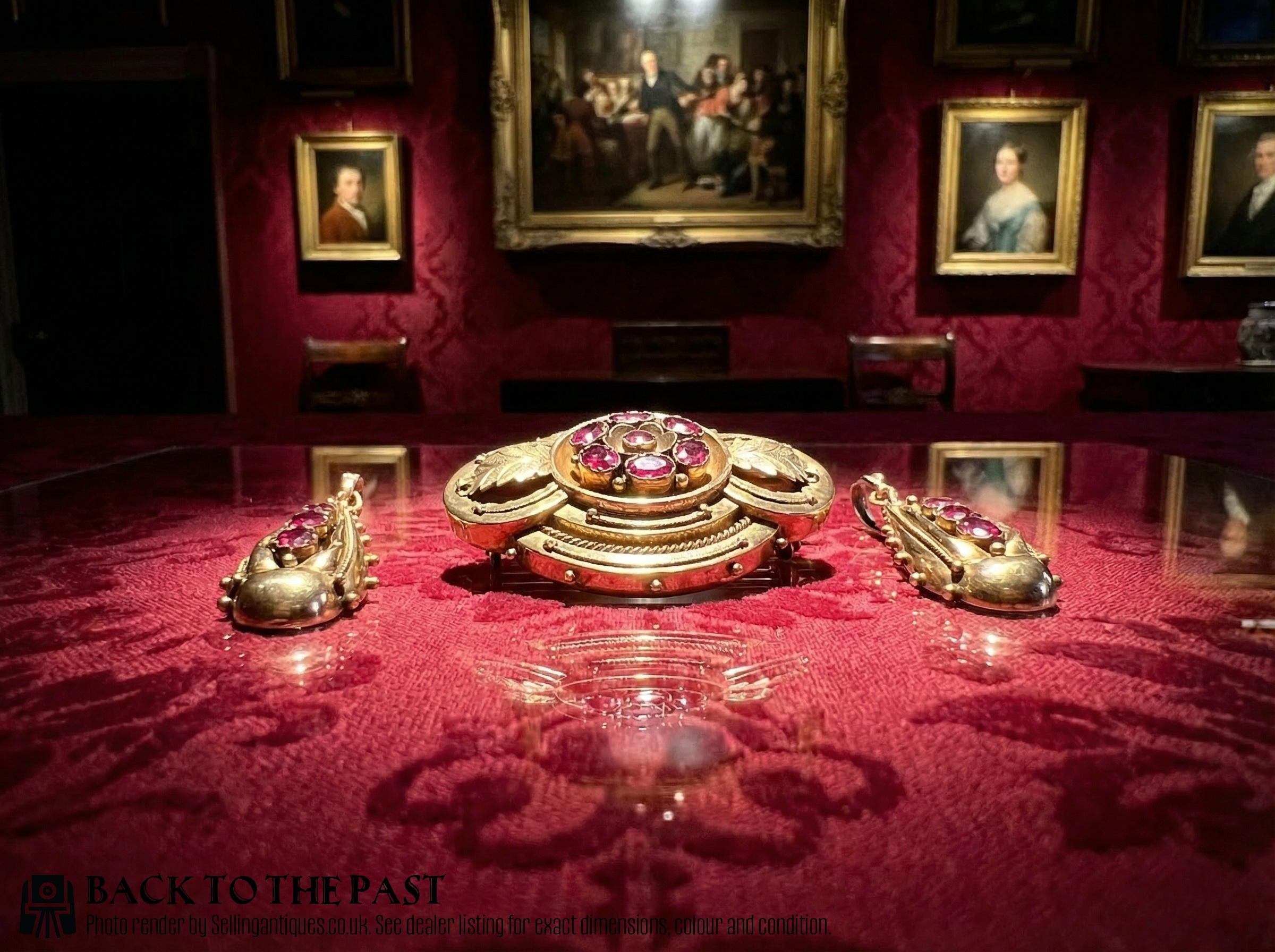
Gold Amethyst Jewellery Set
A gold amethyst jewellery set gathers matched or complementary items like earrings, necklaces, brooches and rings into a single cohesive grouping.
The pieces appearing on this page span several distinct historical eras, ranging from early nineteenth-century work through Victorian and Edwardian examples to mid-century modern designs.
Buyers most frequently encounter matching suites of earrings and brooches or coordinated necklaces from the Victorian and Edwardian periods alongside later mid-century rings.
Materials and construction
Goldsmiths worked primarily in various purities of yellow gold, ranging from nine carat up to eighteen carat, alongside occasional silver settings and white gold.
Stonemasons and jewellers cut amethysts into oval, cabochon, heart and solitaire shapes, often pairing the purple quartz with accent pearls, diamonds and paste stones.
Craftsmen secured these gems within claw settings, halo surrounds and cluster arrangements, integrating hinged elements for bangles and secure fastenings for drop earrings.
Distinctions in craftsmanship
The standard of a set rests upon the depth of colour and clarity of the amethyst stones, alongside the weight and substantial feel of the gold mountings.
Finer examples display careful matching of stone saturation across multiple items in a suite, whereas simpler pieces show greater variation between individual stones.
The delicacy of wirework, the precision of claw settings and the presence of clear hallmarks distinguish master workshops from standard commercial production.
The Gold Amethyst Jewellery Set Glossary
- Demi-parure
- A matched set of jewellery consisting of two or three pieces, typically comprising earrings and a brooch or necklace. This smaller grouping offers a coordinated look without the full commitment of a complete parure.
- Cabochon
- A gemstone shaped and polished with a smooth, rounded convex surface rather than faceted edges. This cutting style highlights the deep purple hues of the quartz.
- Cluster ring
- A ring featuring a central gemstone surrounded by a border of smaller accent stones. In these pieces, a central amethyst frequently sits encircled by pearls or diamonds.
- Paste
- Hand-cut glass or lead crystal used to simulate precious gemstones. Historical pieces often incorporate paste alongside genuine stones.
- Bangle
- A rigid bracelet that slips over the hand or fastens with a hinge and clasp. Many period examples incorporate decorative gemstone settings across the upper band.
Gold Amethyst Jewellery Set: Frequently Asked Questions
What items belong in a jewellery set?
A set typically includes matching or coordinating pieces such as earrings, brooches, necklaces and rings designed to be worn together.
Period suites often paired drop earrings with a central brooch or necklace pendant sharing identical gemstone cuts.
How do I date a gold setting?
Dating relies on hallmarks, metal purities, stone-cutting styles and overall design motifs characteristic of specific eras like the Victorian or Edwardian periods.
Heavier yellow gold weights and specific clasp types also offer strong clues to a piece's manufacturing decade.
Are amethysts natural in antique jewellery?
Natural quartz forms the vast majority of purple stones found in nineteenth and early twentieth-century pieces.
Jewellers selected these stones for their natural colour variation and durability within gold rings and brooches.
How should I care for my set?
Gentle cleaning with warm soapy water and a soft brush maintains the polish of both the gold mountings and the quartz stones.
Storing pieces individually prevents harder diamonds or gold edges from scratching the softer amethyst surfaces.