

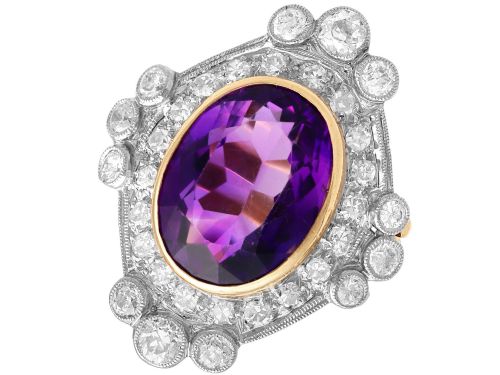
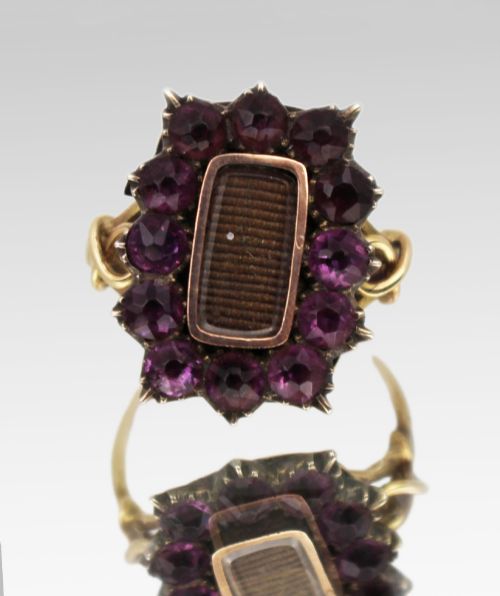
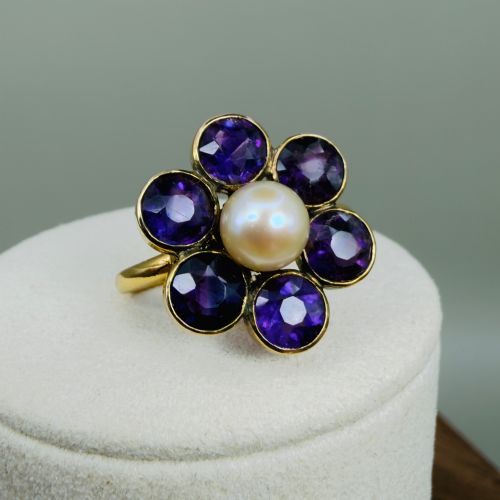


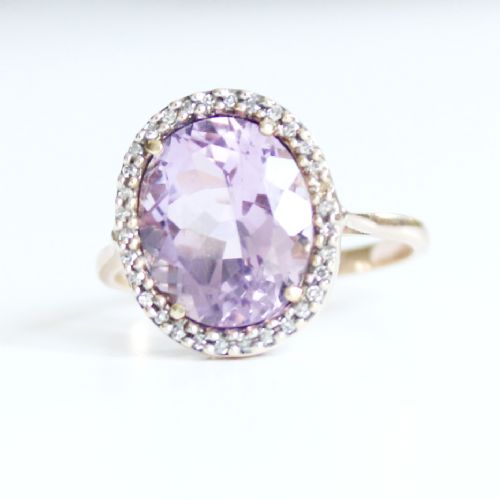

Gold Amethyst Halo Ring
These gold amethyst halo ring examples bring together vibrant purple gems and bright borders of diamonds or pearls in lasting designs.
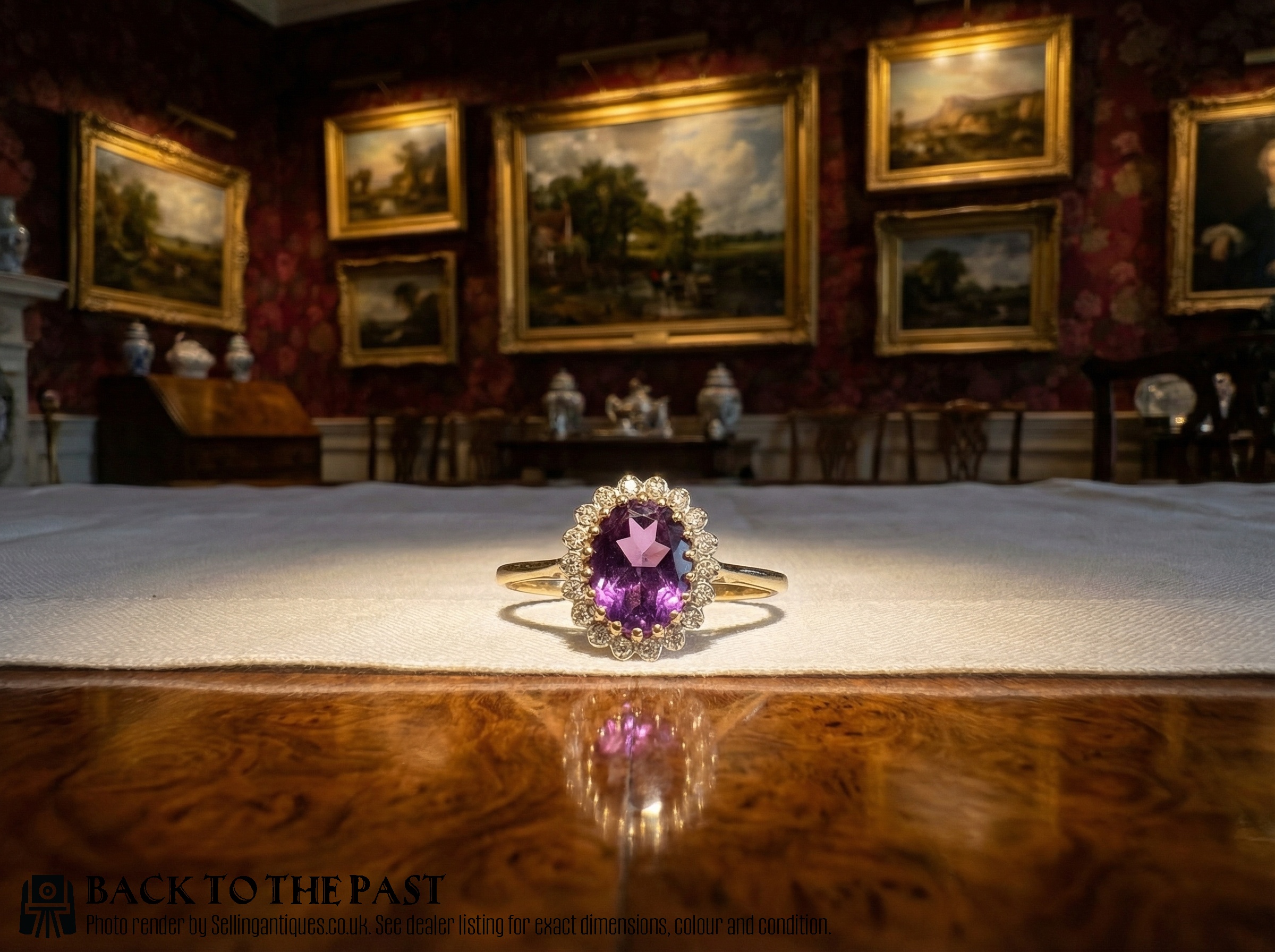
Gold Amethyst Halo Ring
A gold amethyst halo ring centres on a purple stone surrounded by a border of smaller gems, typically diamonds or pearls. You will frequently encounter Victorian and Edwardian examples on this page, alongside mid-century pieces from the nineteen fifties and sixties.
The cluster format sets a central amethyst against contrasting white gems or lustrous pearls. Earlier pieces often utilise rose gold or yellow gold, while later decades introduce varied carat weights and brighter stone arrangements.
How they were made
Goldsmiths shaped these rings from nine carat and eighteen carat gold, sometimes employing warm rose gold alloys for the band and setting. Stones were secured by hand, with emerald cuts and round facets set into close galleries.
Surrounding borders rely on delicate seed pearls or small diamonds arranged closely around the central purple stone. Hallmarks and hand-carving frequently mark the inner shanks of older pieces.
Gold Amethyst Halo Ring Retail Price Guide 2026
Typical asking prices for gold amethyst halo ring among the pieces listed under this phrase on Sellingantiques today, from the lower quarter to the upper quarter. They describe what is for sale here now, not the wider market.
The listings span from Georgian and Victorian eras through Edwardian work into the mid-twentieth century.
What varies in quality
The depth of colour in the central amethyst and the matching quality of the surrounding diamonds or pearls determine the distinction between ordinary pieces and finer examples. Uniformity in the size and lustre of the border stones separates standard workshop production from superior work.
The crispness of the gold setting work and the preservation of original claw or bezel details also shape the overall merit of the ring. Heavier gauge shanks indicate sturdier construction across surviving nineteenth century and twentieth century pieces.
The Gold Amethyst Halo Ring Glossary
- Halo ring
- A finger ornament featuring a central gemstone encircled by a concentric border of smaller stones. This layout magnifies the visual impact of the primary gem.
- Cluster
- An arrangement where multiple smaller stones group tightly around a larger focal stone. In these listings, pearls or diamonds frequently form this secondary ring.
- Seed pearl
- A very small, naturally formed pearl, often pierced and threaded or set individually. Edwardian and Victorian jewellers used them extensively to outline coloured stones.
- Rose gold
- A gold alloy containing copper that imparts a distinct reddish or pinkish hue. It appears frequently in nineteenth century clustering work.
- Emerald cut
- A rectangular gemstone cut with stepped facets and cropped corners. This geometry highlights the clarity and transparent depth of the purple quartz.
Gold Amethyst Halo Ring: Frequently Asked Questions
How do I date a gold amethyst halo ring?
Dating relies on stylistic clues such as the cut of the stones, the colour of the metal alloy, and any accompanying hallmarks stamped inside the band. Victorian and Edwardian pieces often display distinct rose gold tones and delicate seed pearl borders.
Mid-twentieth century examples from the fifties and sixties tend to feature brighter yellow gold or alternative claw settings. Comparing these physical traits against documented period styles provides a reliable timeline.
What is the difference between a cluster and a halo?
While both terms describe a central stone surrounded by smaller gems, a halo specifically denotes an even, uniform border that mirrors the shape of the middle stone. Cluster is a broader term that can include less symmetrical stone groupings.
In these listings, the terms often overlap as jewellers arranged diamonds or pearls around a central amethyst. Examining the geometric symmetry reveals whether the border forms a true halo.
Are these rings suitable for everyday wear?
Amethyst is a durable quartz suitable for daily use, provided the ring receives sensible care during active tasks. Settings involving softer pearls require greater caution to protect the delicate nacre from knocks and harsh chemicals.
Checking the security of the claws ensures the central stone and its border remain firmly anchored over time. Regular gentle cleaning maintains the brightness of both the gold and the purple quartz.
How should I clean my antique ring?
Warm soapy water and a very soft brush will safely lift daily oils from the gold and the amethyst facets. Submerging pieces with pearl borders should be avoided, as moisture can weaken the traditional adhesives or thread used historically.
Patting the ring dry with a lint-free cloth preserves the polish of the metal. Professional jewellers can inspect older settings periodically to confirm the stones stay secure.