

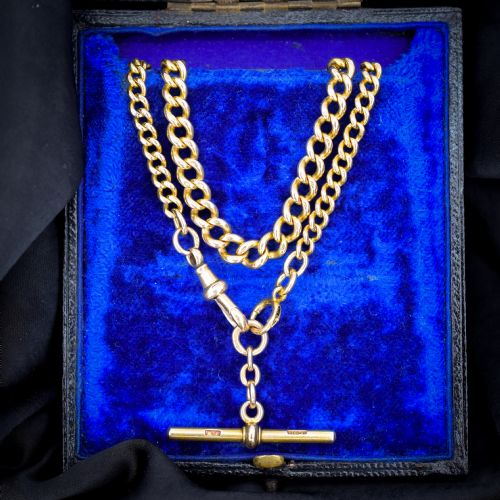


Gold Albert Clip Chain
These gold albert clip chain pieces combine historical utility with enduring design, offering versatile links equipped with reliable spring clasps.
Gold Albert Clip Chain
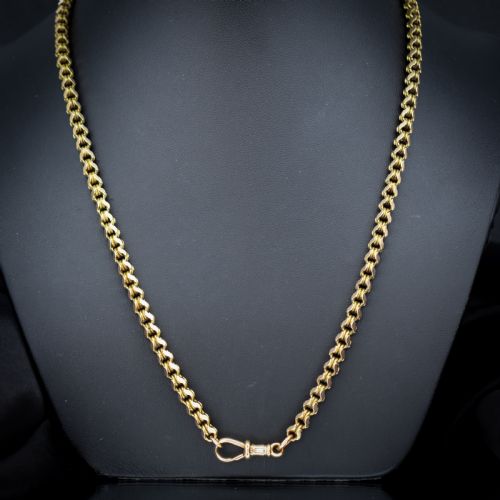
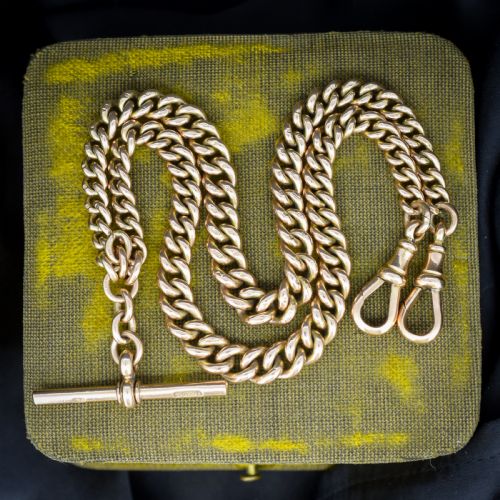
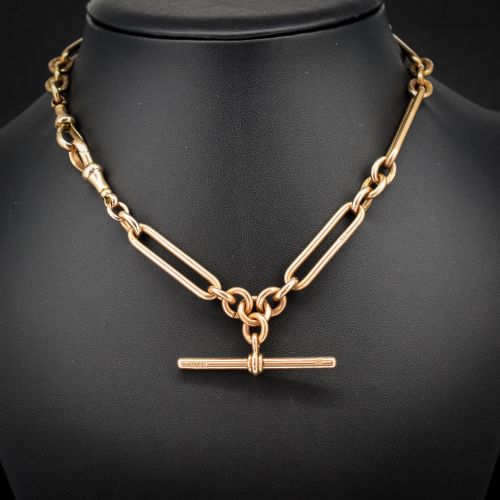
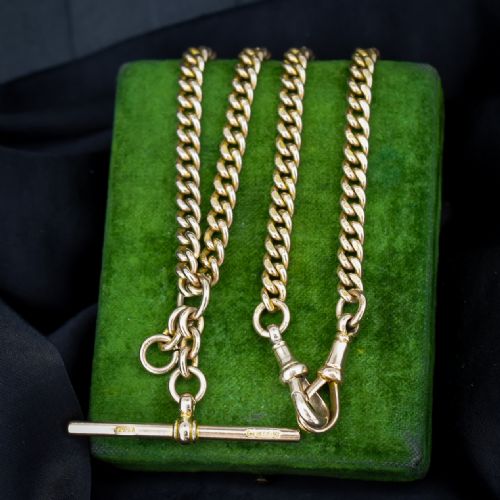
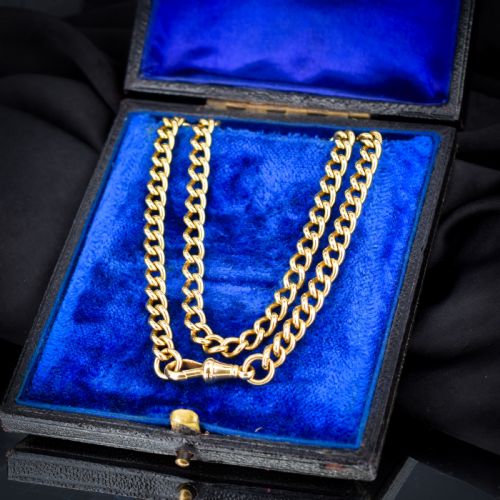
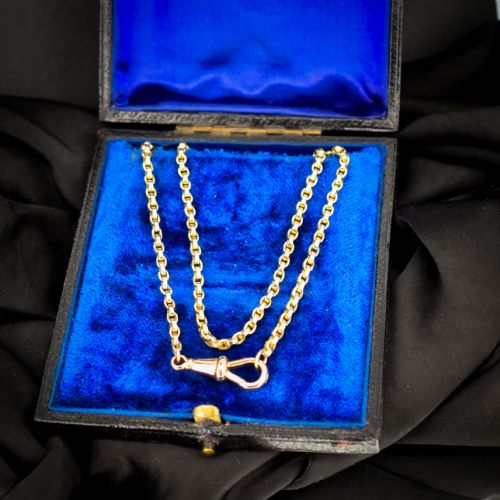
A gold albert clip chain serves primarily as a watch chain or necklace, incorporating sturdy spring clips originally designed to secure pocket timepieces.
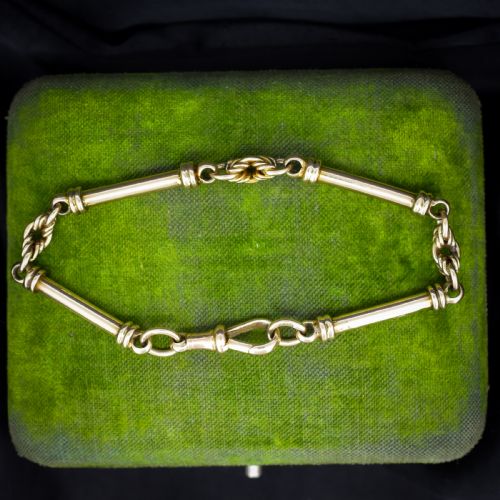
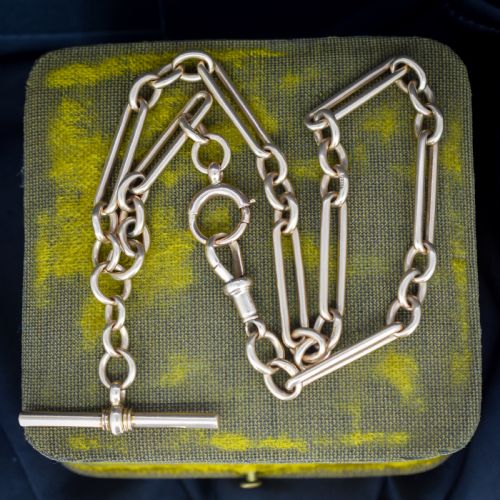
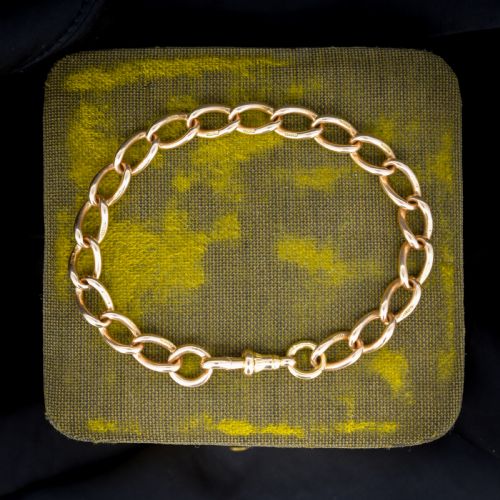
Buyers frequently encounter Victorian and Edwardian examples featuring curb, fancy, trombone, or paperclip links fashioned in various gold purities.
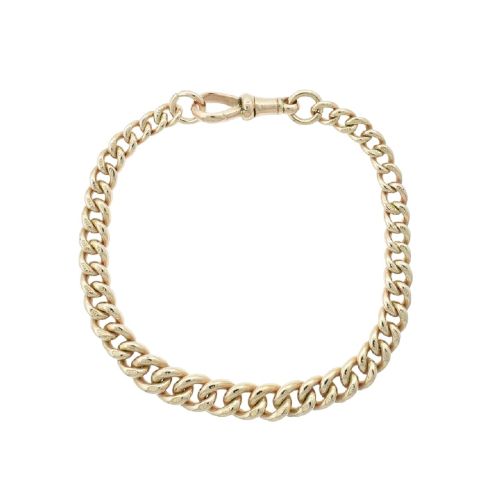
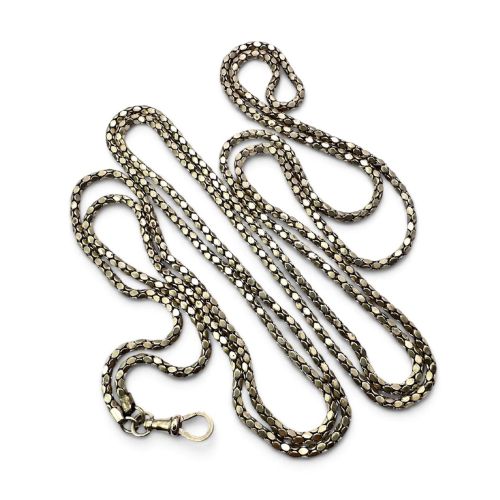
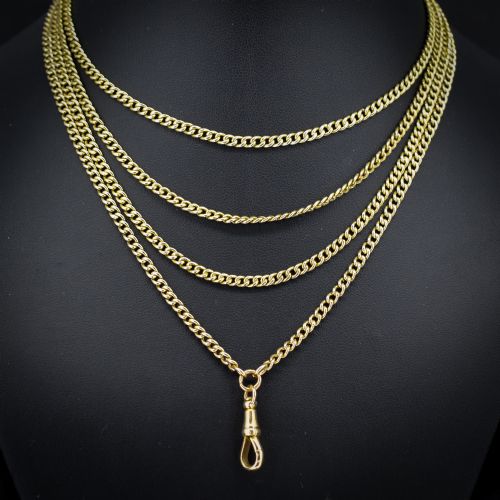
These items manifest as bracelets, shorter neck chains, or exceptionally long guard chains capable of doubling around the neck.
How they were made
Craftsmen utilised 9ct, 15ct, and 18ct gold in yellow, rose, and white varieties to fabricate individual links and secure end fittings.
Links were individually formed, soldered, and assembled into substantial patterns such as graduated curbs, hollow or solid tubes, and intricate fancy links.
Certain long chains stretch past fifty inches, providing enough gold length to span a tall chimney sweep from top to toe.
What varies in quality
The standard of these pieces depends upon the weight of the gold utilised and whether the links are solid or hollow.
Superior examples retain crisp detail in fancy links and secure, fully functioning spring mechanisms within the dog clips and swivel clasps.
The Gold Albert Clip Chain Glossary
- Dog clip
- A spring-loaded clasp with a lever mechanism, historically used to attach pocket watches to albert chains. It provides a secure fastening for modern necklaces and bracelets.
- T-bar
- A horizontal metal bar attached to a short length of chain, designed to pass through a waistcoat buttonhole. It remains a decorative terminal feature on many antique pieces.
- Graduated link
- A pattern where links increase in size progressively toward the centre of the chain. This construction technique creates visual balance and weight distribution.
- Longuard chain
- An exceptionally long necklace designed to be worn doubled or looped. They frequently incorporate multiple dog clips and slide components.
- Trombone link
- A distinctive link shape resembling a musical instrument's slide, featuring elongated rectangular sections connected by smaller circular rings.
Gold Albert Clip Chain: Frequently Asked Questions
What is an albert clip chain?
An albert clip chain is a historic piece of jewellery originally created to anchor pocket watches to waistcoats using a distinctive spring clip. Today, people wear these versatile gold chains as necklaces or wrap them as bracelets.
They appear in various link styles and gold purities, reflecting the standards of the nineteenth and early twentieth centuries.
How do I wear a longuard chain?
Longuard chains measure significantly longer than standard necklaces, allowing you to double them around your neck for a layered appearance. You can attach dog clips to each other or to decorative pendants.
This configuration offers multiple styling options depending on the desired length and weight distribution.
What is the difference between curb and fancy links?
Curb links feature interlocking, uniform, or graduated links that lie flat against the skin. They offer a classic, robust appearance suited for daily wear.
Fancy links incorporate decorative shapes, such as trombone, love knot, or paperclip motifs, providing a more ornate visual texture.
How do I date these chains?
Dating relies on stylistic markers, hallmarks stamped on the metal, and construction methods typical of the Victorian and Edwardian eras. Hallmarks often reveal the assay office and year of manufacture.
Form variations, such as hollow tubular bars or specific clasp types, also help narrow the period of origin.