


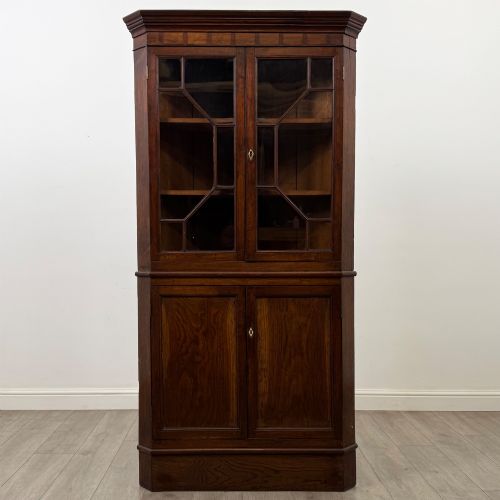
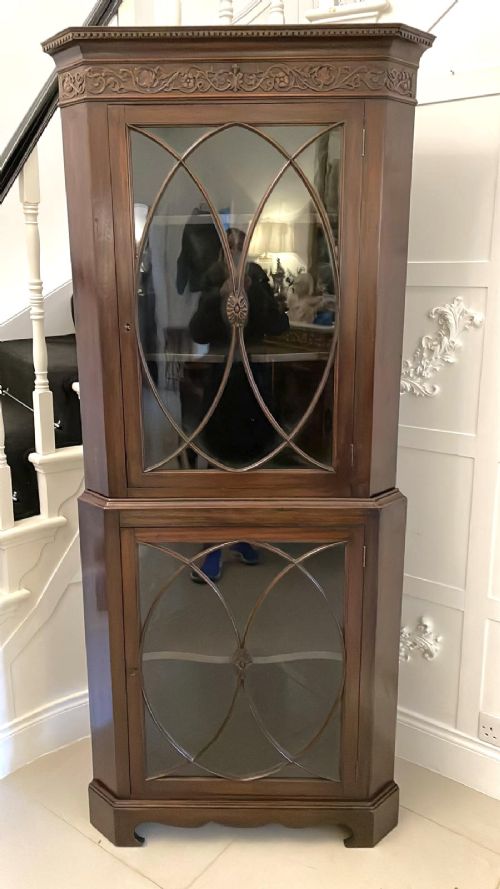
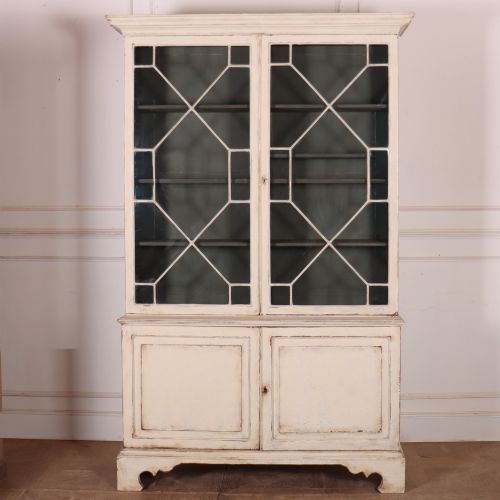
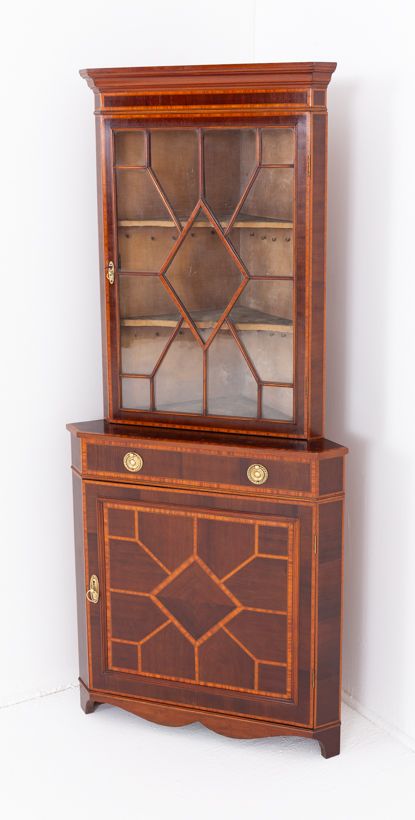
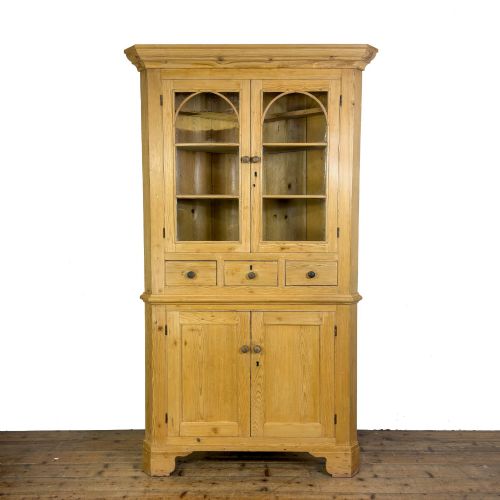


Glazed Tier Stand
These glazed tier stand pieces offer display and storage, bringing period timber and glass into a room with genuine utility.
Glazed Tier Stand
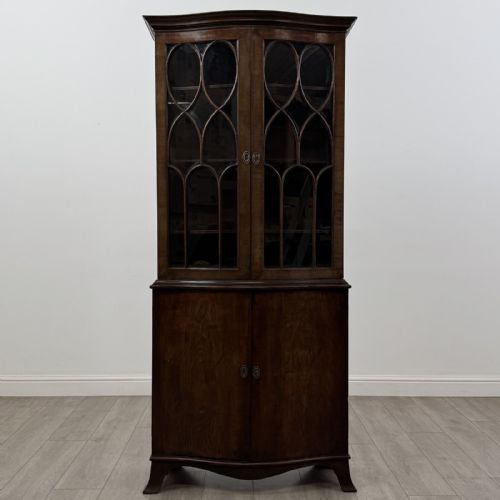
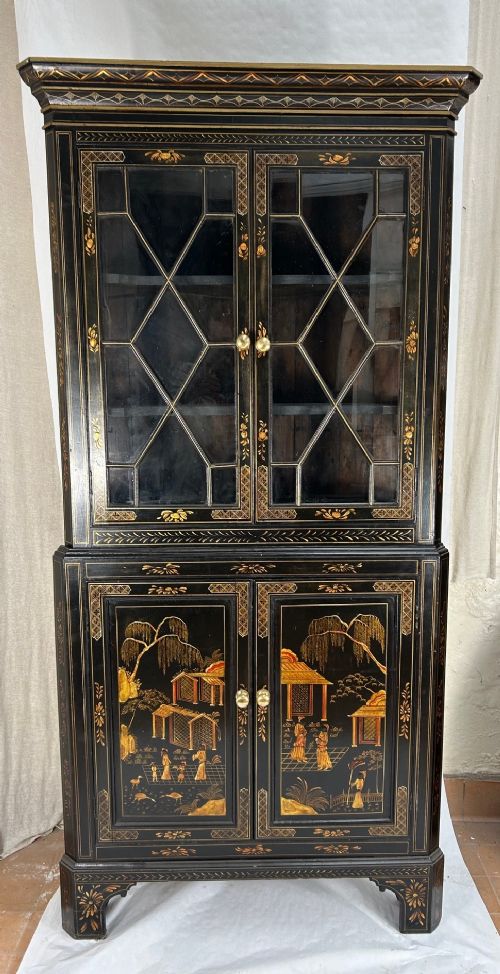
A glazed tier stand brings together multi-level display shelving and glass-fronted storage, often taking the form of corner cabinets, bookcases, and display cabinets. Buyers searching for a glazed tier stand encounter pieces spanning the 18th century through to the Edwardian period.
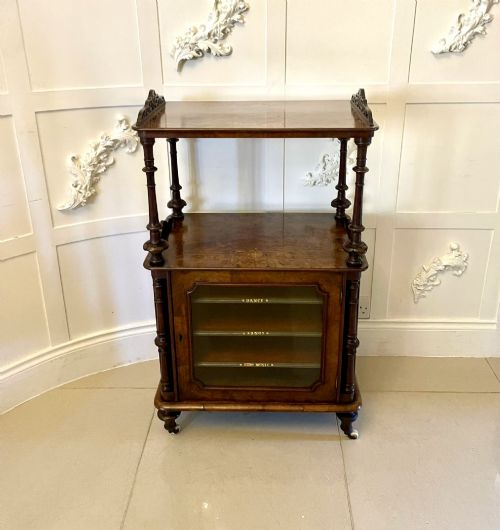
The dominant forms on this page include mahogany, oak, and burr walnut corner cupboards alongside standing bookcases and whatnots. These items served primarily to house books, ceramics, and collectables within domestic interiors ranging from country houses to urban parlours.
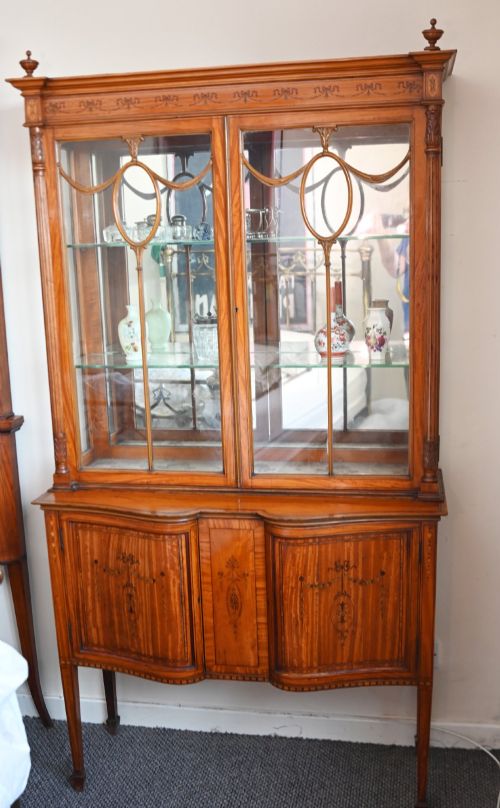
Makers and craftsmen utilised regional timbers such as Welsh oak alongside imported mahogany and rosewood to construct these functional furniture pieces. Styles shift from austere Georgian lines to elaborate Sheraton Revival inlays and Edwardian lacquered finishes.
Materials and construction
Cabinet makers relied on solid hardwoods like oak, mahogany, and walnut for the structural carcase, often applying satinwood inlay for decorative contrast. Timber panels were joined using period carpentry techniques suited to load-bearing tiers and shelving.
Glass panes were held within wooden glazing bars, such as astragal frameworks, requiring precise joinery to support the transparent panels. Brass fittings and hinges completed the hardware, securing doors and drop-front sections on cabinets and music servers.
Glazed Tier Stand Retail Price Guide 2026
Typical asking prices for glazed tier stand among the pieces listed under this phrase on Sellingantiques today, from the lower quarter to the upper quarter. They describe what is for sale here now, not the wider market.
Listings combine 18th-century Georgian pieces with Victorian and Edwardian iterations in mahogany, oak, and burr walnut.
Distinctions in quality
Quality rests upon the selection of timber figures, such as burr walnut or figured mahogany, and the crispness of inlaid details like satinwood. Finer examples display meticulous joinery in the glazing bars and well-proportioned cornices that denote careful workshop execution.
The integrity of the original glass, the weight of the brass hardware, and the preservation of the original surface patination separate standard utility items from exceptional decorative pieces.
The Glazed Tier Stand Glossary
- Astragal glazing
- A method of dividing a glass door into smaller panes using slender wooden mouldings.
- Burr walnut
- A prized timber harvested from the wart-like growths on walnut trees, yielding intricate grain patterns.
- Sheraton Revival
- A late 19th-century design movement inspired by the neoclassical furniture of George Sheraton, incorporating delicate inlays.
- Whatnot
- A piece of open shelving standing on legs, designed for displaying ornaments and small objects.
- Corner cabinet
- A specialised cupboard built or shaped to fit neatly into the right-angled corner of a room.
Glazed Tier Stand: Frequently Asked Questions
Where should I place a corner cabinet?
These cabinets suit under-utilised room corners, turning dead space into functional storage and display.
Ensure the wall angles match the cabinet back to achieve a flush fit.
How do I care for antique walnut furniture?
Keep timber surfaces away from direct sunlight and steady moisture levels to prevent wood movement.
Apply natural beeswax occasionally to nourish the grain without building up heavy residue.
Can these cabinets support heavy books?
Most tier stands and bookcases handle standard book collections on their fixed or adjustable wooden shelves.
Check shelf thickness and bracket support before loading heavier volumes onto upper display tiers.