



Glazed Shop Showcase
A glazed shop showcase turns commercial history into domestic display, framing small collections behind glass with the authority of a nineteenth-century counter.
Glazed Shop Showcase
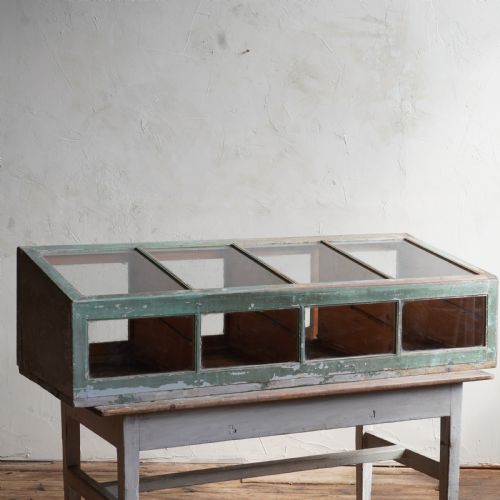
A glazed shop showcase is primarily encountered as a countertop display cabinet, an upright tower, or a serving counter built to hold goods for public inspection. The pieces on this page span the Victorian era, the Edwardian period, and the nineteen-twenties, originating from mercantile interiors and commercial tea rooms. Buyers seek these forms to house small objects while retaining the clear sightlines intended by original shopfitters.
Commercial identity often lingers on the glass or timber through later hand sign-written advertising for confectioners and provisioners like Fry's, Rowntree's, and Cadbury's. Pieces range from modest single-door boxes to substantial triple-bay units and Adam style display counters designed for high-end mercantile settings. Each variant reflects the specific demands of Edwardian and Victorian retail, where goods required physical protection alongside maximum visibility.
Materials and construction methods
Makers relied heavily on solid mahogany and oak for the structural framing, ensuring the cabinets could withstand the daily friction of busy retail environments. Timber components were joined with robust cabinetry techniques, often framing large expanses of plate glass to maximise light penetration into the interior.
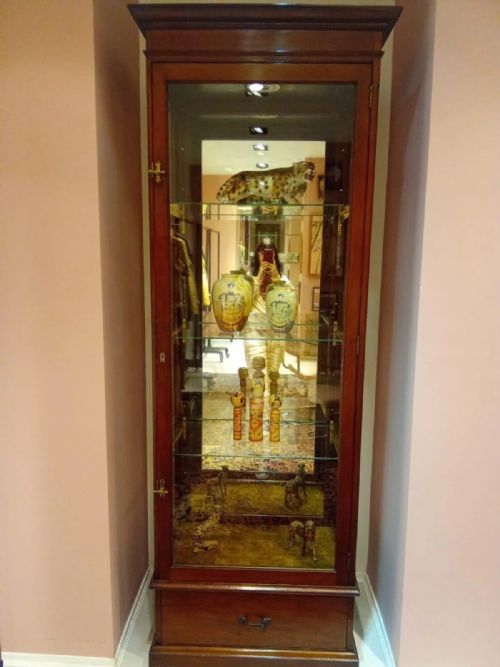
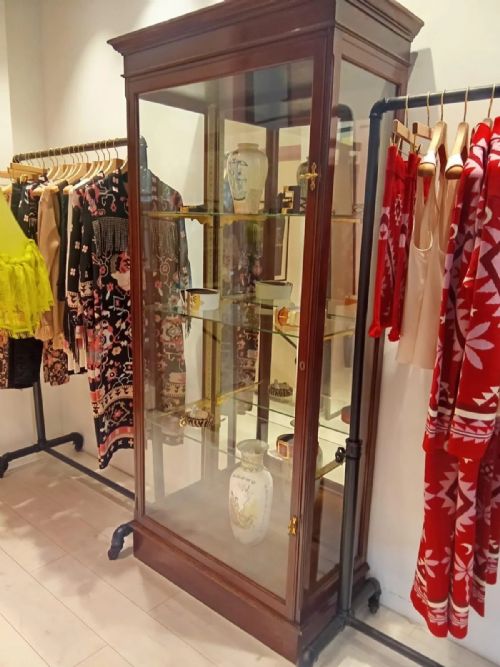
Internal elements frequently included mirrored glass backs to reflect light and amplify the appearance of goods, alongside adjustable glass shelving supported on metal brackets. Brass hardware, including hinges, latches, and corner braces, provided both structural reinforcement and decorative contrast against the dark hardwood frames.
Glazed Shop Showcase Retail Price Guide 2026
Typical asking prices for glazed shop showcase among the pieces listed under this phrase on Sellingantiques today, from the lower quarter to the upper quarter. They describe what is for sale here now, not the wider market.
Listings span the late nineteenth century through the nineteen-thirties, documenting shifts from Victorian oak and walnut to Edwardian mahogany and Art Deco steel.
Assessing quality in commercial cabinets
The distinction between ordinary utility pieces and superior showcases lies in the choice of timber and the ambition of the joinery. Fine examples employ dense, figured mahogany with precise corner joints and integrated brass details, whereas utilitarian equivalents utilise plain oak or softer woods with simpler assembly.
Proportion and glass quality define the visual success of a cabinet. Superior pieces balance substantial structural frames with clean, unblemished glazing and well-integrated internal mirrors, creating an architectural presence rather than a purely functional box.
F. Sage & Co.·E. Pollard & Co. Ltd.·Siegel
The Glazed Shop Showcase Glossary
- Countertop display cabinet
- A glazed enclosure designed to sit upon a shop counter so merchandise remains visible to customers. These units typically feature rear doors for staff access.
- Ebonised wood
- Timber treated with a dark stain or chemical finish to imitate ebony. This technique was popular in Victorian and early twentieth-century cabinet making for a formal appearance.
- Adam style
- A neoclassical design vocabulary characterised by symmetrical geometry, refined proportions, and classical ornamentation. It appears on select timber display counters from the turn of the twentieth century.
- Sign-written
- Lettering applied by hand using signwriter's paint directly onto glass or timber surfaces. Commercial cabinets often bear this lettering for confectionery or tobacco brands.
- Mirrored interior
- A silvered glass backing fitted inside a display case to bounce light forward and make enclosed objects visible from all angles.
Glazed Shop Showcase: Frequently Asked Questions
What were glazed shop showcases used for?
These cabinets originally stood on counters or floors in Victorian and Edwardian shops to protect small, valuable merchandise from dust and handling while keeping it visible to buyers. Confectioners, gunsmiths, and tea rooms utilised them to present goods attractively.
Today, those same commercial origins make them effective for displaying private collections in homes. The generous glass panels and shallow depths allow objects to be viewed clearly without cluttering a room.
How do I clean the glass shelves?
Glass shelves should be removed from the cabinet whenever possible to avoid stressing the antique timber frames and brass support brackets during cleaning. Use a mild glass cleaner applied to a cloth rather than sprayed directly onto the glass, preventing moisture from seeping into wooden joints.
Take care around any hand-painted sign-writing or gilt lettering on the panels. Traditional painted surfaces can flake if exposed to excessive moisture or harsh chemical solvents.
Are the shelves adjustable?
Many Edwardian and Victorian countertop cabinets feature removable or adjustable glass shelving supported by small metal clips inside the carcass. This adaptability allows collectors to house objects of varying heights within the same display space.
Simpler or earlier vernacular boxes often have fixed wooden ledges or permanent shelves. Checking the interior setup helps determine how flexible the display arrangement can be.
How do I date a shop display cabinet?
Dating relies on examining the timber species, construction methods, and hardware styles used in the frame. Victorian examples often display heavier walnut or oak framing, while nineteen-twenties pieces frequently utilise ebonised finishes or streamlined commercial lines.
Original trade labels, brass maker's plaques, or authentic period sign-writing for brands like Fry's or Rowntree's provide additional chronological markers. Comparing these details against known manufacturing periods narrows down the decade of production.