

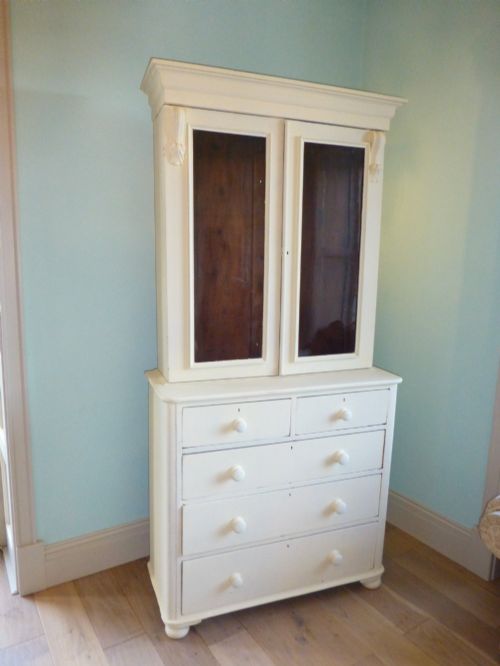

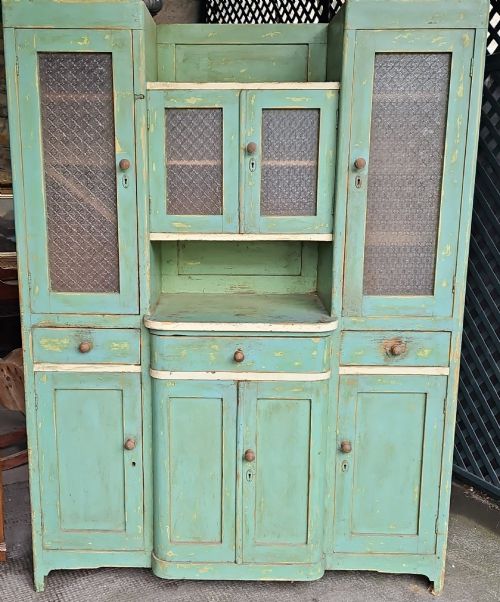
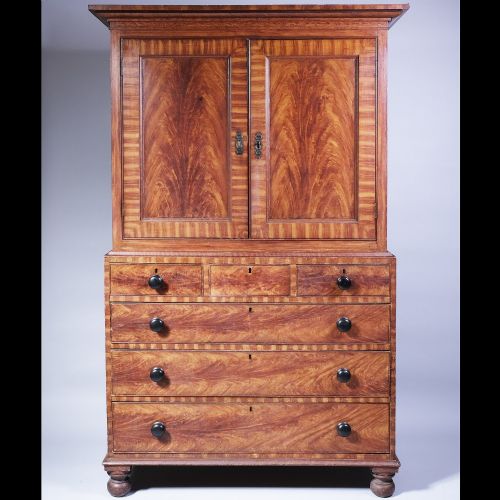


Glazed Pine Furniture
Glazed pine furniture brings practical rustic storage into a room, offering glass fronts to display contents while keeping dust at bay.
Glazed Pine Furniture
Glazed pine furniture spans large kitchen dressers, corner cupboards, housekeepers cupboards, and bookcases originating from country workshops and domestic settings. Buyers seeking glazed pine furniture will mostly encounter nineteenth-century pieces alongside eighteenth-century and Edwardian examples.
Forms range from two-part corner cabinets and architectural bookcases to kitchen cabinets and linen presses. Regional pieces from English, Welsh, Irish, Danish, Hungarian, and West Country traditions appear frequently across the inventory.
The aesthetic leans towards rustic farmhouse, Victorian country, and Scandinavian country styles. Many surfaces retain historic paint finishes, including scumble glaze and cream and teal tones.
How they were made
Construction relies on solid pine and pitch pine timbers built into sturdy carcases for daily domestic use. Joinery techniques support utilitarian forms like corner cupboards and kitchen dressers designed to withstand heavy household demands.
Glazing incorporates glass and textured glass panes set into wooden doors to shield contents. Secondary materials include brass fittings, metal hardware, and porcelain elements.
Surface treatments involve applied paint and scumble glaze techniques to protect the wood and provide decorative colour. Original painted finishes survive on several pieces, preserving the historic appearance.
Glazed Pine Furniture Retail Price Guide 2026
Typical asking prices for glazed pine furniture among the pieces listed under this phrase on Sellingantiques today, from the lower quarter to the upper quarter. They describe what is for sale here now, not the wider market.
Materials span standard pine, pitch pine, glass, textured glass, brass, metal, porcelain, and applied paint.
What varies in quality
The survival of original painted finishes and scumble glaze sets finer examples apart from stripped or later painted surfaces. Patina and the integrity of early timber surfaces dictate the visual depth of a piece.
Architectural proportion and regional vernacular detailing distinguish standard utility cupboards from exceptional vernacular work. Maker choices in glass selection and hardware integration further define the hierarchy of craftsmanship.
The Glazed Pine Furniture Glossary
- Scumble glazed
- A decorative paint technique involving translucent layers dragged or textured to simulate richer wood grain or add mottled depth. It appears frequently on nineteenth-century country furniture.
- Pitch pine
- A dense, resinous softwood variety used for durable furniture construction. It provides greater weight and strength than standard deal.
- Corner cupboard
- A space-saving cabinet built with an angled footprint to fit neatly into room intersections. These items often feature glazed upper doors for display.
- Housekeepers cupboard
- A large storage piece traditionally used for linens and dried goods in large country homes. They combine upper shelving with lower drawers or enclosed compartments.
- Linen press
- A tall storage cabinet designed with sliding trays or shelves behind doors for folded textiles. Early versions often sit above a base chest of drawers.
Glazed Pine Furniture: Frequently Asked Questions
What rooms suit glazed pine cabinets?
These cabinets work well in kitchens, dining rooms, and hallways where practical storage and display space matter. Their country aesthetic brings warmth to both traditional and relaxed modern interiors.
The glass doors allow you to showcase crockery and glassware safely away from dust. Meanwhile, the lower cupboards conceal everyday clutter out of sight.
How do I care for painted pine?
Painted and scumble glazed surfaces require gentle cleaning with a soft, dry cloth to remove dust. Avoid harsh chemical cleaners that can lift historic paint layers.
Keep pieces away from direct sunlight and strong heat sources to prevent the pine from drying out. Maintaining stable room humidity protects both the timber joints and the painted finish.
How do I date a pine cupboard?
Dating relies on construction methods, timber characteristics, and surviving surface treatments like early paint or scumble glazes. Regional styles and hardware types also offer clues to the period.
Eighteenth-century examples often display pegged joinery and hand-planed boards. Later nineteenth-century pieces may incorporate machine-sawn timber and different glass textures.
Are corner cupboards practical?
Corner cupboards utilise awkward room angles that often remain empty, turning dead space into functional storage. They provide accessible display shelving without dominating floor space.
Single-piece units and two-part corner cabinets both offer substantial capacity inside. Their triangular footprints integrate smoothly into dining rooms and living areas.