

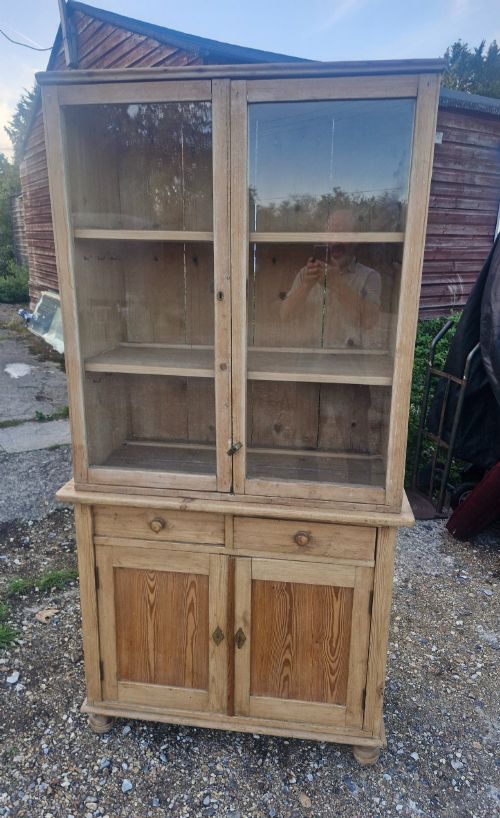

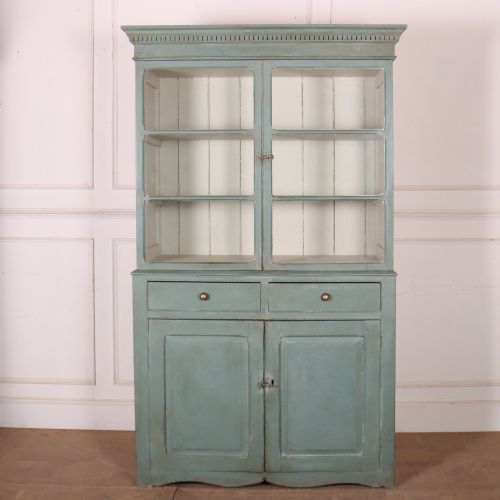
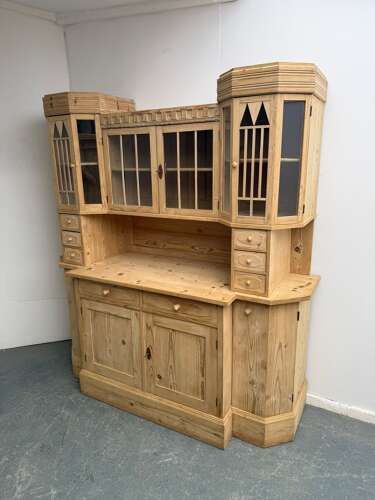
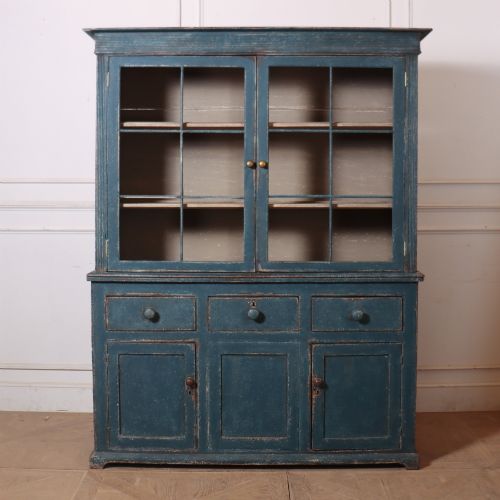





Glazed Larder Cupboard
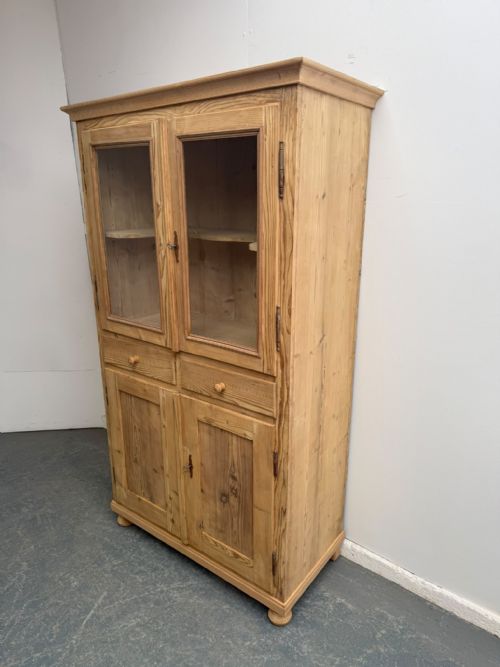
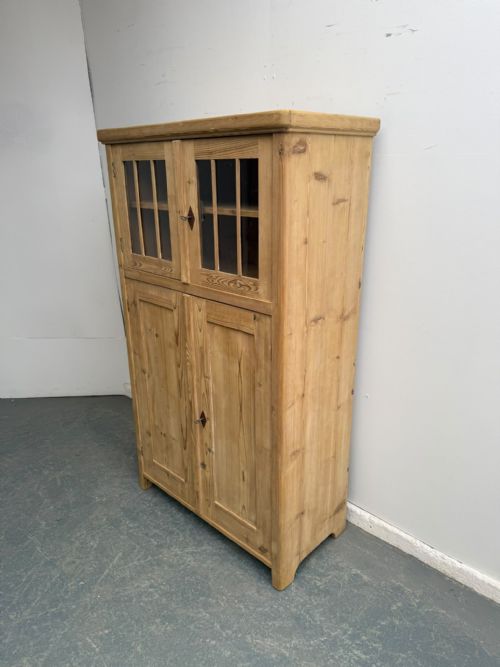
A glazed larder cupboard is a sturdy storage piece combining solid timber construction with glass viewing doors, offering practical pantry storage for the home.
Glazed Larder Cupboard
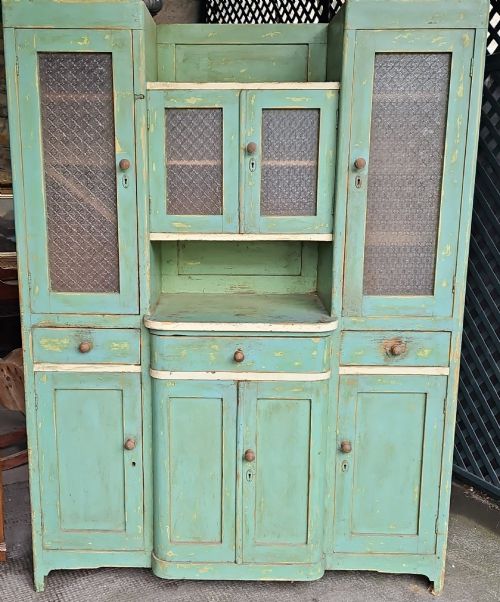
Most examples found here date from the nineteenth century through the Edwardian period and the early twentieth century, spanning styles from English and French country to Arts and Crafts. Buyers encounter tall four-door glazed storage units alongside compact kitchen dressers and painted pine kitchen cabinets.
These functional furnishings served historically to house provisions and household stores while keeping contents visible through glass panel doors. Their enduring appeal lies in their combination of practical shelving capacity and rustic regional character.
How they were made
Construction relies heavily on solid pine, built into robust carcasses and two-part cupboards designed to bear the weight of heavy kitchen stores. Wood surfaces appear either finished with traditional wax or coated in paint, depending on regional workshop traditions and subsequent domestic updates.
Glass panels are fitted into timber doors to create display and storage compartments, complemented by functional brass and iron hardware. Construction techniques follow traditional vernacular cabinet making, utilising pegged joints and panelled doors suited to daily domestic use.
Glazed Larder Cupboard Retail Price Guide 2026
Typical asking prices for glazed larder cupboard among the pieces listed under this phrase on Sellingantiques today, from the lower quarter to the upper quarter. They describe what is for sale here now, not the wider market.
The listings here span the nineteenth and twentieth centuries, utilising pine, glass, brass, and iron across English, Scottish, Irish, and continental styles.
What varies in quality
Quality in these utility cupboards rests on the integrity of the timber framing and the proportion of the structure, particularly in taller two-part forms. Pieces that retain their original glass panes, sound structural joints, and working iron or brass fittings hold greater integrity.
The sophistication of regional joinery and the survival of early painted or waxed surfaces distinguish standard utility pieces from more ambitious Arts and Crafts or larger multi-door farmhouse examples. Proportion and scale also dictate quality, as exceptionally tall or unusually compact cabinets require precise carpentry to remain stable.
The Glazed Larder Cupboard Glossary
- Pine
- A soft timber widely used in vernacular furniture making throughout Britain and Europe, valued for its workability and strength. It forms the primary structural material for the vast majority of country cupboards and dressers.
- Two-part cupboard
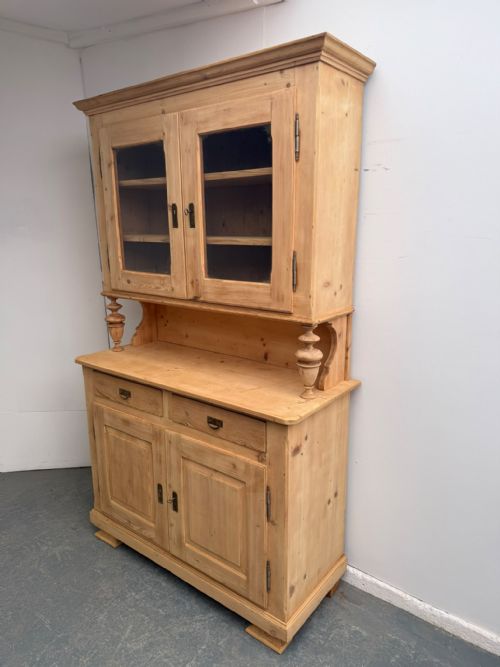
- A large storage unit constructed in upper and lower sections to facilitate transport and placement within domestic interiors. This modular approach was standard for tall kitchen dressers and larder cabinets.
- Textured glass
- Patterned or obscured glass panes used in cabinet doors to allow filtered visibility into storage compartments. It serves a practical function in concealing provisions while maintaining a lighter visual weight than solid timber.
- Arts and Crafts
- A design movement emphasising handcraftsmanship, simple forms, and traditional materials over mass-produced ornamentation. Pieces from this tradition display thoughtful construction details and honest joinery.
Glazed Larder Cupboard: Frequently Asked Questions
What is a glazed larder cupboard?
A glazed larder cupboard is a tall wooden storage unit featuring glass-fronted doors, designed primarily for organising food and kitchen provisions.
These pieces combine enclosed shelving with viewing panels, allowing contents to be identified while remaining protected from dust and pests.
How were these cupboards used historically?
Historically, these cabinets functioned as domestic storage hubs for dry goods, tableware, and household provisions before fitted kitchens became common.
Positioned in kitchens or pantries, they kept frequently used items accessible yet secure behind panelling and glass.
How do I date a pine cupboard?
Dating relies on examining construction methods, timber preparation marks, hardware types, and overall stylistic characteristics associated with specific eras.
Nineteenth-century examples often display hand-sawn timber and forged iron fittings, whereas Edwardian and later pieces utilise more standardised machine joinery.
Can these cupboards fit modern kitchens?
Their tall, upright proportions and generous shelving make them practical freestanding additions for modern kitchen storage needs.
They provide substantial pantry capacity while introducing rustic character and traditional craftsmanship to contemporary interiors.