



Glazed Earthenware Tray
A glazed earthenware tray brings tactile, patterned utility to a tabletop, spanning Georgian blue and white services to vibrant Scottish art pottery.
Glazed Earthenware Tray
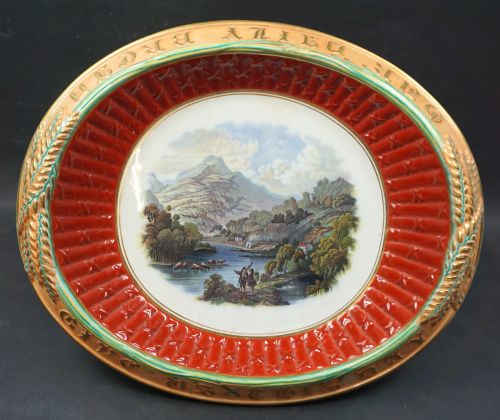
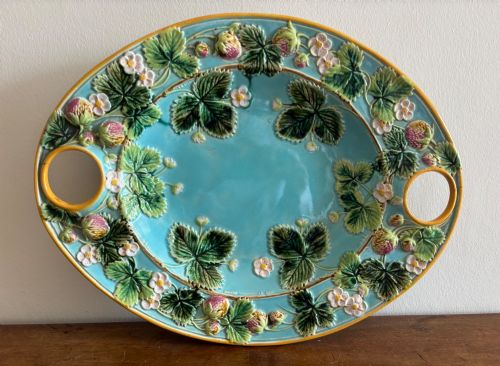
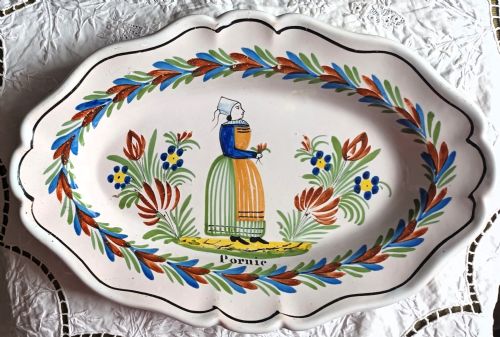
The version a buyer meets most frequently on this page is the nineteenth-century blue and white serving plate or meat platter, alongside French faience dishes and specialised pieces such as inkstands and strawberry dishes. Styles range from classical Georgian patterns to Arts and Crafts and French Provincial designs.
Each object demonstrates the practical application of earthenware bodies combined with protective or decorative finishes, serving both domestic utility and display.
Materials and construction
Potters form these pieces using earthenware clay bodies, which are then finished with various protective and decorative coatings including lead glaze, tin-glaze, and specialised ceramic finishes. Transfer printing and hand-painting provide the surface decoration seen across English and continental examples.
Techniques range from standard blue and white transfer printing on large meat platters to intricate tin-glazed faience work and distinct Scottish art pottery applications, utilising the natural porosity of earthenware beneath impervious glassy layers.
Glazed Earthenware Tray Retail Price Guide 2026
Typical asking prices for glazed earthenware tray among the pieces listed under this phrase on Sellingantiques today, from the lower quarter to the upper quarter. They describe what is for sale here now, not the wider market.
Factors of quality
Quality rests upon the crispness of the transfer print or the precision of the hand-painted brushwork, alongside the stability and clarity of the glaze across the earthenware body. Pieces bearing identifiable factory marks or specific artistic attributions demonstrate distinct manufacturing standards.
The sophistication of the form, whether a fretted vide-poche dish, an integrated inkstand, or a large pictorial meat platter, dictates the refinement of the finished item.
George Jones·Spode·Macintyre and Co.·William Moorcroft
The Glazed Earthenware Tray Glossary
- Earthenware
- Porous pottery fired at lower temperatures than stoneware or porcelain, requiring a glaze to achieve impermeability. It serves as the primary ceramic body for these trays and dishes.
- Tin-glazed earthenware
- Pottery covered with an opaque white glaze containing tin oxide, providing a smooth surface for hand-painted decoration. This technique underpins traditional faience and Delftware.
- Vide-poche
- A small shallow dish designed for emptying pockets of loose items such as coins or keys. French examples often feature fretted or pierced rims.
- Transfer print
- A method of applying detailed monochrome or polychrome designs to ceramic surfaces by pressing a paper sheet printed from an engraved copper plate onto the biscuit or glazed body.
Glazed Earthenware Tray: Frequently Asked Questions
How were glazed earthenware trays used originally?
These items functioned primarily for serving food at the table, holding meat joints, sauces, or strawberries, and organising desk accessories like inkstands.
Smaller formats served as vide-poches for personal items or decorative display around the home.
How do I distinguish Georgian pieces from Victorian ones?
Georgian examples often display specific blue and white transfer patterns like the Bridge of Lucano or Lovick's pattern, alongside refined pearlware bodies.
Victorian pieces introduce majolica glazing, brighter polychrome palettes, and distinct stylistic revivals such as Arts and Crafts or Scottish art pottery.
Are these trays suitable for daily use?
While structurally sound, antique earthenware requires careful handling to preserve fragile tin-glazes, hand-painted details, and centuries-old ceramic bodies.
Many buyers choose to display them on walls or sideboards rather than subjecting them to modern dining routines.
What is the difference between faience and Delftware?
Both terms describe tin-glazed earthenware, with faience generally referring to French and continental production such as Quimper wares.
Delftware specifically denotes tin-glazed pottery originating from the Netherlands, known for its distinct blue and white maritime or floral motifs.