



Glazed Earthenware Dogs
Glazed earthenware dogs are cheerful ceramic companions from the nineteenth and early twentieth centuries, bringing personality and colour to any mantelpiece.
Glazed Earthenware Dogs
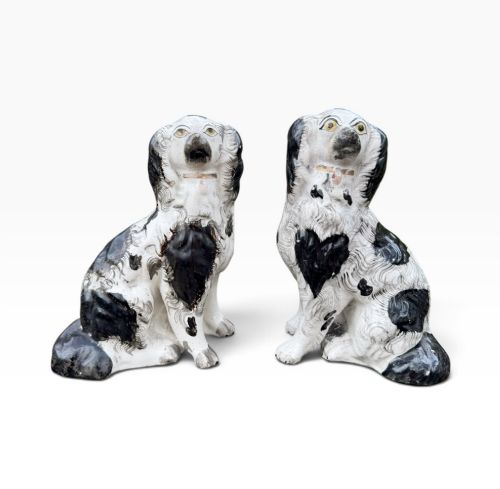
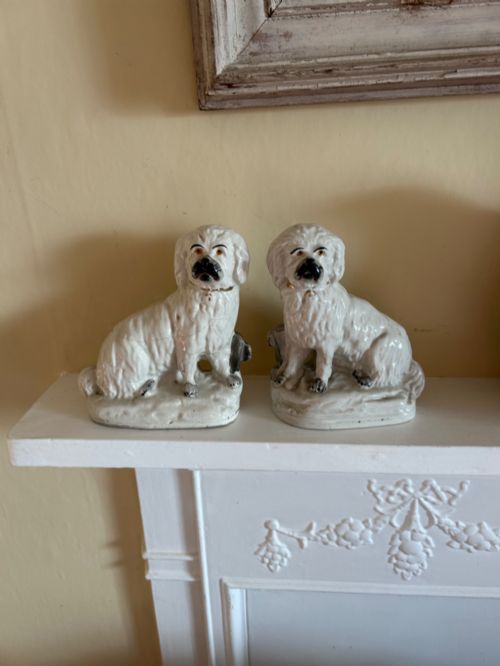
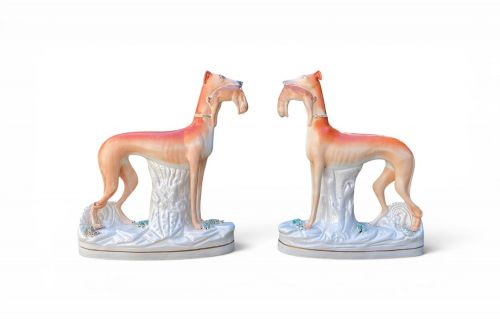
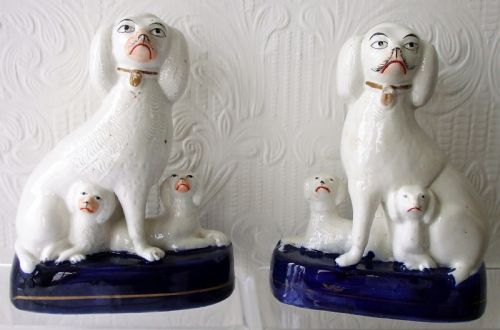
When you search for glazed earthenware dogs, you encounter a charming menagerie of pottery figures spanning the Victorian and Georgian eras. Staffordshire spaniels, poodles, greyhounds and pugs dominate the selection, often modelled in symmetrical pairs that traditionally flanked a fireplace.
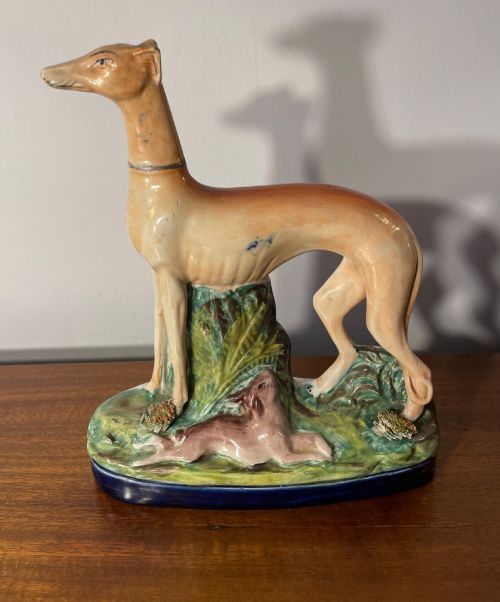
Beyond the standard mantle spaniels, the listings encompass more specific forms such as inkwells, quill holders and clock groups. The range extends from miniature poodles to large hounds and hares, capturing various breeds fashioned by British potters.
While the majority of pieces originate from nineteenth century Staffordshire potteries, the selection also includes examples from later periods and different traditions, such as Japanese ceramic models.
Materials and Manufacture
Potters shaped these figures from earthenware clay, utilising moulds to produce consistent forms of dogs and other subjects. Artisans then applied colourful lead glazes, enamels and occasional gold leaf highlights before firing the ceramics in kilns.
Many Staffordshire pieces received hand-painted details over the glaze, giving character to the eyes, collars and coats of spaniels and poodles. Copper lustre finishes and relief plaques demonstrate the varied technical approaches used across different workshops.
Glazed Earthenware Dogs Retail Price Guide 2026
Typical asking prices for glazed earthenware dogs among the pieces listed under this phrase on Sellingantiques today, from the lower quarter to the upper quarter. They describe what is for sale here now, not the wider market.
Listings feature earthenware and ceramic pieces decorated with lead glaze, enamel, gold leaf and copper lustre.
Assessing Quality and Character
Quality in these figures rests primarily upon the crispness of the moulding and the care taken with hand-painted facial expressions. Superior examples display clean enamel work and rich, even glazing without excessive firing blemishes.
Thomas Parr·Wedgwood and Co Ltd·Beswick
The Glazed Earthenware Dogs Glossary
- Staffordshire
- A term applied to pottery figures produced in the English county of Staffordshire during the nineteenth century. These works include the famous pairs of spaniels and greyhounds found on mantelpieces.
- Earthenware
- Porous pottery fired at lower temperatures than stoneware or porcelain. It serves as the standard ceramic body for nineteenth century British animal figures.
- Lead glaze
- A glossy coating containing lead oxide applied to pottery before firing. It provides a smooth, protective surface that deepens the colours of the underlying earthenware.
- Copper lustre
- A metallic glaze technique reflecting a coppery sheen. Potters used this finish to decorate the collars and bases of certain Staffordshire dog figures.
- Quill holder
- A desk accessory featuring a modelled animal alongside a receptacle for writing feathers. Several greyhound examples incorporate this functional ink and pen design.
Glazed Earthenware Dogs: Frequently Asked Questions
Where were glazed earthenware dogs displayed?
These ceramic figures traditionally sat upon mantelpieces in Victorian and Georgian homes, often arranged as symmetrical pairs on either side of the fireplace.
Owners also placed them on sideboards, chests of drawers and parlour tables to brighten domestic living spaces.
How do I identify Victorian Staffordshire dogs?
Victorian Staffordshire pieces typically feature earthenware bodies covered in colourful lead glazes and hand-painted enamel details. Common subjects include seated spaniels, poodles with pups, and greyhounds.
Look for characteristics such as distinct facial painting, gilt collars, and hollow moulded backs dating from the nineteenth century.
What are quill holder dog figures?
Quill holder figures combine decorative animal sculpture with a practical desk accessory. These ceramic pieces feature modelled greyhounds alongside small openings designed to hold writing quills.
Potters produced them during the mid nineteenth century for use on writing desks and bureau tables.
How should I clean antique ceramic dogs?
Dust these glazed earthenware figures gently with a soft dry cloth to remove surface particles. Avoid submerging older pieces in water, particularly if they feature delicate overglaze enamel painting or gold leaf.
Harsh cleaning chemicals can damage the nineteenth century glaze and wear away hand-painted details.