

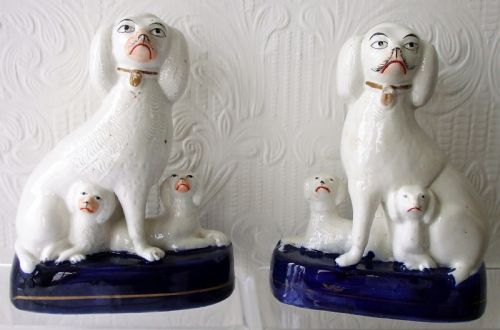


Glazed Earthenware Dog Pair
These glazed earthenware dog pair figures bring Victorian hearths to life with traditional Staffordshire charm.
Glazed Earthenware Dog Pair
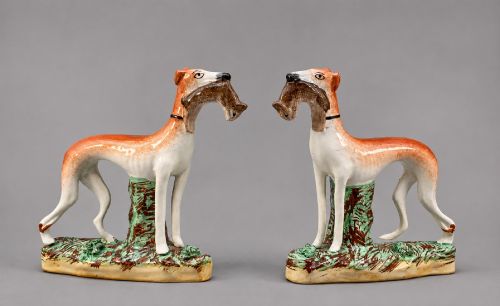
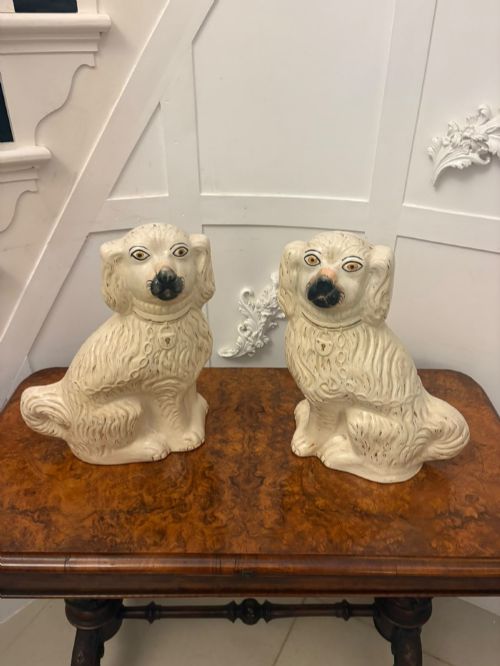
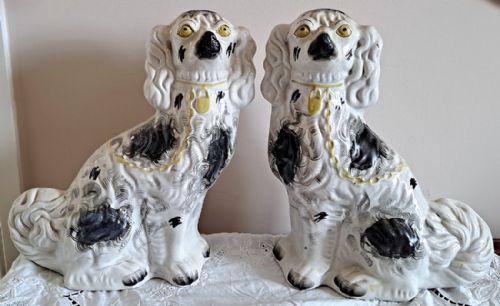
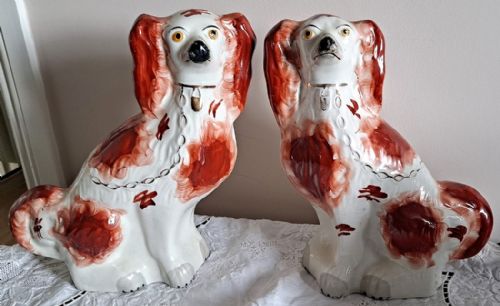
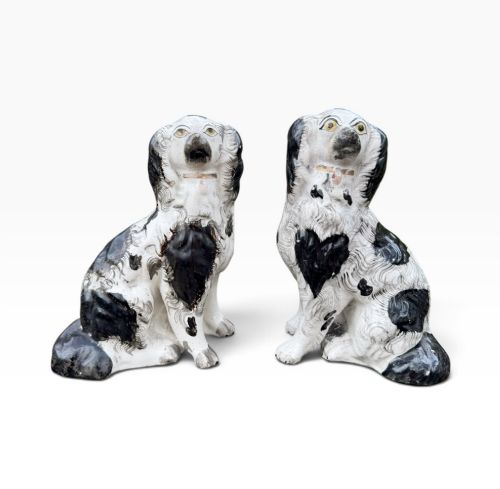
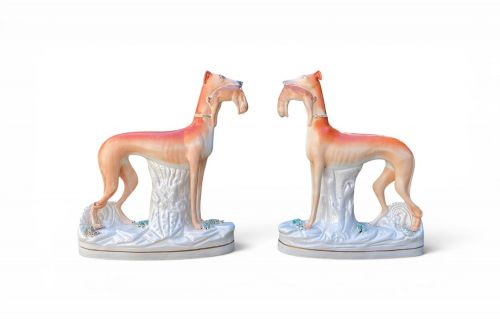
A glazed earthenware dog pair typically takes the form of Staffordshire spaniels, poodles, greyhounds, or pugs designed for domestic display. These mantel ornaments originate primarily from the nineteenth century, spanning the Victorian and Edwardian eras.
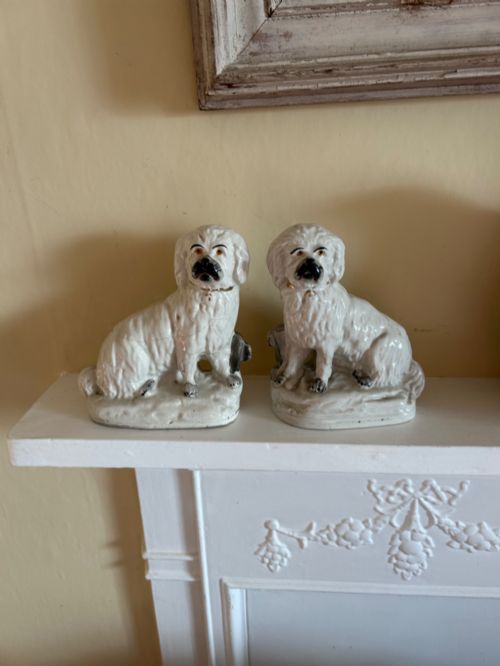
The most common versions met on this page are matched pairs of seated spaniels, often called comforter spaniels, intended to sit on either side of a fireplace. Other variations include greyhounds acting as quill holders and poodles accompanied by pups.
Most pieces stem from English traditions, utilising earthenware clay modelled into decorative figurines and ornamental plaques. Collectors encounter these animals in various sizes, ranging from miniature poodles to large seated hounds.
How they were made
Makers formed the hollow bodies by pressing clay into moulds before firing the ceramic in kilns. Hand painting then added character to the eyes, muzzles, and coats of each dog.
Glazed Earthenware Dog Pair Retail Price Guide 2026
Typical asking prices for glazed earthenware dog pair among the pieces listed under this phrase on Sellingantiques today, from the lower quarter to the upper quarter. They describe what is for sale here now, not the wider market.
Listings feature earthenware, ceramic, and glaze materials across Victorian and Edwardian periods.
What varies in quality
Subtleties in modelling and moulding depth distinguish the artistic merit of the pottery. Well-defined fur texture and balanced proportions indicate superior craftsmanship in nineteenth-century production.
Thomas Parr·Beswick
The Glazed Earthenware Dog Pair Glossary
- Earthenware
- Porous pottery fired at relatively low temperatures and rendered impermeable by a glassy glaze. It serves as the primary ceramic body for nineteenth-century Staffordshire figures.
- Staffordshire figures
- Ceramic ornaments produced in the pottery towns of Staffordshire, England. These decorative pieces encompass dogs, people, and animals made throughout the Victorian period.
- Lead glaze
- A glossy coating containing lead oxide applied to pottery before firing. This technique gives the earthenware a shiny finish and protects the painted surface beneath.
- Enamel
- Vitreous material fused to the ceramic surface during secondary firing to provide colour. Artisans utilise enamels to render markings, eyes, and collars on animal figures.
- Comforter spaniels
- Staffordshire dog pairs traditionally placed on mantelpieces facing inward towards each other. These figures were ubiquitous in Victorian parlours.
Glazed Earthenware Dog Pair: Frequently Asked Questions
Where did people display these dog pairs?
Victorian households traditionally placed these ceramic figures on mantelpieces above the fireplace. Owners arranged them symmetrically on either side of the hearth.
They also appeared on sideboards and chests of drawers in sitting rooms and parlours across England. Their primary role was purely decorative domestic display.
How do I distinguish different dog breeds?
Potters modelled specific physical traits to represent spaniels, poodles, greyhounds, pugs, and terriers. Spaniels typically feature floppy ears and seated postures with painted lockets.
Greyhounds often appear leaner and occasionally incorporate inkwells or quill holders. Poodles are identifiable by their textured clay curls and sometimes feature accompanying puppies.
What periods do these figures come from?
The pieces span the nineteenth and early twentieth centuries, with a strong concentration in the Victorian era. Dates range from mid nineteenth-century production around 1850 to Edwardian examples from 1900.
Victorian Staffordshire pieces form the majority of the available material. Stylistic shifts occur gradually across these decades.
Were these figures sold as pairs?
Potters manufactured these earthenware dogs designed specifically to sit as matched pairs. Each animal was modelled to face its counterpart when placed on a mantelpiece.
Left-facing and right-facing dogs were created together in the pottery workshops. Collectors generally seek to keep these matching pairs united.