
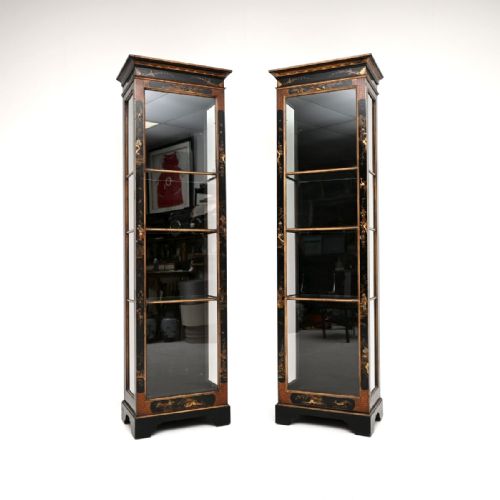
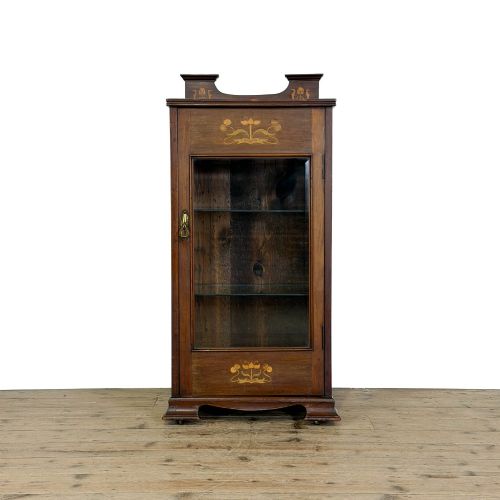
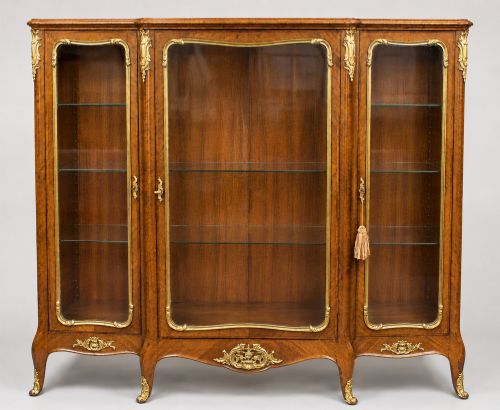
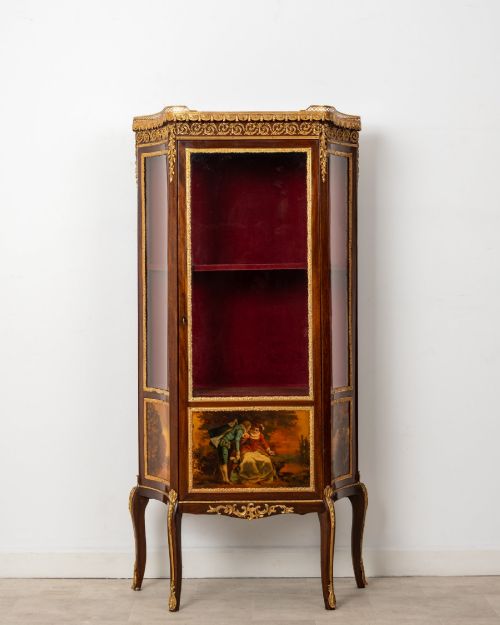
Glazed Curio Display Case
A glazed curio display case protects and showcases prized small possessions behind glass panels, bringing order and elegance to any room.
Glazed Curio Display Case
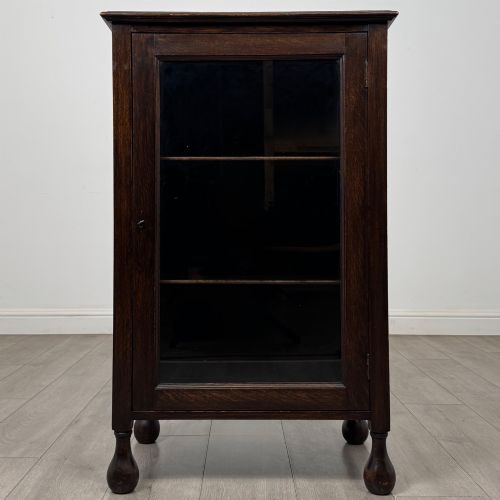
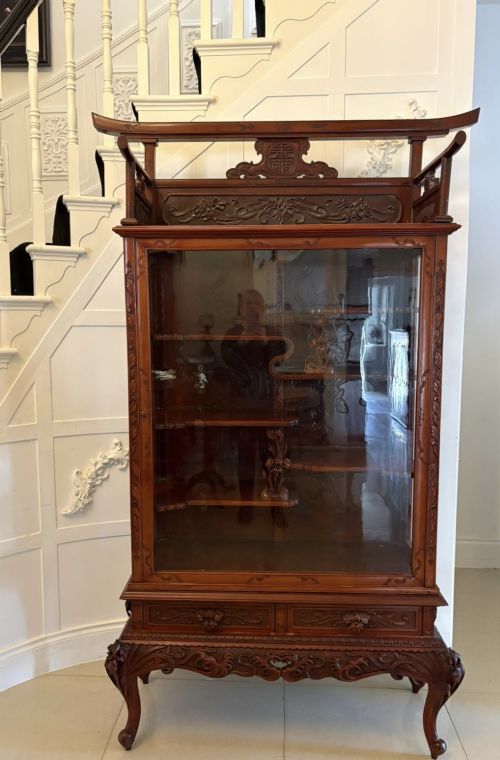
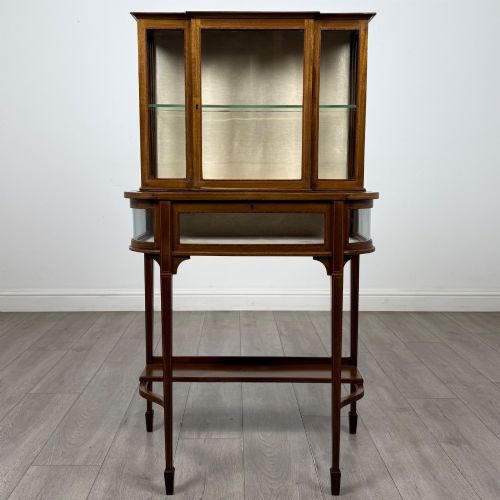
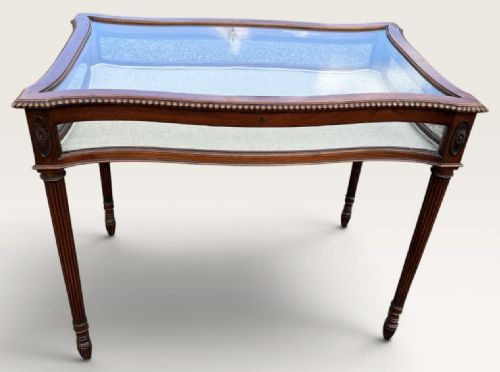
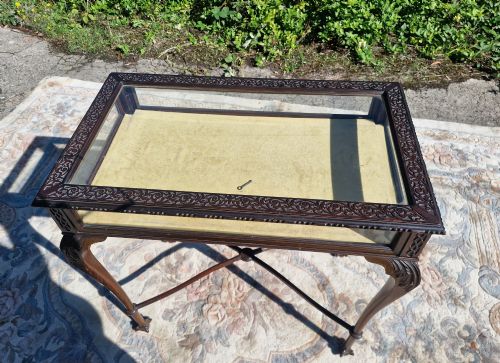
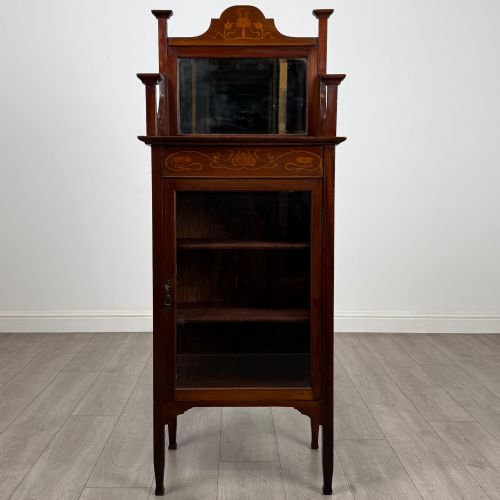
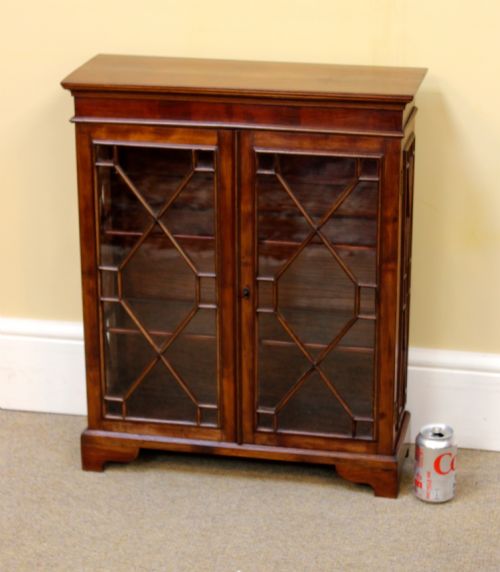
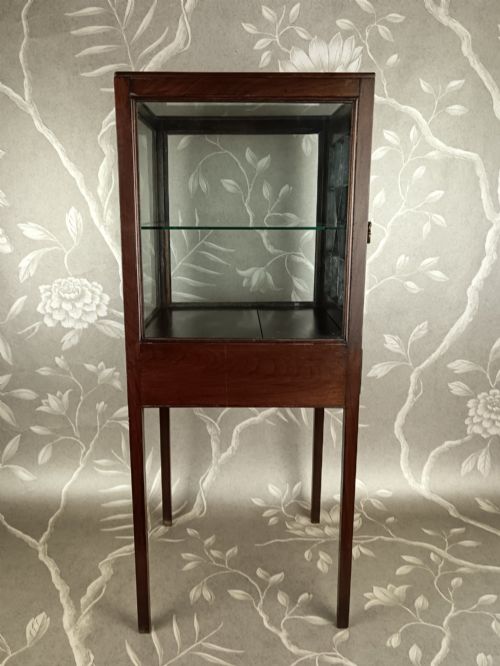
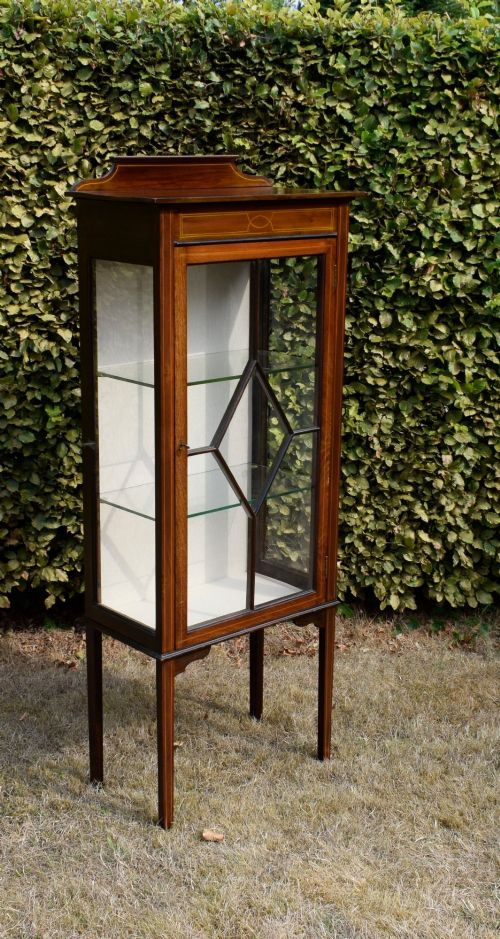
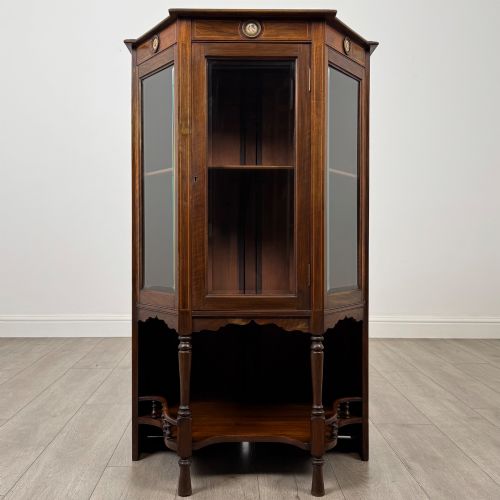
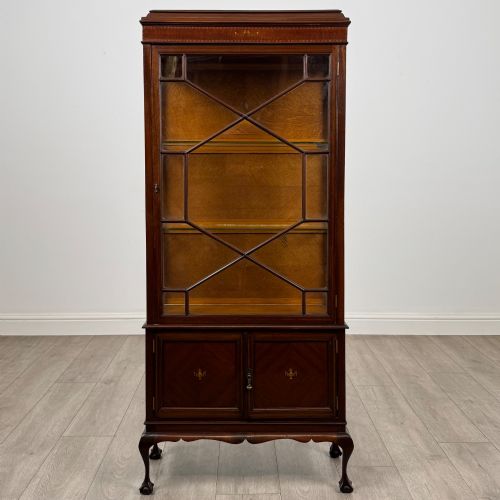
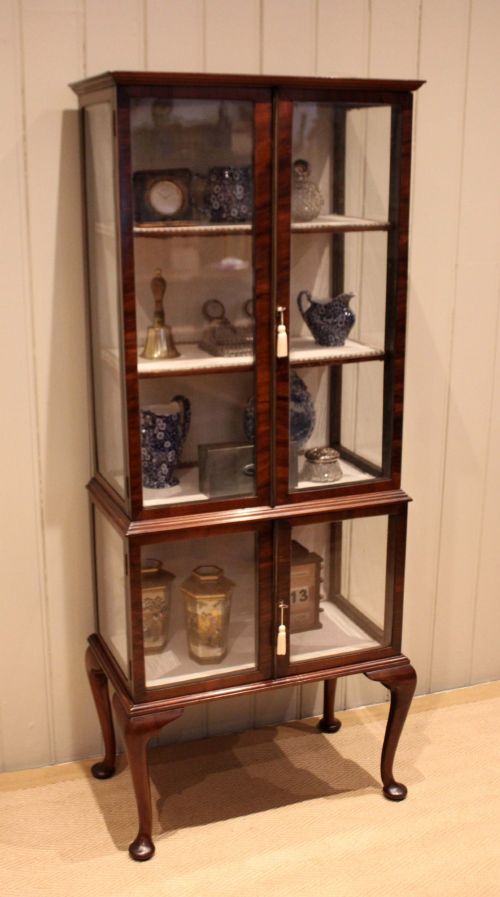
A glazed curio display case serves to exhibit small treasures while keeping them safe from dust and handling. These pieces appear in forms such as tall vitrines, side cabinets, miniature cabinets, and low table-height bijouterie tables with glass tops.
Edwardian mahogany examples and nineteenth-century French pieces dominate the available selection, ranging from simple inlaid side cabinets to elaborate revival models. Makers adapted these forms for different domestic settings, from drawing rooms to specialised shop displays.
The materials span traditional timbers paired with clear glass, brass fittings, and sometimes fabric linings. Buyers encounter various regional styles, including Louis XV and Louis XVI revivals, Art Deco, and Chinoiserie lacquered finishes.
Materials and construction methods
Cabinetmakers constructed these pieces primarily using solid or veneered timbers such as mahogany, walnut, kingwood, and satinwood, often incorporating marquetry or lacquered finishes. Structural integrity relied on precise joinery to support large glass panels without twisting.
Makers applied decorative mounts of ormolu, gilt bronze, or gilt metal to accentuate the framing of the glass doors and vitrine bodies. Marble tops appear on several French and Continental cabinets, adding weight and a finished surface above the glazed compartments.
Interior shelving is frequently adjustable glass to maximise light penetration through the display area. Silk or velvet fabric often lines the base of bijouterie tables and cabinet interiors to cushion the displayed objects.
Listings for glazed curio display cases span the Edwardian period, the nineteenth century, and the nineteen-twenties, incorporating mahogany, walnut, and kingwood.
Distinctions in quality and execution
The standard of timber selection and veneer matching defines the visual weight of the cabinet, alongside the crispness of any inlaid marquetry or hand-painted Vernis Martin panels. Superior pieces display seamless grain continuity and harmonious colour across curved or serpentine surfaces.
Metalwork provides another measure of standard, where finely chased ormolu or gilt bronze mounts demonstrate greater sculptural depth than pressed metal alternatives. The weight and smoothness of hinges, locks, and door alignment reveal the underlying joinery competence.
François Linke
The Glazed Curio Display Case Glossary
- Vitrine
- A glass-fronted cabinet designed specifically for displaying fine porcelain, curios, or silver. The term derives from the French word for glass.
- Bijouterie table
- A low display table with a glazed top and often a glass-sided compartment intended for jewellery, medals, and small trinkets. These pieces frequently feature hinged lids for easy access.
- Vernis Martin
- A type of simulated Japanese varnish developed by the Martin brothers in eighteenth-century France, applied to furniture with painted decorative scenes. Cabinets bearing this finish often date to nineteenth-century revivals.
- Ormolu
- Gilt bronze mounts applied to furniture edges, corners, and feet for decorative effect. The technique involves applying a mercury and gold amalgam to bronze before firing.
- Bow-ended
- A cabinet design featuring a curved, convex front profile rather than a flat plane. This shape softens the corners of the furniture and provides wider interior viewing angles.
Glazed Curio Display Case: Frequently Asked Questions
What is the difference between a vitrine and a bijouterie table?
A vitrine stands upright with vertical glass doors and shelves for standing objects. A bijouterie table is a low piece with a horizontal glass top designed for viewing flat items and small trinkets from above.
Both serve to display collections, but they occupy very different spaces within a room. Vitrines anchor a wall, whereas bijouterie tables sit comfortably in the centre of a room or beside seating.
How were table top display cases used?
Table top display cases were placed upon existing desks, chests, or tables to protect delicate items while keeping them visible. They allowed collectors to curate small exhibitions of medals, coins, or miniatures.
These portable cases offered the security of glass without requiring dedicated floor space for a full-sized cabinet.
Are the shelves in these cabinets adjustable?
Many Edwardian and period shop display cabinets feature adjustable glass shelves supported by metal brackets. This flexibility accommodated objects of varying heights within the same case.
Original glass shelves are a notable feature, though buyers should verify their presence and stability when assessing a cabinet.
How do I date a mahogany display cabinet?
Dating relies on stylistic markers, timber grain, and construction techniques such as the presence of inlaid satinwood or specific revival influences. Edwardian examples often show lighter, simpler inlay work compared to heavy Victorian or ornate French pieces.
The specific combination of wood types, mounts, and hardware helps narrow the period of manufacture.