

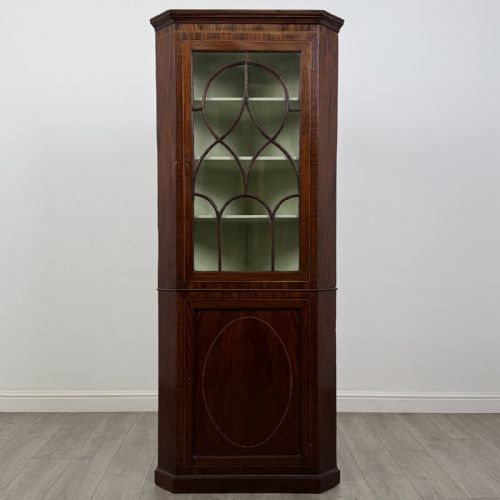
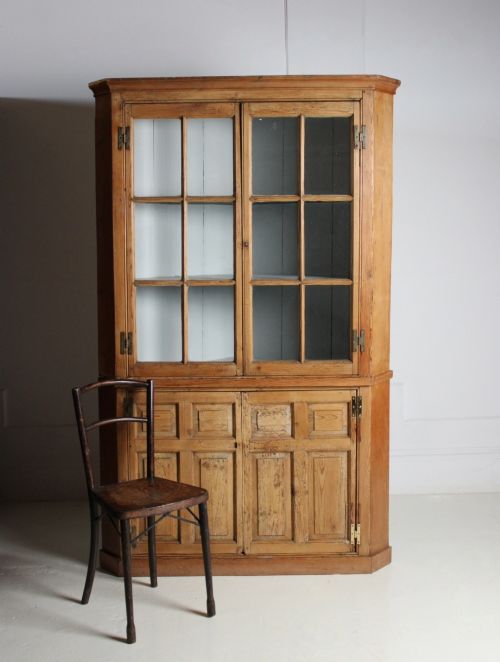
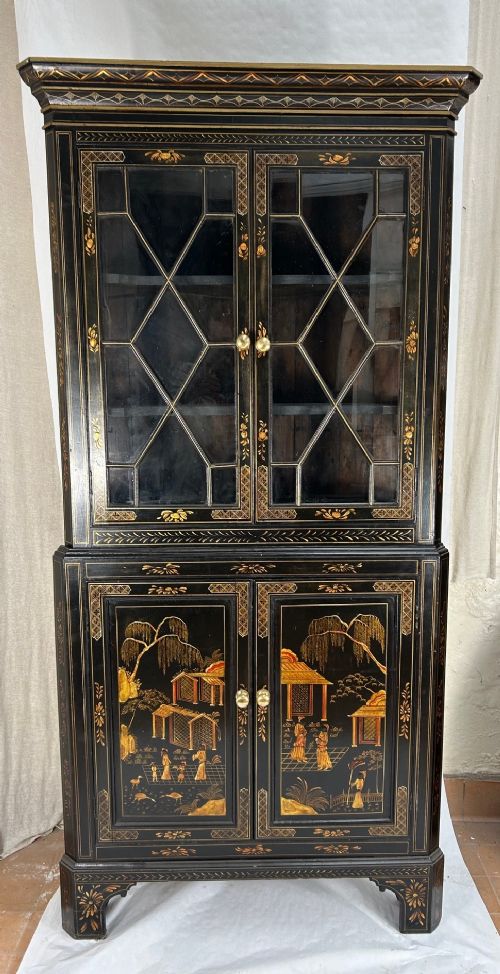
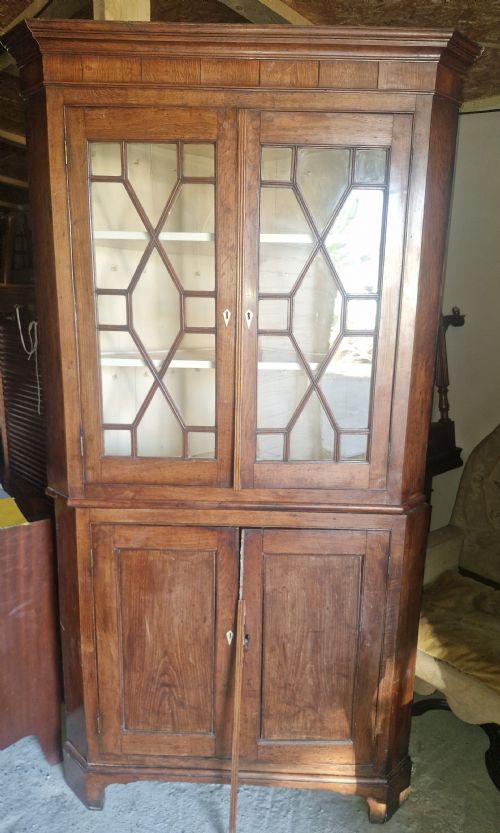


Glazed Corner Furniture
Glazed corner furniture makes effective use of unloved room angles, holding silver and books behind fitted glass panes.
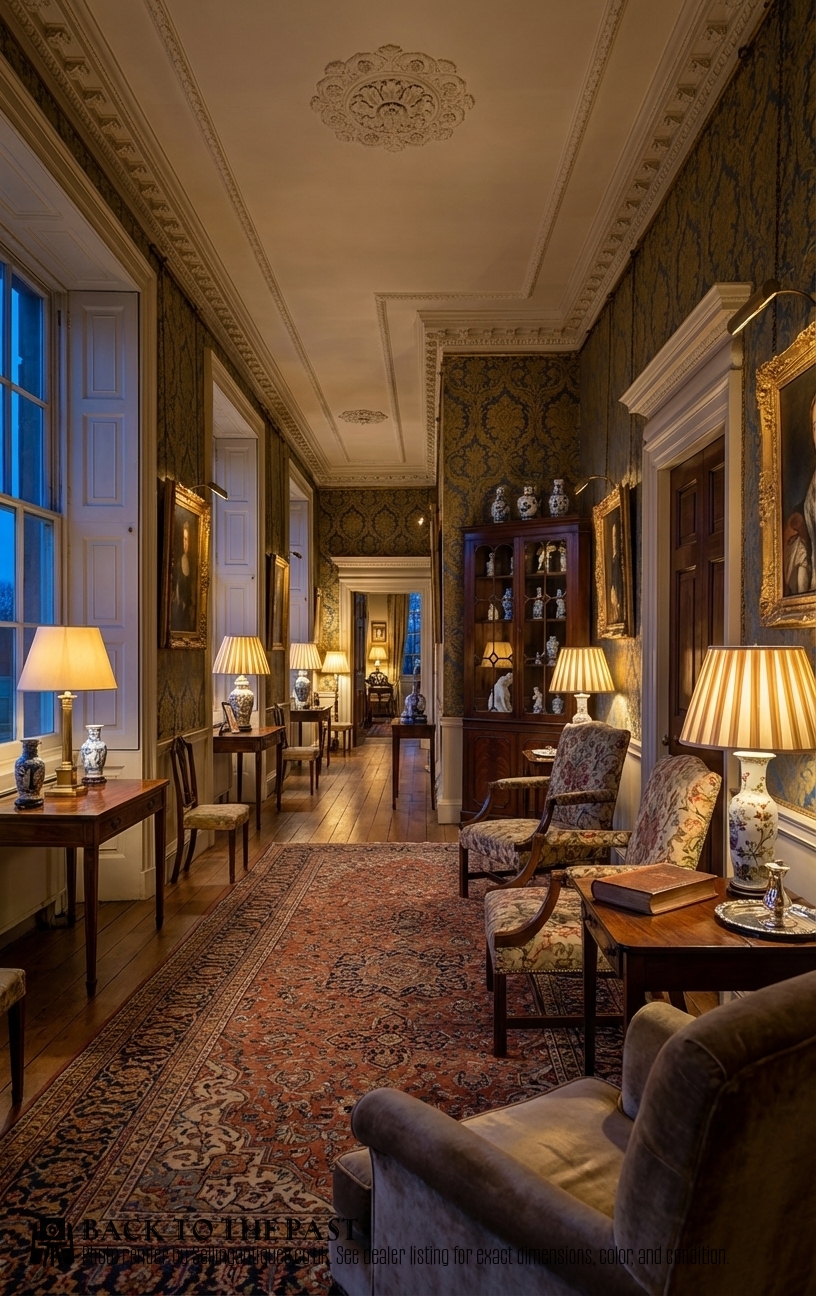
Glazed Corner Furniture
Glazed corner furniture comprises cabinets, cupboards and bookcases designed specifically to fit room intersections while displaying contents through glass doors. The selection heavily favours Edwardian and Georgian examples alongside Victorian and later 1930s forms.
Most pieces encountered on this page arrive in mahogany, oak or walnut, often featuring single or paired glazed doors. They appear either as wall-hanging units or as substantial two-part standing furniture.
Makers such as Maurice Adams, Goodhall, Lamb and Heighway and Edwards And Roberts occasionally provide named provenance to these architectural wooden builds.
Materials and construction methods
Carpenters built these cabinets primarily from timber frames of mahogany, oak and rosewood, frequently embellishing surfaces with satinwood inlay, brass mounts or painted finishes. Glass panels are fitted securely into doors using traditional joinery.
Standing formats often divide into two distinct structural parts for ease of placement, while smaller wall-hanging versions utilise robust internal bracing to support weight securely in corners.
Glazed Corner Furniture Retail Price Guide 2026
Typical asking prices for glazed corner furniture among the pieces listed under this phrase on Sellingantiques today, from the lower quarter to the upper quarter. They describe what is for sale here now, not the wider market.
The selection spans multiple centuries, including Georgian, Victorian, Edwardian and 1930s Art Deco periods.
Assessing craftsmanship and finish
Superior examples reveal themselves through crisply executed marquetry, fine timber grain matching and intricate brass hardware rather than plain construction. Finer pieces demonstrate careful attention to proportion, particularly along bow-fronted or serpentine profiles.
The integration of original glass, polished brass fittings and intact painted or polished surfaces distinguishes workshop-built items from standard utilitarian output.
Maurice Adams·Goodhall, Lamb and Heighway·Edwards And Roberts
The Glazed Corner Furniture Glossary
- Marquetry
- Decorative veneer work forming pictures or geometric patterns using various woods. Craftsmen cut thin slices of tinted timber to fit precisely into prepared recesses.
- Serpentine
- A curved shape curving inward centrally and outward at the ends. This profile requires advanced carpentry skills to execute cleanly on cabinet doors.
- Bow front
- A convex curved cabinet face that projects outward from the corners. This rounded form softens the strict angles inherent in room corners.
- Ebonised
- Timber treated with a chemical stain or pigment to imitate ebony. This dark finish appears frequently on later display pieces.
- Two part
- Furniture constructed in upper and lower vertical sections. This division aided transport and installation in domestic rooms.
Glazed Corner Furniture: Frequently Asked Questions
Where should I place a corner cabinet?
These units suit unused room junctions, dining areas or hallways where standard rectangular furniture blocks circulation. Their angled backs hug the walls snugly.
Ensure the door swing has adequate clearance from nearby furniture or architraves before hanging or positioning the piece.
Are these cabinets secure on walls?
Hanging examples require sturdy fixings into wall studs or masonry to support the combined weight of the timber structure and glass.
Heavier standing models rely on a broad base and balanced internal shelving to remain stable without wall anchoring.
How do I clean antique timber surfaces?
Dust regularly with a dry cloth and apply occasional specialist wax to nourish the polished wood grain.
Avoid using modern silicone sprays or excessive moisture which can damage historic French polish or painted finishes.
Can I store heavy books inside?
Most corner bookcases and display cabinets accommodate moderate volumes, though fixed or adjustable shelving limits heavier loads.
Check the thickness of the timber shelves and their internal supports before loading dense collections of hardbacks.