


Glazed Ceramic Trinket Box
These glazed ceramic trinket box pieces range from seventeenth-century Dutch Delft to Art Deco French powder jars, offering small lidded storage with rich surface decoration.
Glazed Ceramic Trinket Box
A glazed ceramic trinket box serves as a small receptacle for personal items, vanity goods, and small keepsakes. The selection spans centuries of ceramic production, from early earthenware to refined porcelain.
The most common form on this page belongs to the Art Deco period, featuring French and German powder boxes, half-doll jars, and vanity bowls. These twentieth-century pieces often depict flapper girls, Pierrots, and modernist motifs.
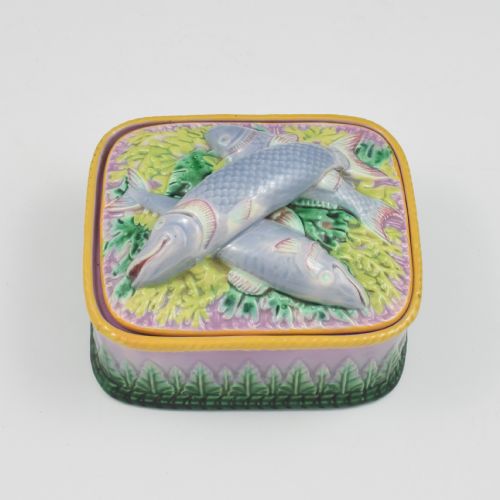
Earlier examples include seventeenth-century Dutch Delft snuff boxes, eighteenth-century German heart-shaped boxes from Dorotheenthal, and Victorian majolica sardine boxes. Each era brings distinct regional styles and utilitarian purposes to the lidded box form.
How they were made
Potters shaped these vessels using earthenware, porcelain, and tin-glazed earthenware bodies. The clay was formed either by hand, on a wheel, or pressed into moulds before initial firing.
Surface decoration relies heavily on specialised glazes, including tin glaze and brush enamel painted details. Gilt accents and metal mounts appear on select pieces to frame the ceramic body.
Listings feature periods spanning from the seventeenth century through to Art Deco nineteen thirty productions, incorporating earthenware, porcelain, and tin-glazed materials.
What varies in quality
Quality rests upon the crispness of the moulding and the finesse of the hand-painted or enamelled decoration. Finer pieces demonstrate precise brushwork and controlled glaze application that enhances the underlying ceramic form.
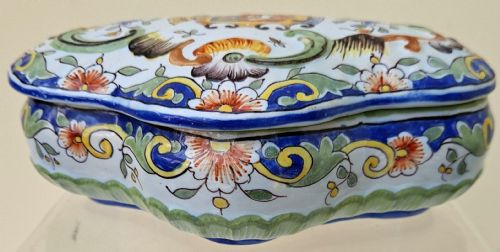
The sophistication of the design, particularly in figural Art Deco half-dolls and regional faience, distinguishes standard production from superior artistic output. Maker attribution, such as works originating from Limoges or Desvres, also signals higher manufacturing standards.
George Jones·Limoges·Dorotheenthal
The Glazed Ceramic Trinket Box Glossary
- Tin Glaze
- An opaque white glaze containing tin oxide, providing a smooth surface for painted decoration. It is characteristic of faience and Delftware.
- Powder Bowl
- A vanity vessel designed to hold cosmetic powder, frequently fitted with a decorative lidded cover or surmounted by a half-doll figure. These were common accessories on dressing tables.
- Majolica
- A type of earthenware decorated with colourful lead glazes over an opaque white tin glaze. It yields rich, saturated hues popular in Victorian wares.
Glazed Ceramic Trinket Box: Frequently Asked Questions
What were glazed ceramic trinket boxes used for?
These lidded vessels served practical roles on dressing tables and desks, holding cosmetics, powder, snuff, patches, or small personal valuables. Their portable size made them suitable for daily personal use.
Over time, many transitioned from utilitarian dressing items to decorative cabinet pieces and collector's objects, prized for their artistic glazes and miniature scale.
How do I identify Art Deco powder boxes?
Art Deco examples, largely dating around nineteen thirty, typically feature stylized motifs, geometric forms, and figural elements such as flapper girls or Pierrots. French and German potteries produced many of these vanity sets.
Look for half-doll figures emerging from the centre of lids, accompanied by vibrant enamel painting and distinct modernist styling that separates them from Victorian or earlier wares.
What is the difference between faience and porcelain?
Faience utilises an earthenware body covered in an opaque tin glaze, resulting in a slightly heavier structure with hand-painted regional designs. It is characteristic of European wares from French and Dutch traditions.
Porcelain employs a finer, vitrified clay body that is fired at higher temperatures, producing a more translucent and durable material often seen in twentieth-century vanity jars.
How should I display lidded ceramic boxes?
These small boxes work well on dressing tables, mantelpieces, or inside glass-fronted cabinets where their painted lids and intricate glazes can be appreciated up close. Keeping them out of direct sunlight helps protect delicate enamel colours.
Displaying them alongside related vanity items or grouping pieces by period creates a cohesive historical arrangement without cluttering the surface space.