



Glazed Ceramic Tray
These glazed ceramic tray examples are practical vessels and decorative dishes spanning Victorian, Georgian, and twentieth-century periods.
Glazed Ceramic Tray
When you search for a glazed ceramic tray, you encounter an array of utilitarian and decorative forms, including platters, serving dishes, trinket dishes, and inkstands. The pieces on this page span the Georgian, Victorian, and early twentieth-century periods, originating from English potteries, French provincial kilns, and Dutch workshops.
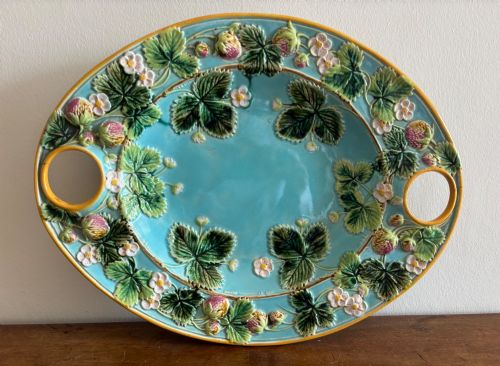
The most common variants you will meet include blue and white transfer-printed meat plates, majolica strawberry dishes and bread plates, and hand-painted Quimper faience pin trays. These items served functional roles on dining tables and desks before evolving into purely decorative display pieces.
Makers represented range from large English factories producing transfer-printed earthenware to Scottish art potteries and French faience painters. Each piece reflects the dominant domestic aesthetic of its decade, from classical Georgian blue and white patterns to vibrant Arts and Crafts and Art Deco designs.
How they were made
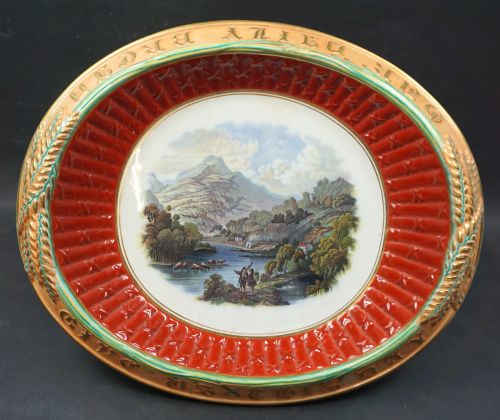
Potters shaped these wares from earthenware, porcelain, and faience, applying lead glazes, tin glazes, or colourful majolica pigments to the clay bodies. Transfer printing allowed factories to transfer intricate landscape and floral scenes onto large meat platters and serving dishes.
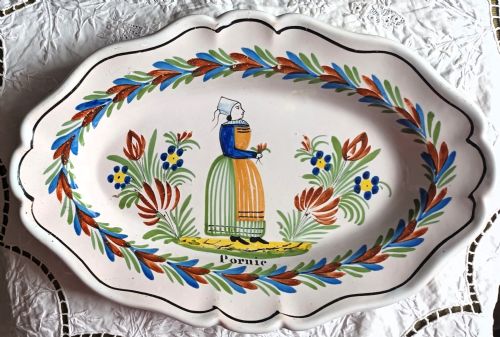
Hand-painting remained essential for tin-glazed earthenware and faience pieces, where artisans brushed cobalt blue and polychrome designs directly onto the unfired glaze. Firing in traditional kilns set these glazes, producing the lustrous surfaces seen on Victorian majolica and Scottish art pottery.
Glazed Ceramic Tray Retail Price Guide 2026
Typical asking prices for glazed ceramic tray among the pieces listed under this phrase on Sellingantiques today, from the lower quarter to the upper quarter. They describe what is for sale here now, not the wider market.
Listings feature earthenware, faience, and tin-glazed pottery spanning the Georgian, Victorian, and early twentieth-century periods.
What varies in quality
The distinction between ordinary utility wares and exceptional pieces lies in the crispness of the transfer print or the dexterity of the hand-painted brushwork. Superior items display harmonious colour palettes, deep glaze saturation, and well-balanced proportions that survive from moulding to final firing.
Model complexity also separates standard production from ambitious studio work, such as moulded majolica relief or pierced frette borders on French faience. Preservation of the glazed surface, minimal kiln stilt marks, and intact painted details dictate the standing of an individual tray.
George Jones·Spode·William Moorcroft·Macintyre And Co·Liberty And Co
The Glazed Ceramic Tray Glossary
- Faience
- Tin-glazed earthenware produced in France and other continental European regions, known for its opaque white surface and hand-painted decoration. Artisans painted directly onto the unfired tin glaze before a final kiln firing.
- Majolica
- A Victorian earthenware type characterised by colourful, lead-glazed moulded reliefs depicting natural motifs like foliage and fruit. George Jones and other prominent factories utilised this technique to create vibrant tableware.
- Transfer Print
- A decoration method where an engraved copper plate transfers an ink design onto tissue paper, which is then pressed onto the ceramic body. This technique allowed factories to mass-produce detailed pastoral scenes on meat platters.
- Vide-Poche
- A small French tray or dish designed to empty pockets of small items such as coins and keys upon entering a room. These shallow vessels frequently feature hand-painted regional figures or floral motifs.
- Tin-Glazed
- Earthenware coated with a glaze containing tin oxide, which dries opaque white and provides a smooth canvas for pigment application. Dutch Delft and French faience rely upon this chemical composition.
Glazed Ceramic Tray: Frequently Asked Questions
What is a glazed ceramic tray used for?
These pieces served diverse household functions, from presenting meat roasts on dining tables to holding inkwells on writing desks and gathering small items in hallways.
Over time, many shifted from active utility to decorative display, preserved for their hand-painted designs or historic transfer-printed scenery.
How do I date a glazed ceramic tray?
Dating relies upon examining the clay body, glaze characteristics, style of decoration, and any maker marks stamped or painted on the underside. Georgian and Victorian pieces typically feature heavier earthenware bodies and distinct transfer-printed borders.
Twentieth-century examples often display brighter palettes associated with Art Deco or Scottish art pottery movements, reflecting the aesthetic preferences of their decade.
Are these trays suitable for daily use?
While originally created for functional dining or desk use, antique ceramics require careful handling to preserve their historic glazes and hand-painted details. Modern use is generally restricted to decorative display or gentle service to prevent surface wear.
Hand washing in lukewarm water without harsh detergents helps protect fragile nineteenth-century lead and tin glazes from degradation.
What is the difference between faience and majolica?
Faience generally refers to tin-glazed earthenware originating from France or the Netherlands, featuring hand-painted blue and white or polychrome motifs. The tin glaze provides an opaque white background for the painted designs.
Majolica, popular during the Victorian era, employs colourful lead glazes over moulded relief decoration, creating tactile surfaces representing natural elements like leaves and flowers.