




Glazed Ceramic Plant Stand
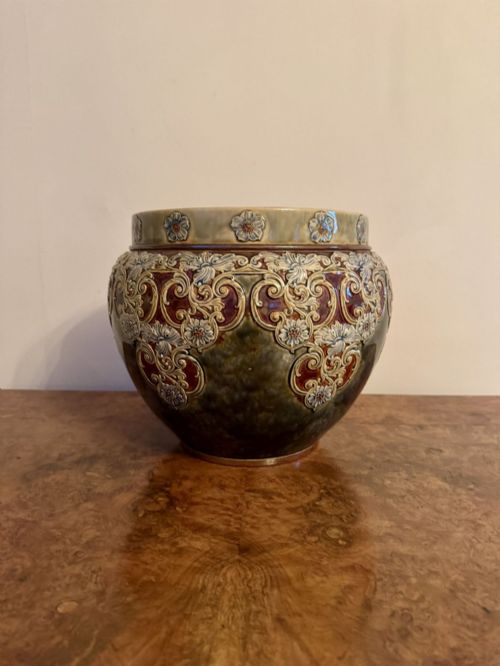
A glazed ceramic plant stand brings sculptural colour and botanical display together, drawn from Victorian, Edwardian and Arts and Crafts traditions.
Glazed Ceramic Plant Stand
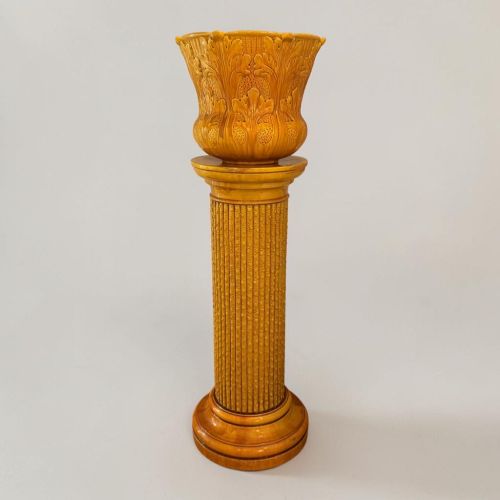
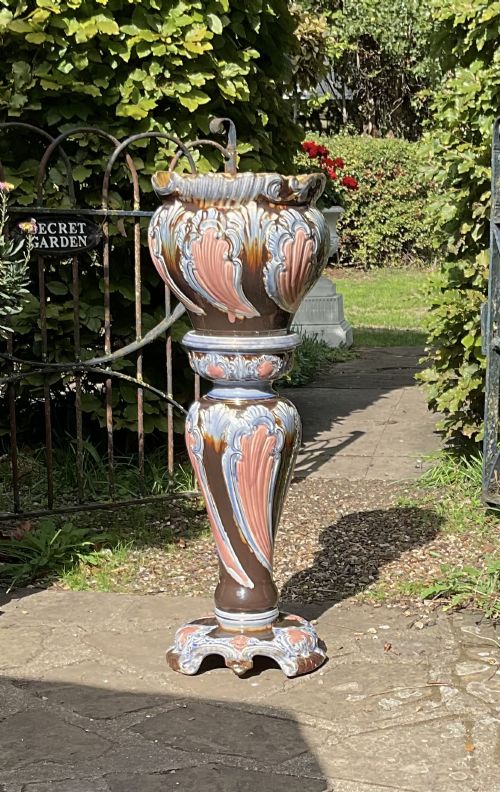
A glazed ceramic plant stand supports heavy foliage and floral arrangements in interior and conservatory spaces, taking forms such as pedestals, jardinieres, garden seats and floor stands. Buyers searching for a glazed ceramic plant stand encounter diverse structural configurations, including paired stands, matching jardinieres with pedestals, and single columnar supports.
The objects span from the nineteenth century into the early twentieth century, showing distinct aesthetic movements like Victorian rustic, Art Nouveau, Arts and Crafts and Chinoiserie. Makers utilise durable earthenware, ironstone, faience and majolica to create functional display furniture that doubles as decorative art.
Materials and construction
Potters shape durable earthenware, ironstone and faience bodies on the wheel or in moulds before applying rich coloured glazes and majolica surfaces. These techniques allow for intricate naturalistic modelling, such as swans and griffins, alongside smooth architectural fluting.
Specialised firing methods produce distinctive finishes, including bright majolica colours, lustrous sheens and secessionist surface designs. These protective glaze coats seal the porous ceramic body while providing a glossy or iridescent exterior suited to indoor horticulture.
Glazed Ceramic Plant Stand Retail Price Guide 2026
Typical asking prices for glazed ceramic plant stand among the pieces listed under this phrase on Sellingantiques today, from the lower quarter to the upper quarter. They describe what is for sale here now, not the wider market.
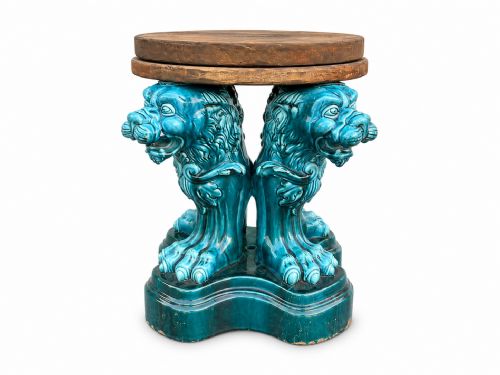
Victorian potters occasionally supported heavy botanical displays upon the backs of mythical griffins and sculptural swans.
Evaluating craftsmanship and design
Quality rests in the ambition of the modelling and the depth of the glaze application, distinguishing standard utilitarian vessels from sculptural works by notable potteries. Pieces featuring complex figural elements like griffins or swans demand advanced ceramic skill.
The presence of integrated matching jardinieres and pedestals elevates a piece, as does the sophistication of artistic movements such as Art Nouveau and Arts and Crafts. Finer examples display harmonious proportion between the supporting column and the upper vessel.
Burmantofts Art Pottery·Clement Massier·Minton·Julius Dressler·Woodlesford Art Pottery·Bretby
The Glazed Ceramic Plant Stand Glossary
- Majolica
- A type of earthenware covered with an opaque tin-lead glaze and painted with metallic oxide colours. This technique creates vibrant green, brown, and yellow tones on nineteenth-century garden pottery.
- Jardiniere
- An ornamental ceramic pot or stand designed to hold growing plants or floral arrangements. They frequently appear paired with matching pedestals for elevated display.
- Faience
- European tin-glazed earthenware decorated with opaque colours over a white glaze. The term describes regional pottery traditions adopted by Victorian manufacturers.
- Ironstone
- A heavy, durable type of commercial earthenware patented in the nineteenth century. It resists chipping and provides a sturdy body for garden seats and large stands.
- Lustre glaze
- A metallic ceramic finish that reflects light with iridescent sheen. Clement Massier utilised this technique on earthenware bodies around nineteen hundred.
Glazed Ceramic Plant Stand: Frequently Asked Questions
How do I use a jardiniere and pedestal?
Place the pedestal on a stable floor surface in a conservatory or hallway, then rest the matching jardiniere securely on top. This arrangement elevates potted ferns and flowering plants to eye level.
Ensure the weight of the planted container balances evenly across the column head. Heavy nineteenth-century ceramics require solid placement away from busy walkways.
What is the difference between a garden seat and a plant stand?
Garden seats function as solid, supportive furniture pieces designed for sitting, often taking drum or barrel forms in glazed earthenware. Plant stands and pedestals feature narrower tops meant strictly for displaying decorative vessels and greenery.
While some nineteenth-century examples overlap in nomenclature, seats prioritize structural load-bearing capacity while stands focus on vertical display.
How do I identify Art Nouveau plant stands?
Art Nouveau ceramics display organic flowing lines, naturalistic motifs, and stylized floral patterns popular around nineteen hundred. Look for whiplash curves and elongated plant forms.
Makers such as Minton and Burmantofts embraced these fluid contours in their secessionist and glazed earthenware lines.
Can these ceramic stands go outside?
Historic glazed earthenware and majolica pieces suit indoor conservatory and garden room environments best. Frost and outdoor moisture can compromise nineteenth-century ceramic bodies and glazes.
Keep them protected from freezing temperatures to preserve the historic glaze and structural integrity.