



Glazed Ceramic Candlesticks
These glazed ceramic candlesticks bring colour and weight to a room, offering both functional lighting and sculptural form.
Glazed Ceramic Candlesticks
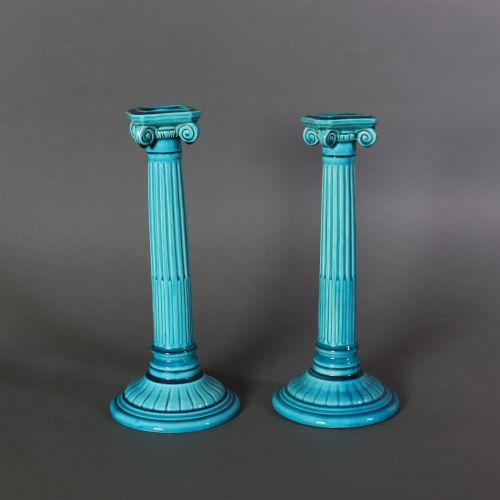
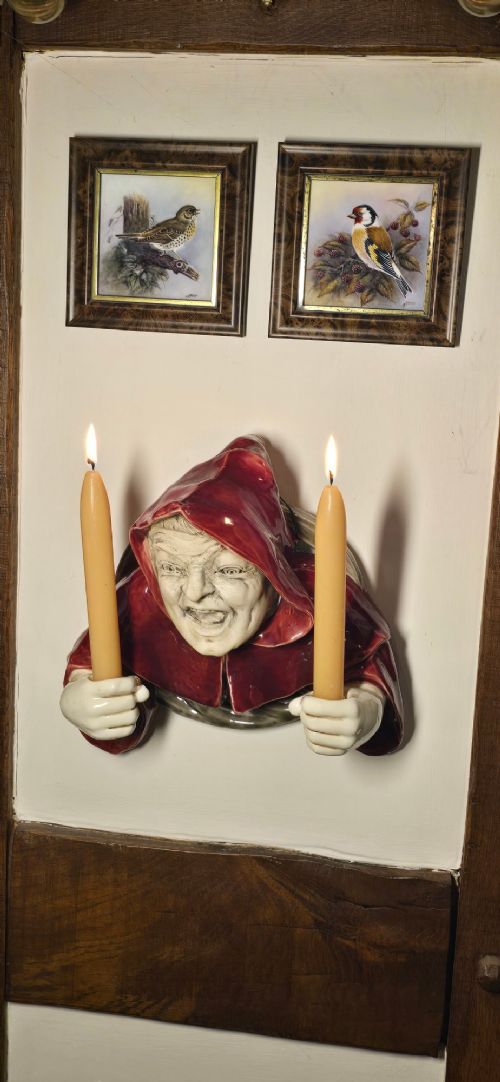
When you search for glazed ceramic candlesticks, you encounter pieces spanning from the eighteenth century through to the early twentieth century. The selection ranges from utilitarian chambersticks to elaborate figural pairs modelled as animals, figures and monks.
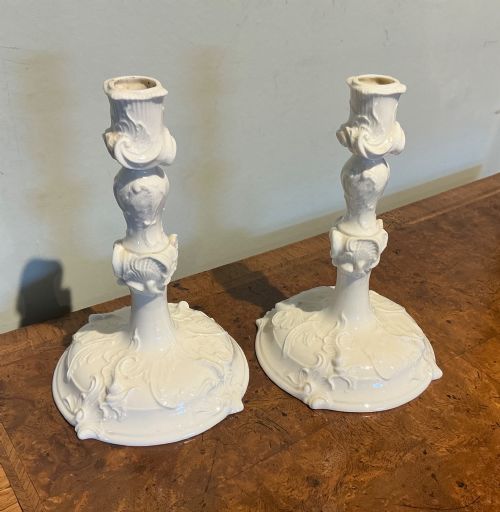
The most common examples you meet on this page belong to the nineteenth century, including Victorian earthenware and porcelain pieces. Makers from Staffordshire and factories such as Minton dominate the domestic output, alongside continental works from Dutch and German potteries.
Forms vary significantly, encompassing traditional pillar candlesticks, wall sconces and chambersticks designed for carrying through a house. Styles shift from Rococo Revival and Victorian Neoclassical to Arts and Crafts and Chinese Export influences.
How they were made
Potters shaped these pieces using earthenware, porcelain, faience and stoneware before applying liquid glazes to seal the porous clay. Many items received hand-painted polychrome decoration or underglaze colour before firing in kiln heat.
Gilding and metal highlights were frequently added over the glaze, requiring a secondary, lower-temperature firing to bond the gold leaf or metallic paint to the ceramic surface.
Glazed Ceramic Candlesticks Retail Price Guide 2026
Typical asking prices for glazed ceramic candlesticks among the pieces listed under this phrase on Sellingantiques today, from the lower quarter to the upper quarter. They describe what is for sale here now, not the wider market.
Listings feature pieces spanning from the eighteenth century to the twentieth century, incorporating earthenware, porcelain, faience and stoneware.
What varies in quality
The sophistication of the hand-painting distinguishes standard production wares from superior studio and factory output. Controlled brushwork and harmonious polychrome palettes elevate individual examples above plain or hastily decorated utility items.
Burmantofts Faience·Nymphenburg·Royal Doulton·Minton·Decoro England·Royal Bayreuth
The Glazed Ceramic Candlesticks Glossary
- Chamberstick
- A low candlestick fitted with a saucer base and a loop handle for carrying from room to room.
- Faience
- Tin-glazed earthenware, often brightly coloured and associated with decorative nineteenth-century studio pottery.
- Polychrome
- Decoration employing multiple distinct colours, typically applied by hand beneath or over the glaze.
- Putti
- Plump, naked infant angels frequently depicted in European sculpture and ceramic modelling.
- Stoneware
- A dense, vitreous ceramic fired at high temperatures, impervious to liquid even without glaze.
Glazed Ceramic Candlesticks: Frequently Asked Questions
What is a chamberstick used for?
A chamberstick was designed to be carried by hand through dark corridors and up staircases before the days of electric lighting. The wide saucer base caught any dripping wax, protecting the holder's fingers.
Today, they function well on bedside tables or sideboards where their compact form and handle add historic character to a room.
How do I date a ceramic candlestick?
Dating relies on stylistic clues, potting techniques and factory marks stamped or painted on the base. Regency and Victorian pieces often show specific Neoclassical or Rococo Revival motifs.
Examining the footring and the characteristics of the glaze also helps establish the period of manufacture.
Why are some candlesticks figural?
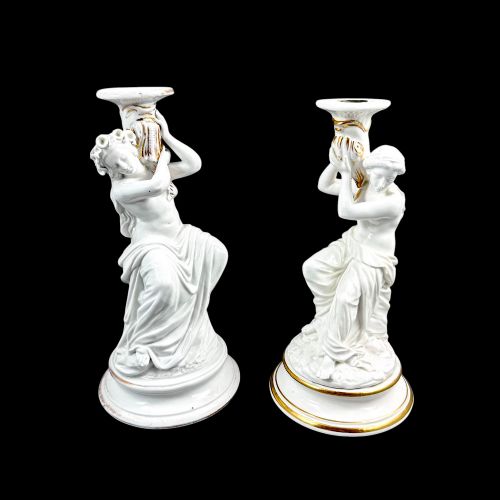
Figural candlesticks incorporate animals, mythological characters, or human figures into the supporting stem to display the modeller's skill. Themes like hunting animals, putti or foreign figures were popular decorative motifs.
These sculptural pieces served as ornamental mantel displays as much as sources of light.