
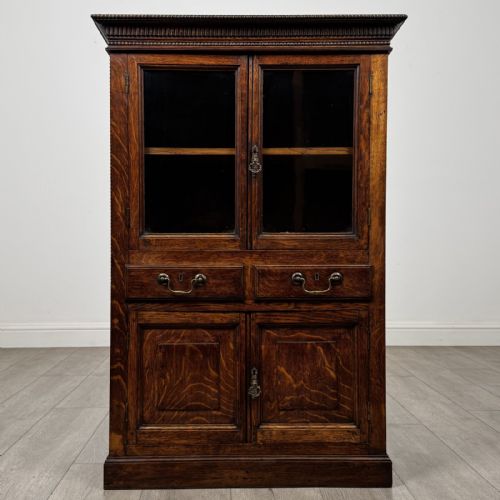
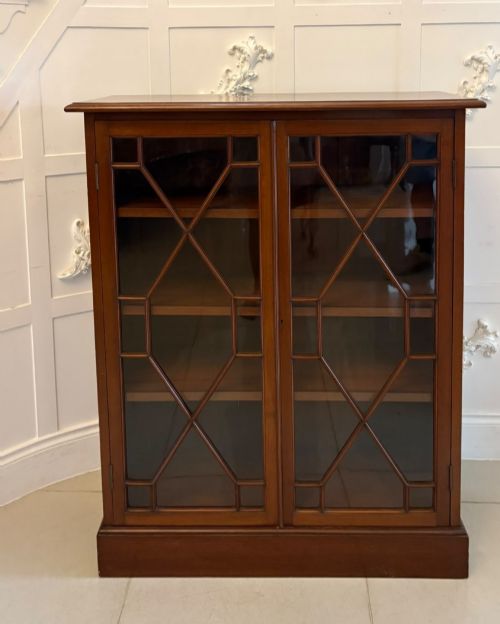
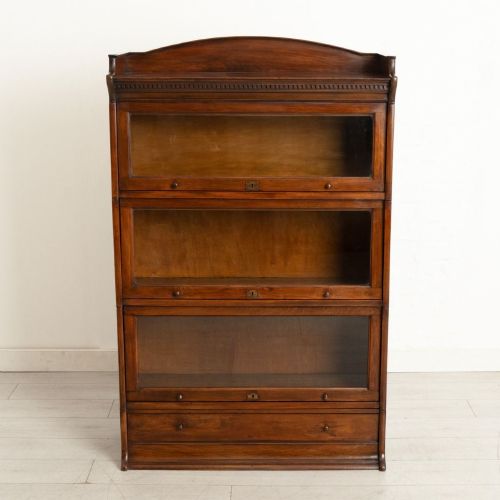
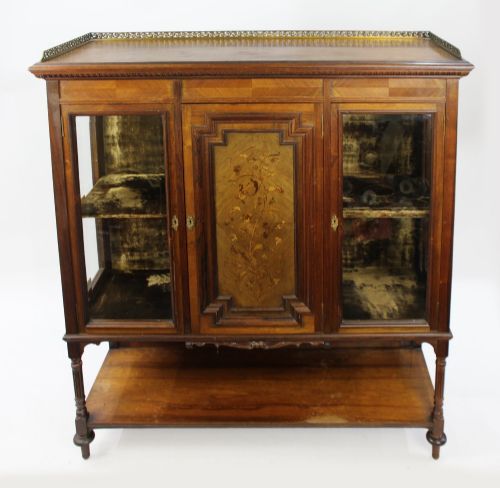
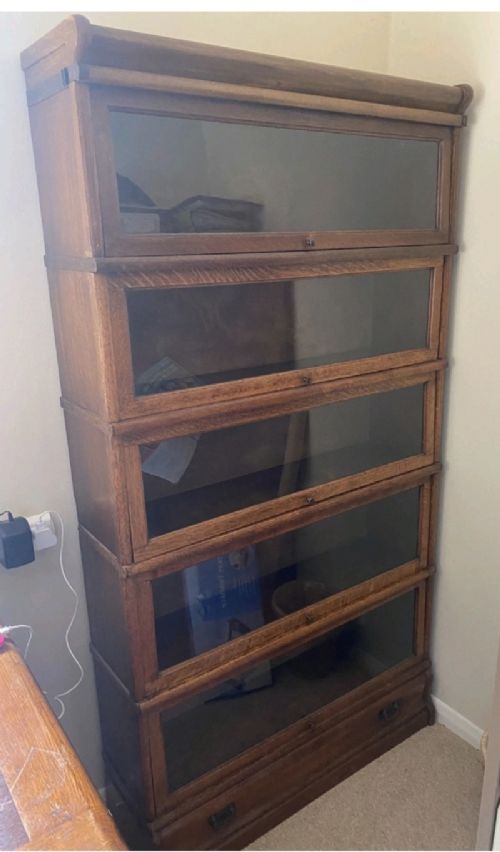
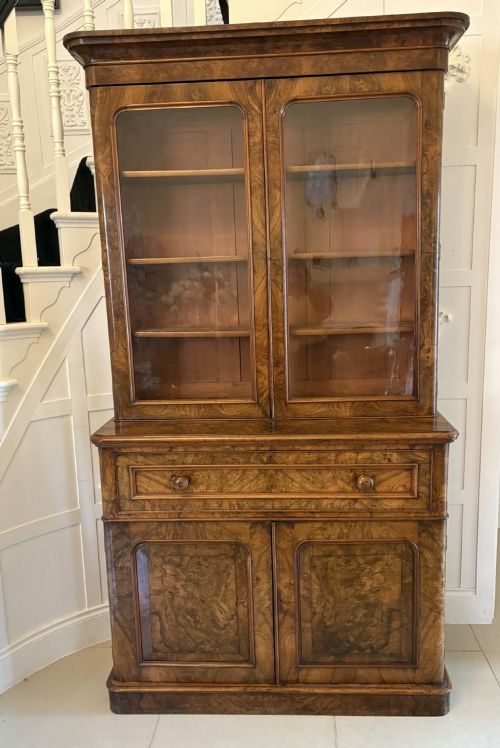
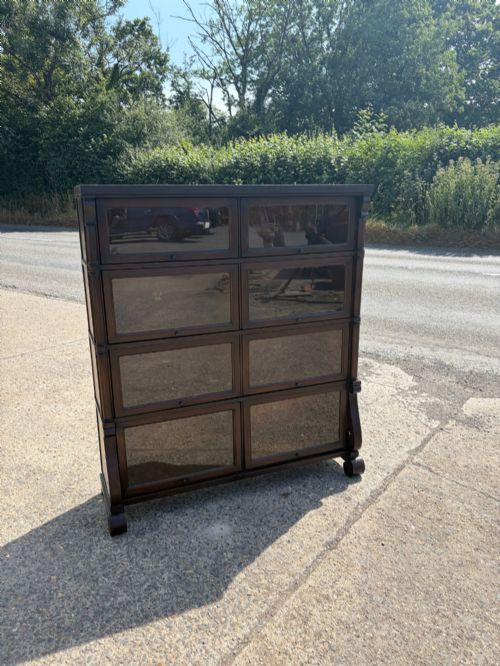
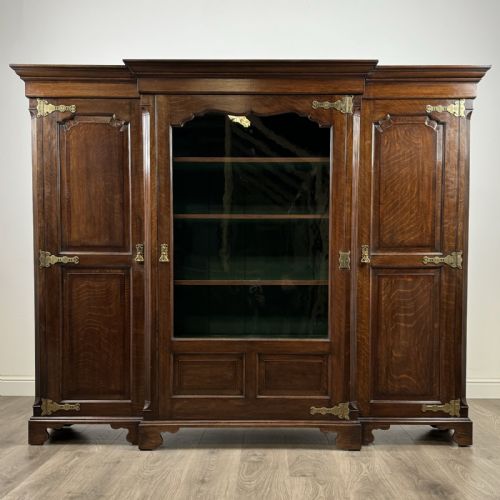
Glazed Cabinet with Doors
A glazed cabinet with doors protects your volumes and treasures behind glass while keeping them clearly in view across the room.
Glazed Cabinet with Doors
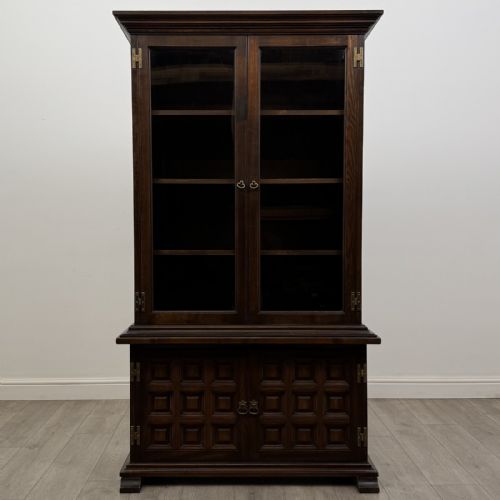
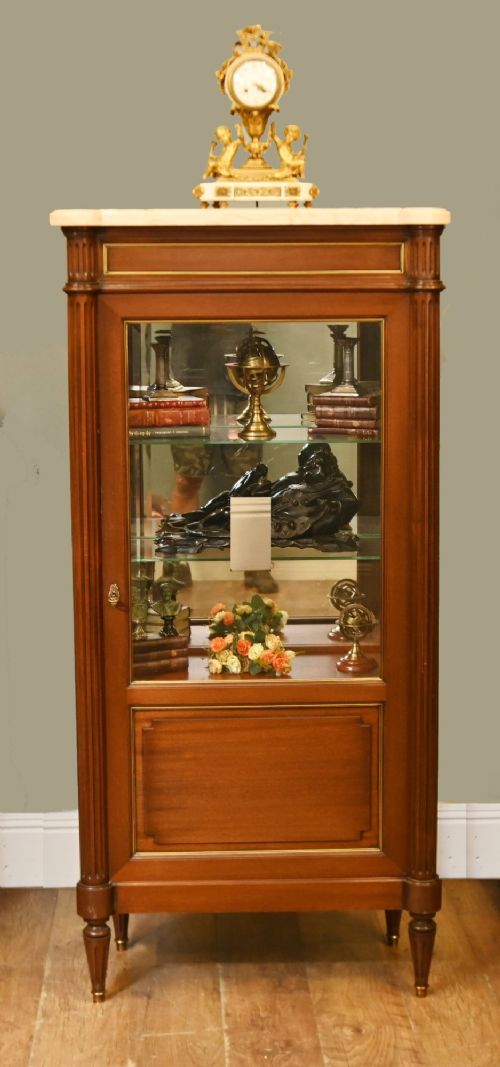
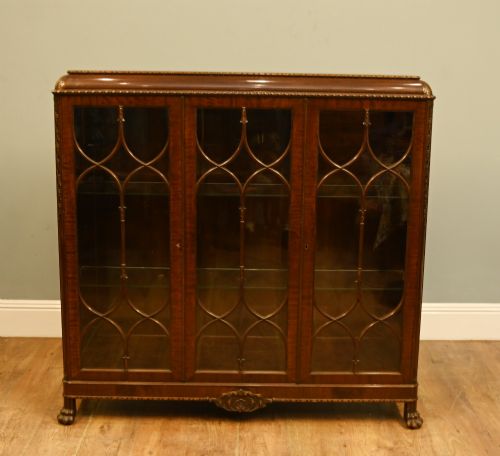
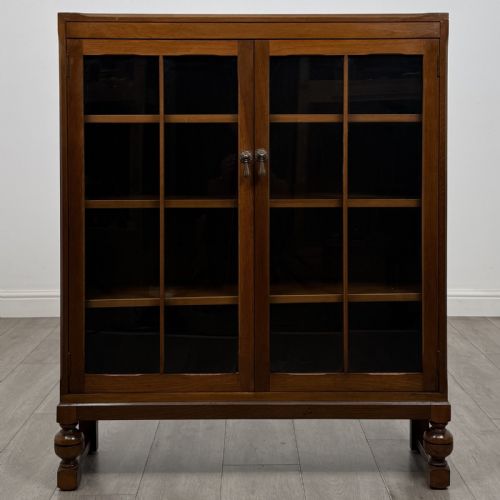
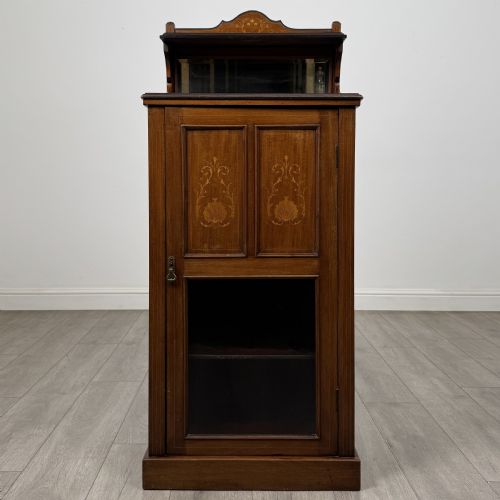
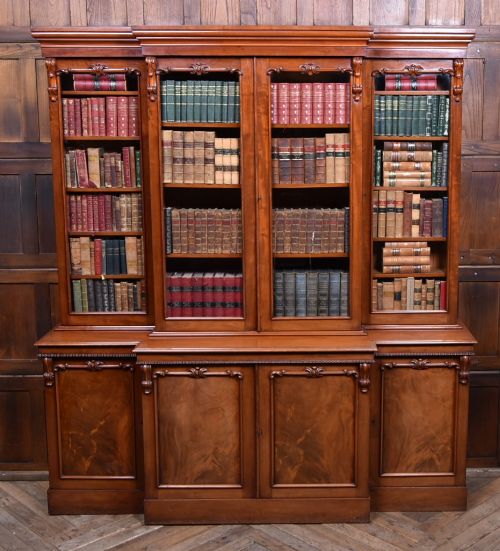
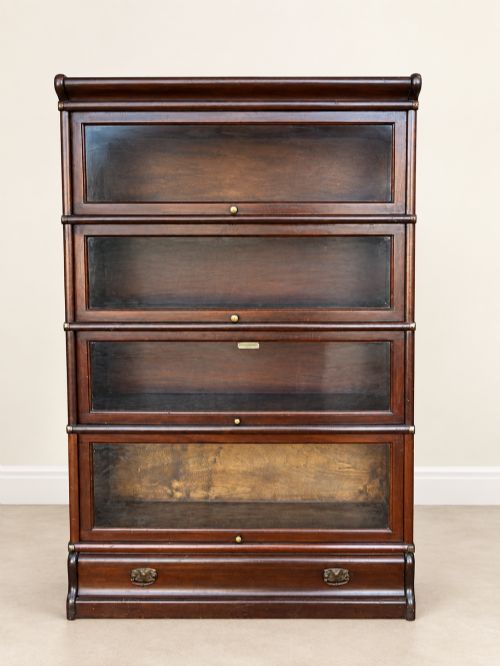
A glazed cabinet with doors spans practical bookcases, display pieces, and corner cupboards produced across the Victorian, Edwardian, and Georgian eras. You will most frequently encounter tall mahogany bookcases and walnut or oak display pieces fitted with glass panels.
Makers designed these items for libraries, drawing rooms, and studies, utilising upright timber frames to house books and porcelain. Pieces range from large two-part bureau bookcases down to compact pier cabinets and side cabinets intended for smaller spaces.
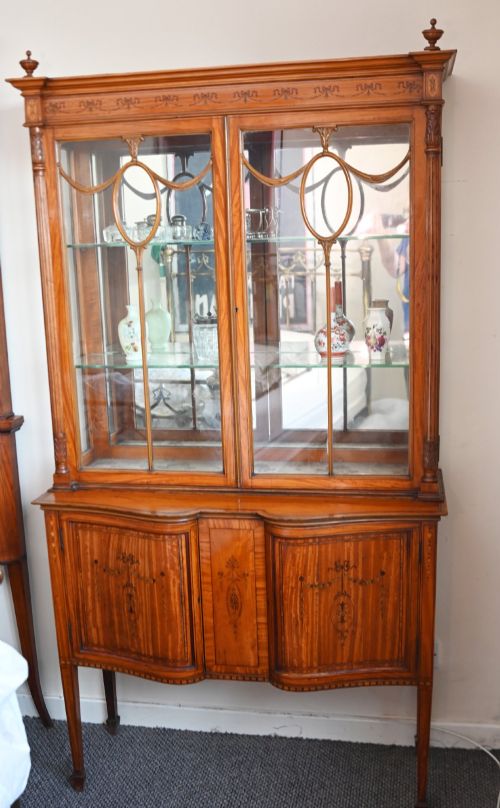
Examples from the nineteenth century often rely on figured mahogany or burr walnut, whilst twentieth-century pieces shift toward golden oak and painted satinwood. Architectural proportions and adjustable shelving remain common across the selection.
Materials and construction
Joiners built these cabinets using solid timbers and veneers such as mahogany, oak, pine, and burr walnut, frequently applying brass hardware and glass to the upper doors. Internal shelving is commonly adjustable to accommodate varying heights of books or decorative objects.
Surface ornamentation relies on subtle inlay work, including satinwood, ebony, and rosewood stringing, alongside carved mouldings and hand-painted panels. Glazing bars, or astragals, divide the glass panes into geometric patterns on finer cabinet doors.
One school library required a sturdy oak home for its books in 1920, proving that even textbooks deserved a grand timber facade.
Gradations of craftsmanship
The choice of timber grain dictates the initial visual impact, with highly figured mahogany and burr walnut marking the upper tier of production. Plain pine and standard oak typically represent more utilitarian workshops or domestic school rooms.
Delicate astragal glazing bars and precise inlay demonstrate superior cabinet-making skills compared to heavy, plain framing. Original glass panels, intact brass fittings, and well-balanced door hinges separate standard utility pieces from exhibition-grade furniture.
Tudor & Burrey Shrewsbury
The Glazed Cabinet with Doors Glossary
- Astragal
- Moulding that holds glass panes within a door. These thin strips divide the upper section of a bookcase into smaller geometric panes.
- Bureau bookcase
- A combination form featuring a sloping writing flap below a glazed upper cabinet. This dual-purpose furniture dates predominantly to the Georgian and Regency periods.
- Credenza
- A low sideboard or cabinet intended for display and storage. Nineteenth-century examples often incorporate glazed doors alongside cupboards.
- Pier cabinet
- A narrow display cabinet designed to stand against the wall space between windows. They frequently feature burr walnut and marquetry inlay.
- Secretaire
- A cabinet containing a fitted writing drawer or drop-front desk space. They appear integrated beneath glazed bookcase sections in library furniture.
Glazed Cabinet with Doors: Frequently Asked Questions
What is a glazed cabinet with doors used for?
These pieces served primarily to store and display books, ceramics, and curiosities while protecting them from dust and damage.
In domestic settings, they functioned as library bookcases, drawing room display units, or refined storage in studies and halls.
How do I tell Victorian from Georgian pieces?
Georgian furniture generally displays lighter timber tones, classical proportions, and fine mahogany veneers with restrained stringing.
Victorian cabinets often feature heavier carcases, darker wax finishes, bolder carved mouldings, and rich burr walnut or ebonised surfaces.
Are the shelves adjustable?
Many of the recorded bookcases and display cabinets feature adjustable wooden or glass shelving supported by traditional rack-and-pinion systems.
This adaptability allows owners to reconfigure the interior height to suit varying collections of books or decorative objects.
Where should I place a corner cabinet?
Two-part corner cupboards fit directly into ninety-degree wall intersections, making efficient use of awkward architectural space.
They work well in dining rooms or studies to display glassware without obstructing main pathways through the room.