






Glass Whisky Jug
A glass whisky jug is a practical barware essential, combining clear or cut glass with sterling silver mounts to serve spirits in style.
Glass Whisky Jug
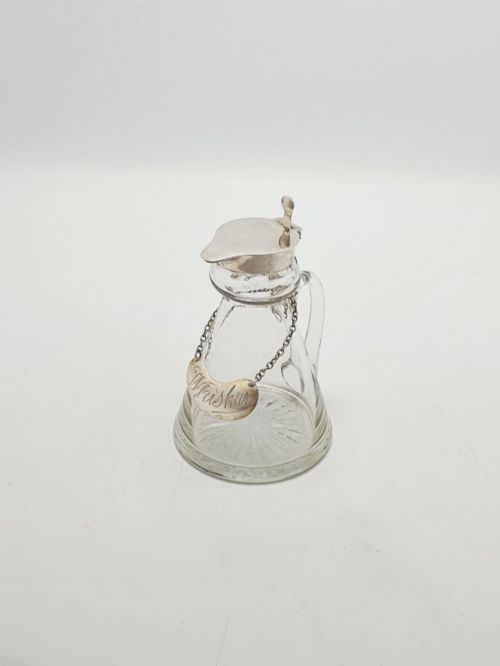
When you search for a glass whisky jug, you encounter barware pieces designed for serving spirits, frequently taking the form of a whisky noggin, tot, or small decanter. These pieces appear across periods including the Victorian era, the Edwardian period, and the 1920s and 1930s under George V.
The versions most commonly met on this page range from small individual noggins to larger decanters and jugs, often accompanied by matching silver labels. Styles span from Victorian and Edwardian designs to Art Nouveau and Art Deco shapes.
Originating predominantly from British and Irish makers, these items served a practical purpose in the home bar or dining room. The form prioritises a sturdy glass vessel paired with secure metal mounts for pouring.
Materials and construction
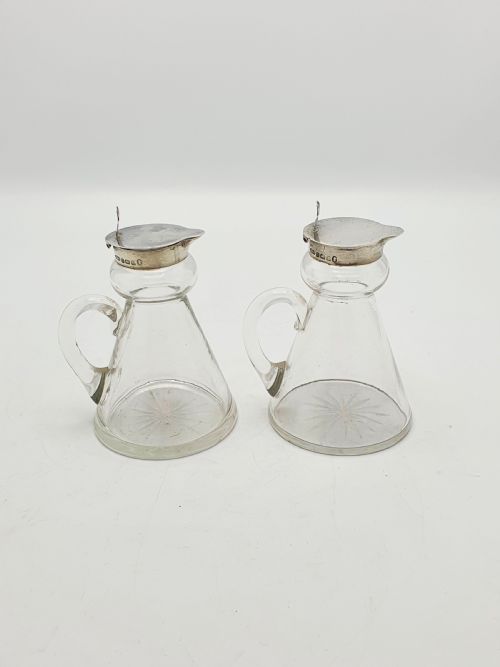
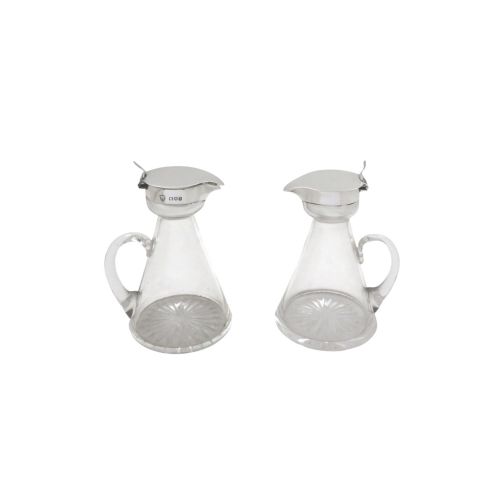
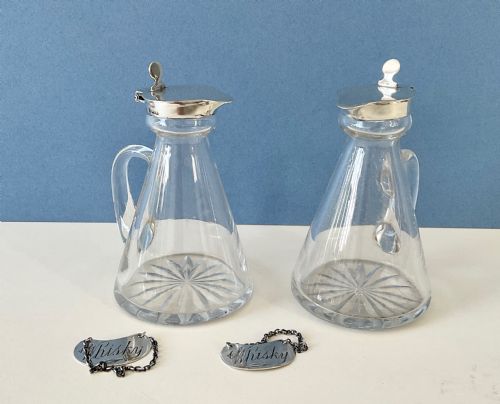
These items combine clear glass, cut glass, or cut crystal vessels with sterling silver mounts, caps, and collars. The glass is shaped into jugs or noggins, sometimes featuring intricate cut patterns that catch the light.
Sterling silver is worked into hinged mounts, collars, and hinged lids, securely attached to the glass necks. Many examples are completed with a matching silver label denoting the contents.
Glass Whisky Jug Retail Price Guide 2026
Typical asking prices for glass whisky jug among the pieces listed under this phrase on Sellingantiques today, from the lower quarter to the upper quarter. They describe what is for sale here now, not the wider market.
Listings feature items from the 19th Century, Victorian, Edwardian, and 1920s to 1930s George V periods.
Assessing quality in silver and glass
The standard of craftsmanship is evident in the weight and clarity of the glass or crystal, alongside the thickness and finish of the sterling silver mounts. Crispness in the cut glass patterns distinguishes finer vessels.
The precision of the silver hallmarks and the fit of the metal collars to the glass body indicate the skill of the maker. Complete sets that retain their matching silver labels hold greater cohesion.
Hukin & Heath·Elkington
The Glass Whisky Jug Glossary
- Whisky Noggin
- A small vessel designed for holding and pouring a single measure of whisky. These typically feature a handle and a silver pourer lid.
- Tot
- A small drinking vessel or container for a measure of spirits, often accompanied by a matching silver label.
- Cut Crystal
- Glass that has been decoratively shaped by cutting facets or patterns into the surface. This technique enhances the brilliance and weight of the material.
- Sterling Silver
- An alloy of silver containing 92.5 percent pure silver and 7.5 percent other metals, usually copper. It provides the durable mounts and tops found on these jugs.
Glass Whisky Jug: Frequently Asked Questions
What is a whisky noggin?
A whisky noggin is a small, handled glass jug designed for serving an individual portion of spirits. They typically hold a single tot or measure.
These pieces were popular for personal use at the dining table or sideboard, allowing guests to pour their own drink to taste.
How do I date a silver mounted jug?
Dating these pieces relies primarily on the sterling silver hallmarks stamped onto the mounts or collars. These marks indicate the assay office, the year of manufacture, and the silversmith.
Stylistic elements like Edwardian curves or Art Deco lines also offer clues to the period of production.
What is the difference between a noggin and a decanter?
A noggin is generally smaller, featuring a handle and a spout designed for immediate pouring of a single measure. Decanters are larger storage vessels intended for holding a whole bottle.
Both utilise glass bodies with silver mounts, but their capacity and daily function differ.
How should I clean the silver mounts?
Clean the sterling silver using a soft cloth and a gentle silver polish, taking care to avoid getting polish on the glass or inside the vessel. Regular light dusting maintains the shine.
Avoid harsh abrasives that might damage the hallmarks or scratch the metal surface.