
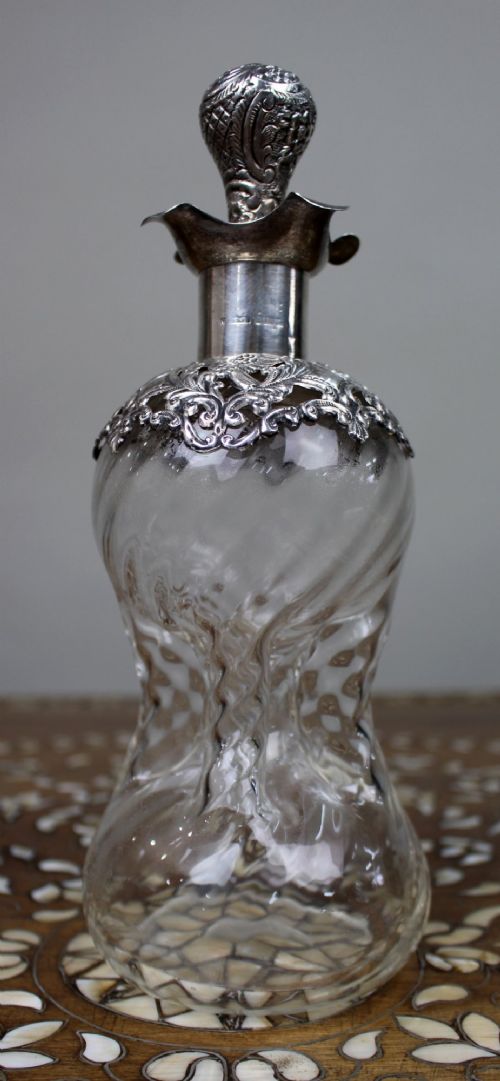


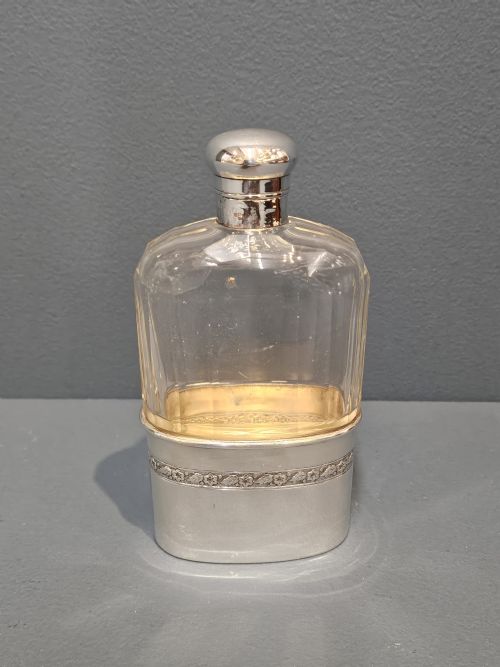


Glass Whisky Flask
These glass whisky flask examples combine cut crystal or glass with sterling silver and leather, offering a tactile pocket companion for spirits.
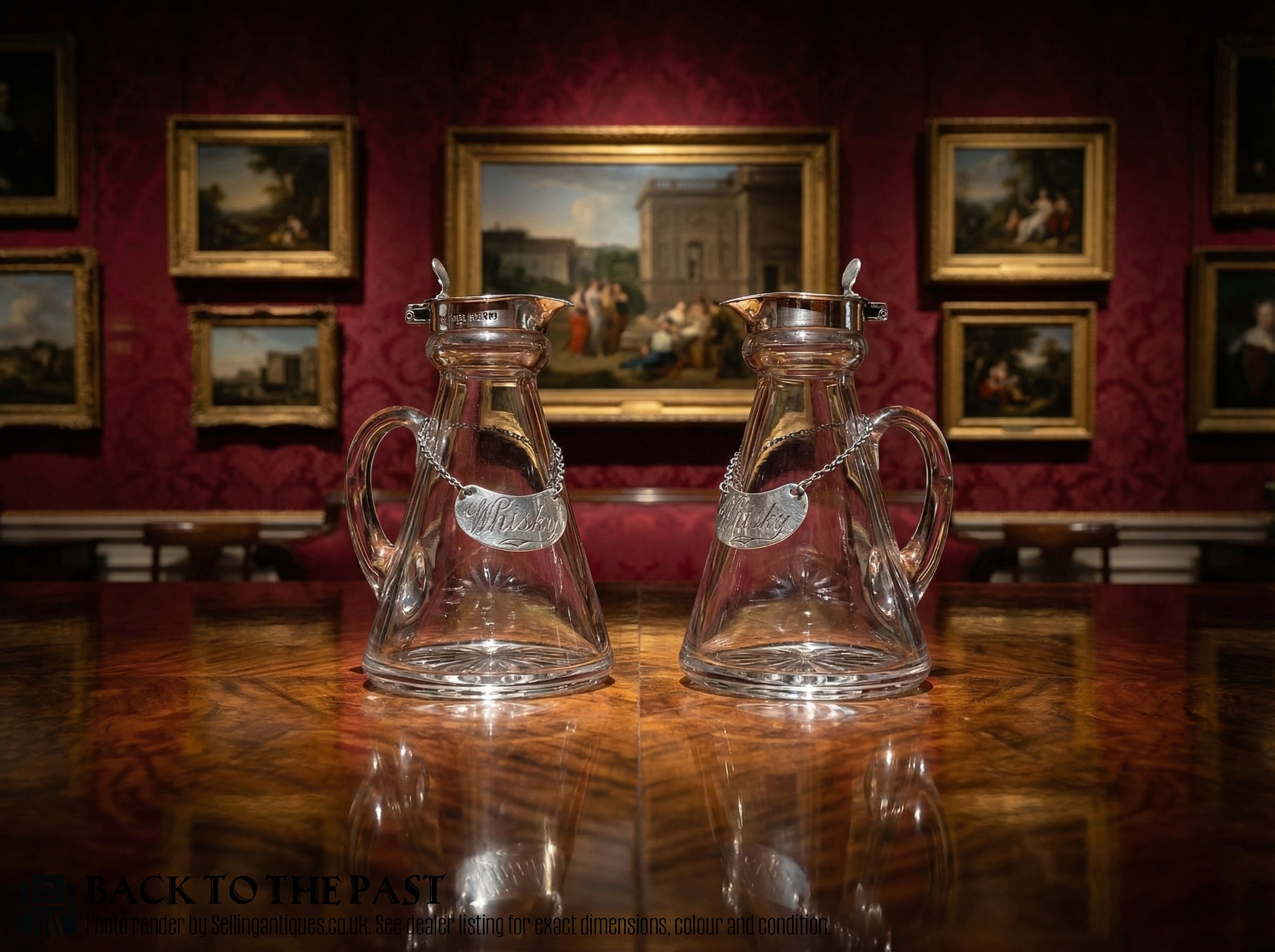
Glass Whisky Flask
A glass whisky flask is typically encountered in portable hip flask formats alongside table decanters and tots, spanning the Victorian, Edwardian and Art Deco periods.
Makers produced these spirit containers in clear glass, cut crystal and coloured glass varieties, frequently incorporating sterling silver mounts, removable cups or leather casing.
The pieces on this page originate predominantly from the late nineteenth and early twentieth centuries, reflecting changing social habits around outdoor refreshment and home barware.
Materials and construction methods
Silversmiths formed protective caps, hinged lids and detachable cups from sterling silver or silver plate, often applying hammered finishes or floral patterns.
Glassblowers and cutters produced heavy-walled vessels in cut crystal and smooth glass to withstand pocket use or table service.
Craftsman bound selected bodies in crocodile leather or plain leather, pairing the organic texture directly against polished metal and transparent glass.
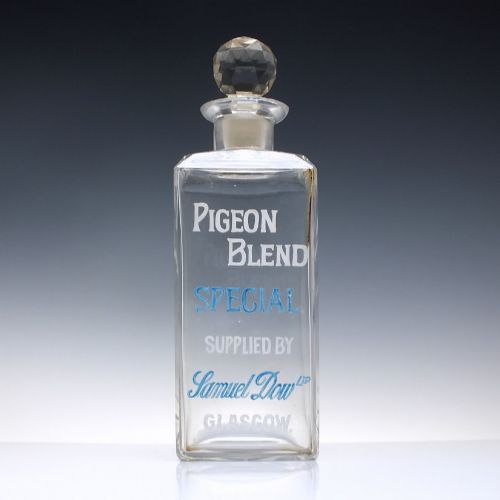
One Scottish Victorian glass whisky decanter bears the delightful proprietary title Pigeon Blend.
Judging the range of quality
Quality rests on the weight and depth of the cut glass against simpler moulded vessels, alongside the substance of the silver mounts.
Pieces featuring fully integrated hallmarks, matching removable cups and intact internal cork stoppers demonstrate superior original craftsmanship.
The integration of specialist materials like genuine crocodile leather and heavy silver gilt work elevates the standard beyond standard plate and plain glass.
Asprey London·Elkington·James Dixon & Sons
The Glass Whisky Flask Glossary
- Hip flask
- A curved container designed to fit a pocket for carrying spirits. These portable pieces often feature captive caps or detachable base cups.
- Decanter
- A vessel used for holding and serving alcoholic beverages. They appear here with silver mounts and specialised labels.
- Tot
- A small measure of spirits or a tiny drinking glass. They are commonly paired with silver whisky labels on this page.
- Noggin
- A small mug or vessel for liquor. This historic drinking form often appears as part of matched table sets.
- Silver gilt
- Silver that has been coated with a thin layer of gold on its surface. This technique adds a rich interior or exterior finish to mounts and cups.
Glass Whisky Flask: Frequently Asked Questions
What is a glass whisky flask?
A glass whisky flask is a portable or table-ready vessel designed to hold spirits securely. They combine glass bodies with protective metal or leather elements.
Most examples date from the Victorian and Edwardian eras, reflecting traditional portable drinking customs.
How were these flasks used?
Pocket-sized hip flasks accompanied travellers and sportsmen on outdoor pursuits for quick draughts of whisky. Table decanters and tots served the same spirits within a domestic setting.
Removable cups built into the base allowed users to pour a measure away from home.
How do I date an antique flask?
Dating relies heavily on silver hallmarks stamped onto the mounts, lids and cups. These marks reveal the assay office, year and maker.
Stylistic cues such as Edwardian floral patterns or Art Deco geometric lines also help place the piece in its era.
Are the leather coverings genuine?
Period pieces frequently utilise genuine leather or crocodile skin to secure a firm grip in the hand. Makers stitched or fitted these coverings tightly over the glass bodies.
Examine the grain and stitching closely to understand the original material specification.