



Glass Top Display Box
A glass top display box puts small treasures in focus, taking the form of glazed bijouterie tables, shop cabinets, and tabletop cases.
Glass Top Display Box
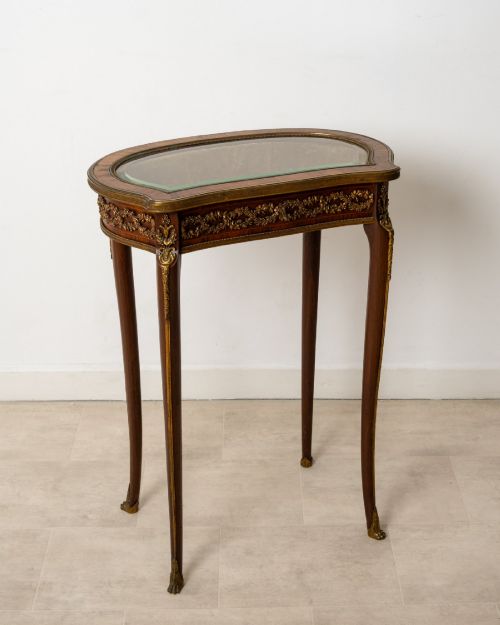
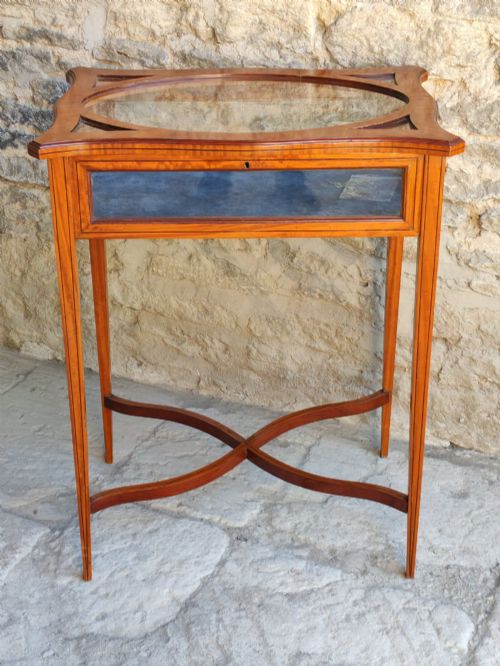
A glass top display box protects delicate possessions while keeping them in full view, spanning forms from freestanding bijouterie tables to tabletop shop cabinets. Buyers seeking a glass top display box encounter pieces designed for parlours and retail counters alike, originating from Victorian and Edwardian workshops.
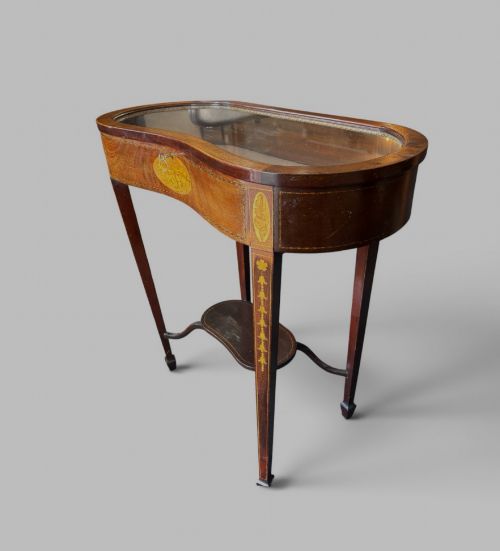
The most common examples on this page are mahogany and satinwood bijouterie tables with glazed lids, alongside oak or hardwood counter-top shop cabinets. These items range from kidney-shaped display tables to octagonal cases, reflecting both domestic and commercial uses from the nineteenth and early twentieth centuries.
How they were made
Cabinetmakers built these pieces using dense hardwoods like mahogany, rosewood, kingwood, and satinwood, frequently applying decorative marquetry, brass inlay, or satinwood banding. Glazed panels form the viewing surfaces, allowing light to reach the interior chamber.
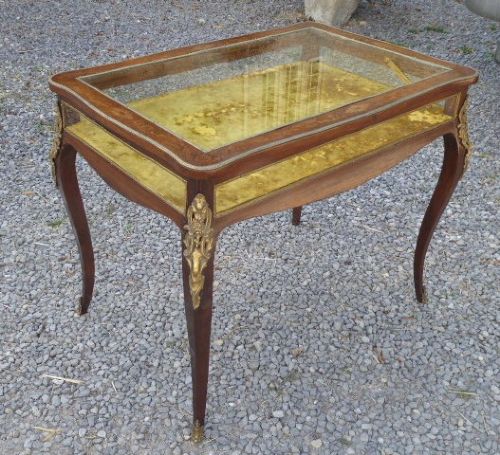
Mounts in ormolu, also described as gilded bronze, adorn French and English models, whilst interiors are typically lined with velvet, satin, or fabric to cushion jewellery and small objects. Hinged or drop-front glass doors provide access to the enclosed space.
Glass Top Display Box Retail Price Guide 2026
Typical asking prices for glass top display box among the pieces listed under this phrase on Sellingantiques today, from the lower quarter to the upper quarter. They describe what is for sale here now, not the wider market.
Listings feature woods such as mahogany, rosewood, kingwood, and satinwood, alongside brass and ormolu mounts.
What varies in quality
The sophistication of the timber work and the crispness of the cast ormolu mounts set finer examples apart from simpler utilitarian pieces. Details such as fine stringing, intricate marquetry, and shaped kidney or octagonal outlines indicate greater craftsmanship.
Interior execution also marks the distinction between standard cases and superior ones, particularly the choice of fabric lining and the precision of the glazed frame construction. Cabinetwork that retains well-fitted glass and smooth hinges represents the upper tier of the range.
The Glass Top Display Box Glossary
- Bijouterie table
- A glazed display table designed specifically for holding small ornaments, medals, and jewellery. These pieces elevate collections to eye level in a drawing room.
- Ormolu
- Gilded bronze mounts applied to furniture edges and corners for decorative effect. French cabinets frequently utilise these metal ornaments.
- Marquetry
- Inlaid patterns of contrasting wood veneers assembled to form pictorial or geometric designs. This technique decorates the surfaces of many refined display tables.
- Vitrine
- A glass-fronted or glass-topped cabinet for displaying objects of curiosity. The term often describes French-influenced display tables.
- Bevelled glass
- Glass panes with angled edges cut around the perimeter. This treatment catches the light and adds depth to the viewing window.
Glass Top Display Box: Frequently Asked Questions
What fits inside a bijouterie table?
These glazed cases suit small collectibles such as pocket watches, rings, medals, and porcelain figures.
The enclosed velvet or satin lining protects delicate items while presenting them clearly to anyone looking through the top glass.
How do I clean the fabric lining?
Original fabric linings require gentle surface dusting with a soft brush rather than liquid cleaners.
Harsh methods can damage historic textiles and the timber substrates beneath them.
Where were shop display cabinets used?
Merchants placed these glazed wooden cases directly onto counters to showcase small goods like pencils or confectionery.
Shoppers could inspect items closely through the glass while the merchandise remained secure inside.
How do French and English styles differ?
French models frequently incorporate shaped kingwood or mahogany frames with prominent ormolu mounts and curved cabriole legs.
English equivalents tend to feature straighter lines, satinwood inlay, and Edwardian or Victorian mahogany construction.