


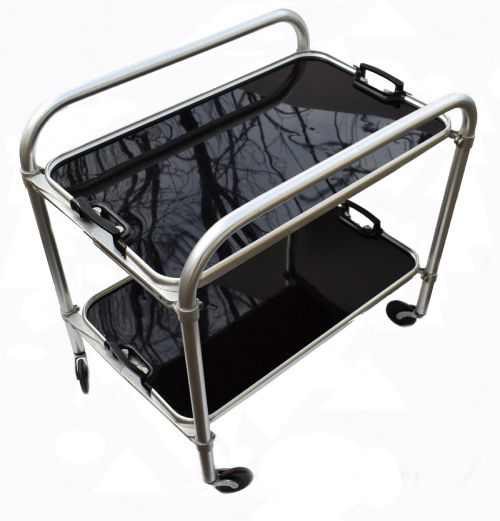


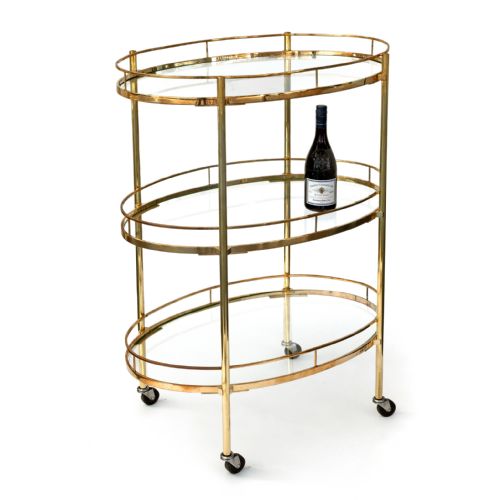


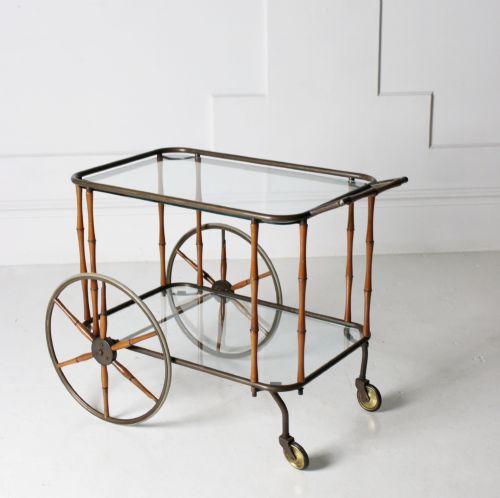
Glass Serving Cart
A glass serving cart brings tangible elegance to any room, offering a mobile surface for drinks and glassware.
Glass Serving Cart
A glass serving cart functions as a mobile station for hospitality, holding bottles, glasses and bar accessories within easy reach. These pieces appear across several distinct twentieth-century eras, reflecting changing domestic habits and interior tastes.
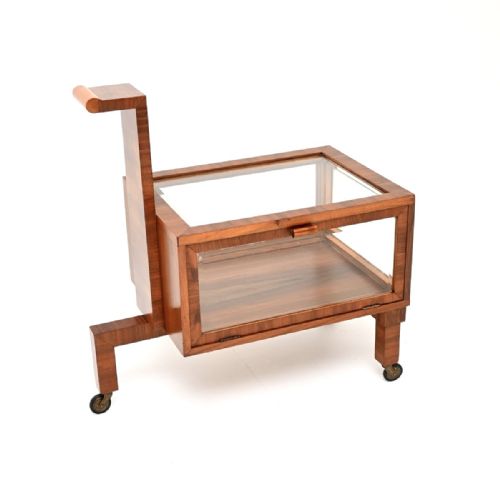
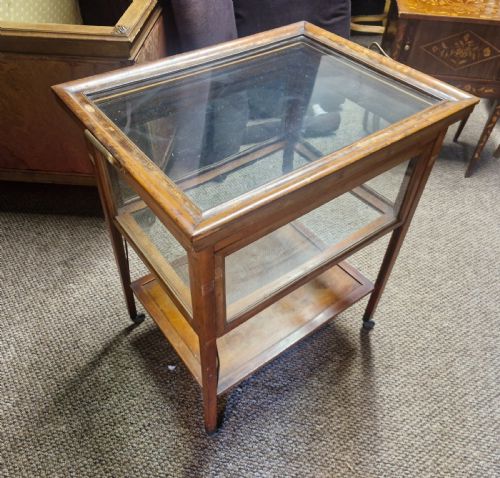
The most common examples encountered here stem from the Art Deco period, featuring tiered designs and metal frames. Alongside these, buyers find Edwardian tea trolleys and later twentieth-century cocktail carts.
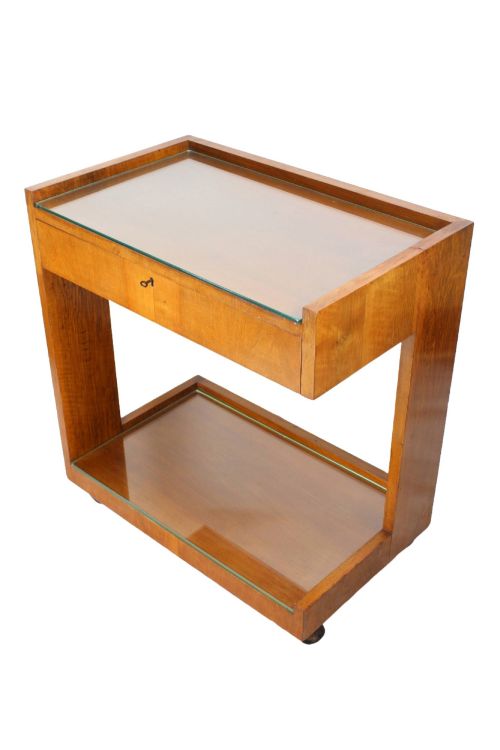
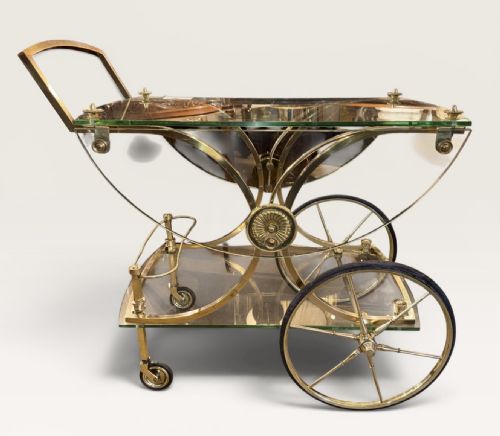
Forms range from compact two-tier walnut structures to larger three-tier brass displays and drop-side tea carts. Each variation serves a practical purpose while anchoring the visual style of a room.
Materials and construction
Makers built these pieces using metal frameworks of brass, chrome, aluminium and steel to support glass, mirror glass or smoked glass shelves. Wood elements such as walnut, mahogany and general timber provide warmth and structural contrast in many designs.
Specialised techniques distinguish the higher-end examples, including shaped goatskin wrapping over wooden cores and intricate faux bamboo metalwork. Mirrored surfaces and galleried edges require precise fitting to secure the glass panels within their metal or wooden mounts.
Listings feature items spanning the Edwardian era through the 1930s Art Deco period and onward to later twentieth-century designs.
Assessing quality and craftsmanship
Quality reveals itself in the weight and finish of the metal frame, whether heavy cast brass or polished chrome, compared to lighter plated alternatives. The integration of secondary materials, such as genuine goatskin or figured walnut, marks out superior fabrication.
The choice of glass - ranging from standard clear panes to cobalt blue mirror glass or smoked glass - sets different tiers of pieces apart. Structural integrity in tiered systems and smooth movement on wheels further distinguish standard utility from exceptional design.
Aldo Tura·Maison Bagues·Maison Jansen
The Glass Serving Cart Glossary
- Art Deco
- A design style spanning the 1920s and 1930s characterised by streamlined geometric forms and modern industrial materials. This aesthetic dominates the selection of trolleys available here.
- Etagere
- A piece of furniture consisting of a set of open shelves for displaying small objects. In this context, it refers to multi-tiered serving carts with open visibility.
- Galleried
- Featuring a raised decorative border or railing around the edge of a shelf or tray. This feature prevents bottles and glasses from sliding off during transit.
- Hostess trolley
- A term used for mobile serving units designed to hold food, tea or bar supplies. These often include drop sides or multiple tiers for expanded surface area.
Glass Serving Cart: Frequently Asked Questions
What is a glass serving cart used for?
These carts serve as mobile stations for entertaining, holding spirits, glassware, ice buckets and cocktail accessories during gatherings.
Outside of parties, they function as permanent display stands for decorative objects, books or house plants in living spaces.
How do I clean a glass serving cart?
Use a soft cloth and mild glass cleaner for the shelves, avoiding harsh abrasives that might scratch mirrored or smoked surfaces.
Polish metal frames with appropriate cleaners suited to brass, chrome or silver plating to maintain their original lustre.
How do I date a glass serving cart?
Examine the primary materials and stylistic markers, such as geometric chrome frames characteristic of the 1930s or lighter wood tea trolleys from the 1920s.
Construction methods, screw types and the presence of maker signatures or attribution details help narrow down the specific decade of production.
Are glass serving carts sturdy enough for heavy bottles?
Most pieces are engineered to support the weight of standard glassware and liquor bottles distributed across their tiers.
Multi-tiered brass and metal frames offer robust support, though care should be taken with vintage glass panels on older models.