





Glass Serving Bowl
These glass serving bowl examples span Victorian heavy-cut crystal to French opalescent art glass, bringing practical elegance and period weight to the table.
Glass Serving Bowl
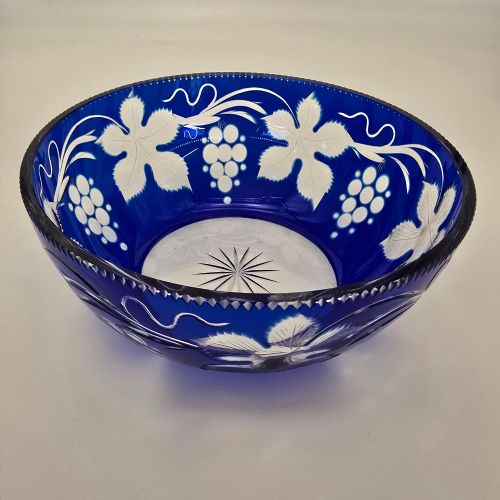
A glass serving bowl fulfils the practical need for presenting fruit, salads, and punch while acting as a decorative centrepiece. The selection encountered here ranges from nineteenth-century Bohemian cobalt pieces to twentieth-century French opalescent designs.
Victorian and Edwardian examples lean heavily on deep cut crystal and sterling silver rims, while later 1930s works introduce moulded opalescence and vibrant colour. Buyers will find everything from modest sweet dishes to large punch bowl sets.
Geographic origins span Britain, France, and Bohemia, showcasing distinct regional approaches to glassmaking over the course of a century. These functional items reflect the changing domestic habits of dining and entertaining across different eras.
Materials and technique
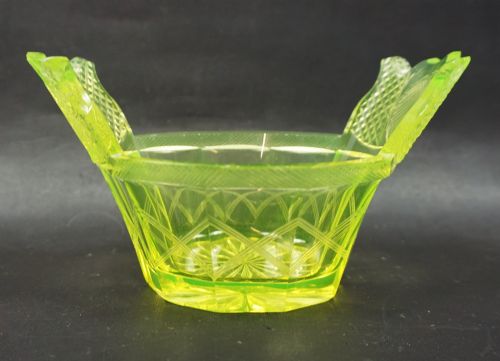
Production relies on lead crystal and clear glass shaped through blowing, pressing, or mould-casting. Cut glass decoration is achieved by wheel-cutting deep facets into the cooled surface to catch the light.
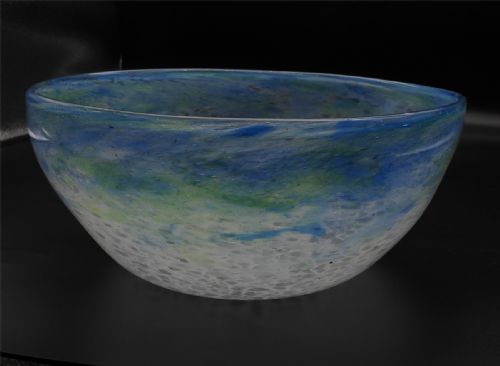
Opalescent and coloured wares utilise specialised mineral additives in the molten batch, creating varying degrees of translucency and surface glow. Many pieces integrate secondary materials such as sterling silver rims, ormolu mounts, and silver-plated fittings.
Glass Serving Bowl Retail Price Guide 2026
Typical asking prices for glass serving bowl among the pieces listed under this phrase on Sellingantiques today, from the lower quarter to the upper quarter. They describe what is for sale here now, not the wider market.
Some punch bowls hide seasonal themes beneath their elegant crystal cutwork, ready for an unexpected Halloween gathering.
Assessing quality
Quality reveals itself in the crispness of the cutting, the weight of the crystal, and the purity of the metal mounts. Superior pieces display deeply carved facets that are smooth to the touch and perfectly balanced in the hand.
Moulded artistic glass derives its merit from the sharpness of the relief design and the subtlety of the opalescent fire. Maker signatures and silver hallmarks provide further distinction between standard domestic ware and high-end studio output.
G Vallon·Rene Lalique·Monart Glass
The Glass Serving Bowl Glossary
- Cut Glass
- Glass decorated by grinding facets and patterns into the surface using rotating wheels. This technique enhances the refractive quality and weight of the material.
- Opalescent Glass
- Glass that diffuses light with a milky, pearlescent glow, often showing blue or amber tones at the edges. It gained popularity in the early twentieth century through French mould-blown pieces.
- Lead Crystal
- Glass containing a high proportion of lead oxide, which increases brilliance, density, and resonance. It allows for deeper and sharper wheel-cutting than standard soda-lime glass.
- Ormolu
- Gilded bronze mounts applied to decorative objects and glassware, common in French Empire and Victorian luxury pieces. The finish mimics solid gold through the application of a gold-mercury amalgam.
- Cobalt Glass
- Deep blue glass created by adding cobalt oxide to the molten batch during production. It provides a striking backdrop for clear cut panels or gilded decoration.
Glass Serving Bowl: Frequently Asked Questions
How do I clean an antique glass bowl with a silver rim?
Wash the glass gently in warm soapy water using a soft cloth, avoiding harsh abrasives that might scratch the surface.
Keep silver polish away from the glass to prevent staining, and dry the metal components immediately after cleaning.
Can I use these bowls for serving food daily?
Most sturdy cut glass and crystal pieces remain entirely suitable for serving fruit, salads, and desserts at the modern table.
Delicate opalescent or thin art glass bowls warrant more careful handling to avoid accidental chips during use.
How do I tell Victorian cut glass from later twentieth-century pieces?
Victorian and Edwardian bowls typically feature heavier lead crystal with hand-cut facets that show slight irregularities under close inspection.
Later twentieth-century production often relies on smoother mould-blown techniques with more uniform wall thicknesses and machine-smoothed rims.
What is the difference between crystal and standard glass?
True crystal contains lead oxide, which gives the material greater weight, a higher refractive index, and a clear musical ring when struck.
Standard glass lacks this metallic oxide content, resulting in a lighter feel and less brilliance under direct light.