




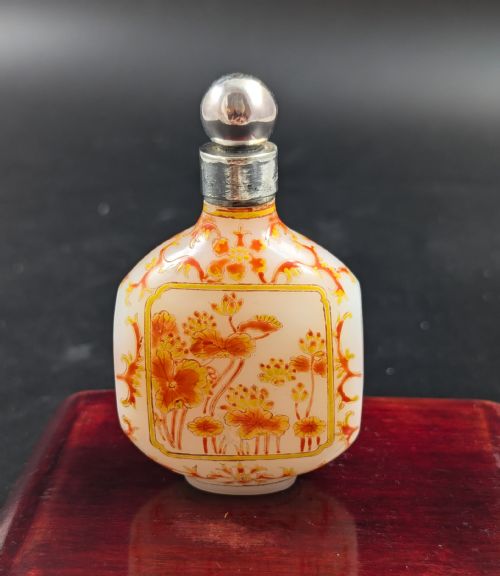

Glass Scent Vial
A glass scent vial is a portable pocket vessel for perfume, prized for delicate glasswork and precious metal mounts.
Glass Scent Vial
A glass scent vial is a small portable vessel designed to carry liquid fragrance or salts in a pocket or reticule. When you search for a glass scent vial, you encounter various forms from the Georgian, Victorian, Edwardian, and early twentieth-century periods.
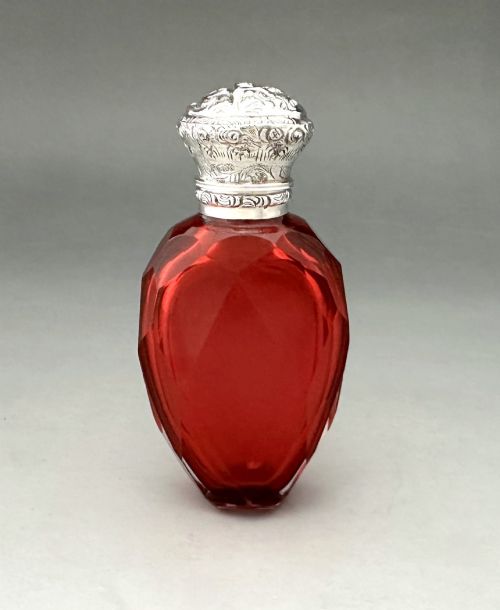
The most common examples on this page combine blown or cut glass bodies with hinged metal caps or screw tops of sterling silver, silver gilt, or enamel. They appear in diverse colourways including ruby, cranberry, amethyst, and clear glass.
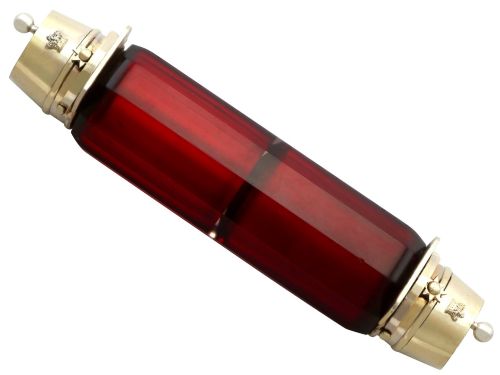
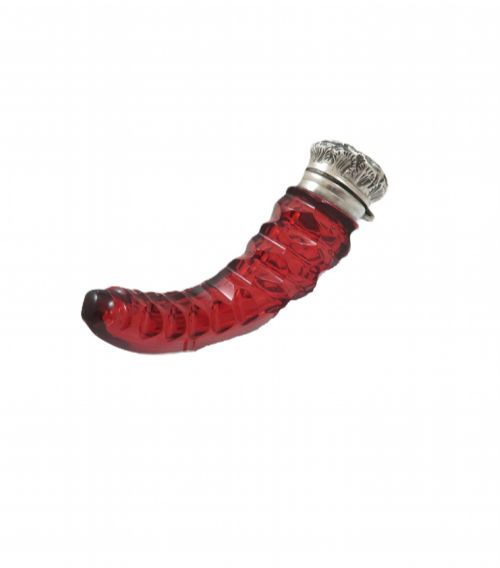
Makers produced these vanity items in simple pocket shapes as well as distinctive forms like icicles and double-ended designs for holding two different liquids. Alongside standard perfume bottles, the selection includes related vanity jars and snuff bottles.
How they were made
Glass bodies were formed by blowing molten metal into moulds or free-blowing, then finished through wheel-cutting, etching, or enamelling to create decorative surface patterns. Coloured glass varieties derived their rich hues from mineral additions to the batch during melting.
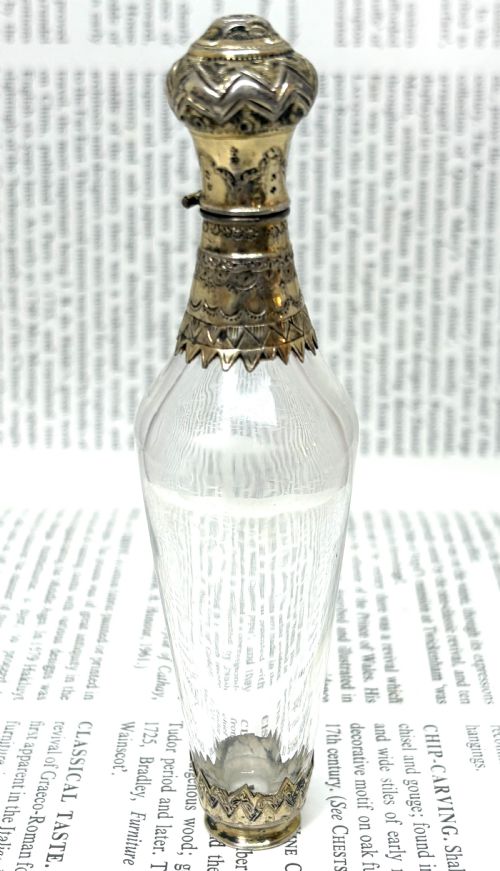
Mounts and lids utilise sterling silver or silver-gilt, often shaped with repoussé work, chasing, or finely engraved detail. These metal collars and screw caps were securely fitted to the glass necks to prevent leakage of the precious contents.
Glass Scent Vial Retail Price Guide 2026
Typical asking prices for glass scent vial among the pieces listed under this phrase on Sellingantiques today, from the lower quarter to the upper quarter. They describe what is for sale here now, not the wider market.
Some Victorian owners carried tiny icicle-shaped scent bottles in their pockets, ensuring a frosty look even on the warmest summer afternoons.
What varies in quality
Quality rests in the crispness of the glass cutting and the depth of hand-engraving on both the crystal body and the silver mounts. Superior pieces display harmonious proportions between the heavy metal top and the delicate glass reservoir.
The presence of undamaged original stoppers and fully functional, tight-closing hinged lids elevates a piece. Finer examples also feature complex chemical glass colours, detailed enamelling, or specialised maker signatures.
Rene Lalique
The Glass Scent Vial Glossary
- Cranberry glass
- A rich pinkish-red transparent glass created by adding gold to the molten batch. It became especially popular during the Victorian period for decorative tableware and small scent bottles.
- Double-ended
- A symmetrical bottle design featuring a cap at each end, allowing the owner to carry two different scents or smelling salts simultaneously. These often incorporated cut glass bodies with matching silver lids.
- Silver-gilt
- Sterling silver that has been coated with a thin layer of gold, providing a warm golden finish while retaining the structural strength of solid silver. This treatment protected the metal from tarnishing inside pocket environments.
- Repoussé
- A metalworking technique where the artisan hammers the metal from the reverse side to form a raised design in relief. On scent bottles, this created ornate floral or scrollwork patterns on the silver caps.
- Vanity jar
- A larger dressing table container typically featuring a solid silver lid and a heavy cut glass base. They served a similar domestic function to pocket vials but remained stationary on a bedroom bureau.
Glass Scent Vial: Frequently Asked Questions
How do I clean a vintage glass scent vial?
Clean the interior gently with warm water and a soft bottle brush, avoiding harsh chemical detergents that might harm fragile enamel or old glass surfaces.
Keep silver polish away from the glass body to prevent staining, and ensure the bottle dries completely before replacing the stopper.
What is the difference between a scent bottle and a vanity jar?
Scent bottles were designed for portable daily use in pockets or reticules, often featuring secure screw caps or tight stoppers to prevent leaks during travel.
Vanity jars are larger, heavier containers meant to sit permanently on a dressing table or bureau rather than being carried about.
How can I tell a Victorian scent vial from a Georgian one?
Georgian examples often display simpler, restrained cutting and heavier proportions with minimal silver mounts, reflecting earlier manufacturing capabilities.
Victorian and Edwardian pieces frequently showcase more elaborate moulded glass colours like cranberry, alongside heavily chased or engraved sterling silver caps.
Were these bottles used for perfume or smelling salts?
They served both purposes depending on the specific interior fitments and the historical period of manufacture.
Double-ended vials often held smelling salts in one compartment and liquid perfume in the other to revive the user against tight corsetry.