






Glass Powder Box
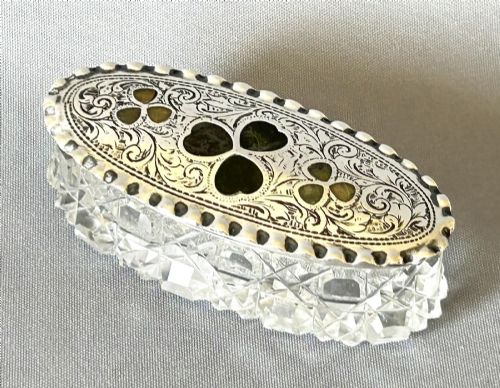
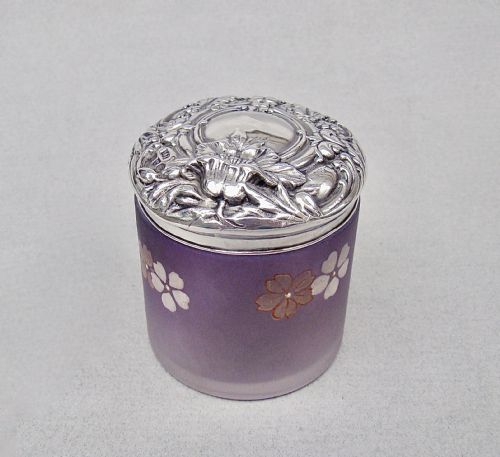
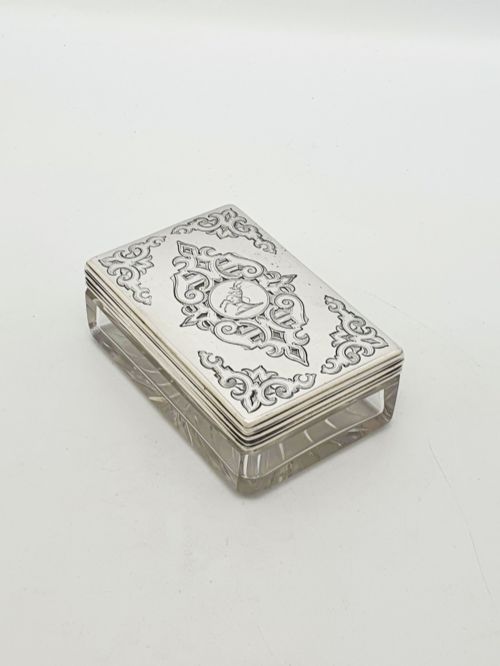
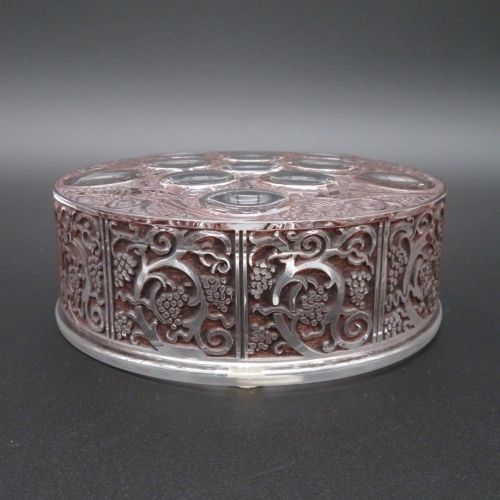
A glass powder box sits upon a dressing table to hold loose cosmetic dust, combining metalwork with moulded or cut vessels.
Glass Powder Box
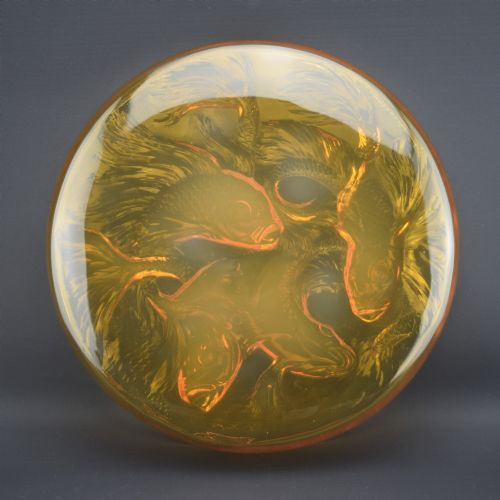
When searching for a glass powder box, buyers encounter vessels designed for the dressing table, spanning Victorian, Edwardian, and Art Deco periods. These items range from heavy cut crystal bases with sterling silver mounts to pressed opalescent glass vessels adorned with intricate figural motifs.
The selection includes lidded jars, vanity pots, and trinket boxes originating from English workshops and continental makers such as French and German houses. Art Deco geometric styles sit alongside ornate Edwardian silver-topped pieces and coloured glass from the nineteenth century.
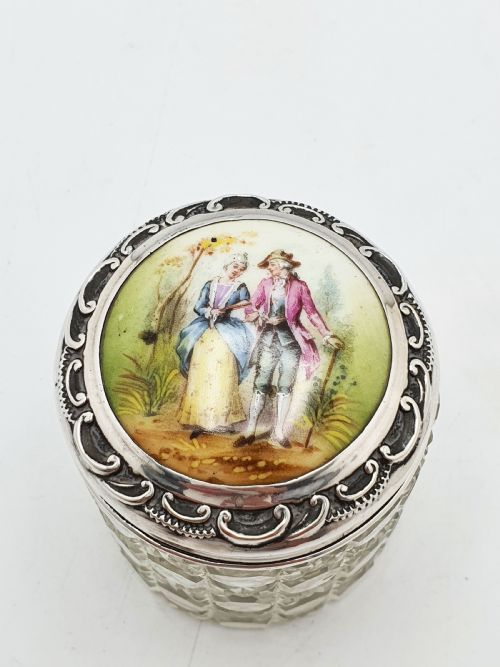
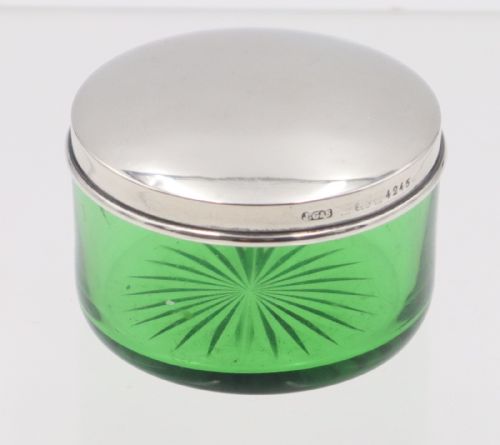
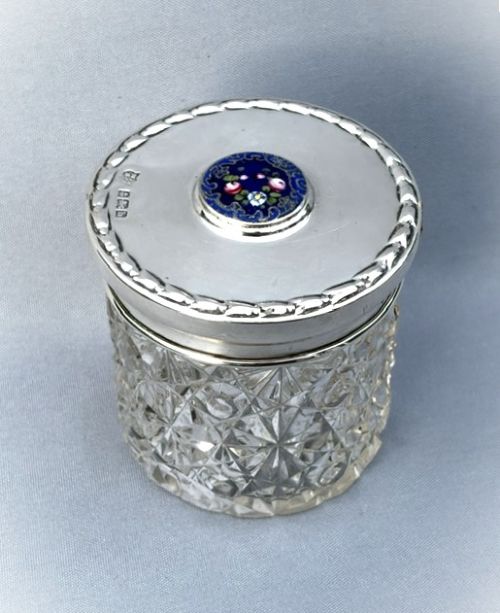
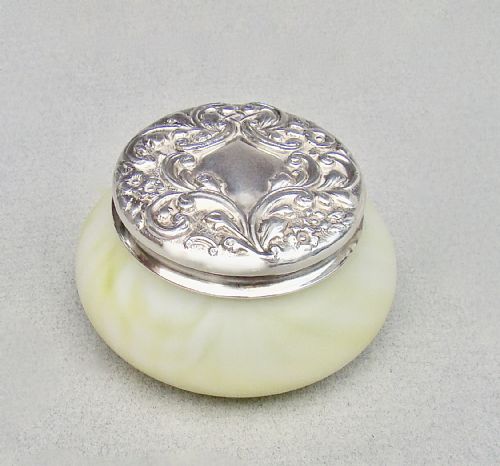
Most examples combine a transparent, frosted, or coloured glass body with a fitted metal lid, frequently cast in sterling silver or silver gilt. Some incorporate hand-painted porcelain plaques, enamel work, or tortoiseshell insets into the cover.
How they were made
Vessels were produced using various glass-forming techniques, including heavy cutting into crystal, moulding opalescent or frosted pieces, and blowing coloured glass such as cranberry or Bristol blue. Metal smiths then fashioned sterling silver mounts, hinges, and lids to fit the rims.
Decorative surfaces on the lids often involved guilloché enamel work, where geometric patterns were engine-turned into metal before translucent coloured enamel was applied. Other pieces utilised hand-painted porcelain inserts or integrated tortoiseshell panels set within silver frames.
Glass Powder Box Retail Price Guide 2026
Typical asking prices for glass powder box among the pieces listed under this phrase on Sellingantiques today, from the lower quarter to the upper quarter. They describe what is for sale here now, not the wider market.
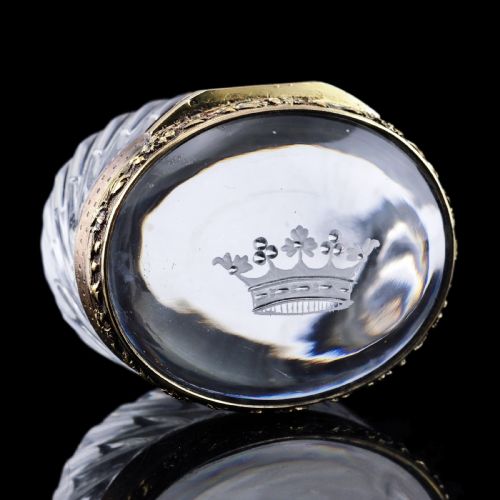
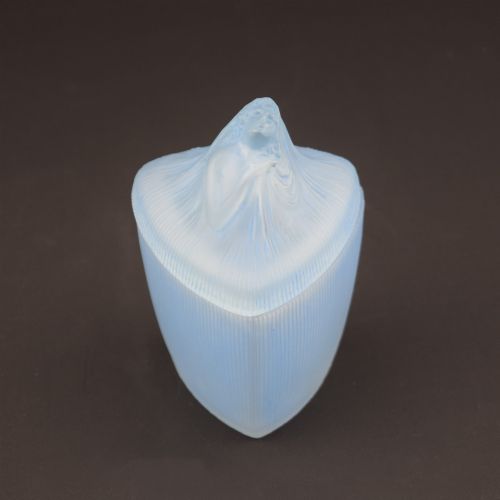
Some powder boxes double as tiny architectural monuments, topped with coronets or sirens.
What varies in quality
Quality reveals itself in the crispness of the glass cutting and the weight of the crystal base, alongside the precision of the metal mounts. Superior pieces exhibit tight hinges, unblemished enamel without chipping, and clear hallmarks on the silver components.
Artistic execution distinguishes standard production items from masterworks, particularly in moulded pieces where relief details remain sharp and well-defined. The integration between the glass vessel and its metal rim demonstrates the maker's skill in achieving a secure, flush fit.
Rene Lalique·A. J. Pepper & Co·Henry Clifford Davis·A. Bromet & Co·Posen
The Glass Powder Box Glossary
- Guilloché enamel
- A decorative technique involving precise mechanical engraving beneath translucent enamel. It creates repetitive geometric patterns that catch the light.
- Opalescent glass
- Glass containing ingredients that cause it to diffuse light and appear milky with iridescent tones. It often highlights moulded relief details.
- Sterling silver mount
- A collar or rim of standard silver alloy fitted to the glass opening. It supports the hinged lid.
- Satin glass
- Glass with an acid-etched or heavily frosted surface texture. It produces a soft, non-reflective finish.
- Hallmark
- A series of official stamps marked on precious metal items. It indicates the assay office, metal purity, and date of manufacture.
Glass Powder Box: Frequently Asked Questions
What is a glass powder box?
A small lidded vessel designed to hold cosmetic face powder on a dressing table. These pieces combine a glass body with a decorative metal or enamel lid.
They emerged across the nineteenth and twentieth centuries in various styles, including Victorian cut crystal and Art Deco coloured glass.
How do I date an Edwardian powder box?
Examine the hallmarks stamped on the sterling silver lid mounts, which indicate the assay office and year of production. Stylistic clues like floral Edwardian motifs also help narrow the timeframe.
Makers' marks provide further confirmation of the active working years of the silversmith.
What is guilloché enamel?
Guilloché is an engraving technique where a machine cuts precise geometric patterns into metal. Translucent enamel is then layered over the design.
This method was widely utilised on silver lids during the Art Deco and Edwardian periods.
How were these boxes used?
Owners placed loose cosmetic powder inside the glass vessel for daily toilet use. The fitted lid kept the powder contained and protected from moisture.
They also served to hold small trinkets, hairpins, and dressing table accessories.