
Glass Pendant Chandelier
A glass pendant chandelier brings sharp refraction and steady illumination into a room, spanning Edwardian lanterns to Art Deco globes.
Glass Pendant Chandelier
Buyers seeking a glass pendant chandelier investigate overhead fixtures that suspend single or multiple points of light from ceilings. These pieces combine framing metals with glass drops, beads, or shades to cast patterned illumination across a space.
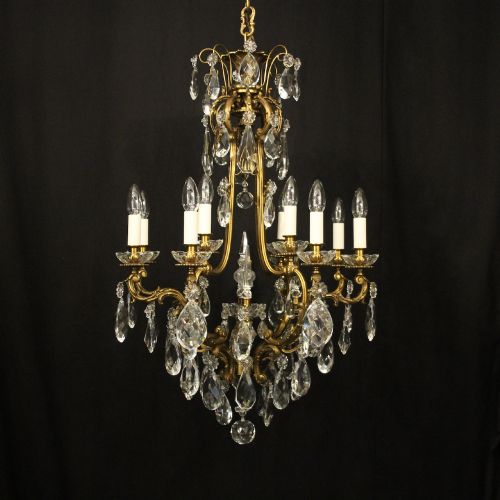
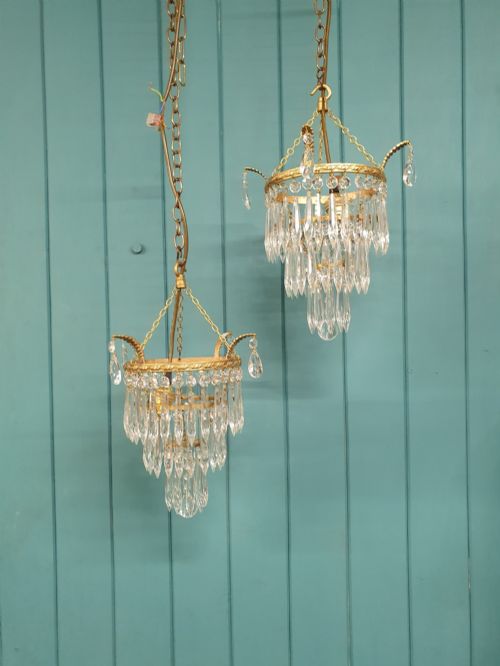
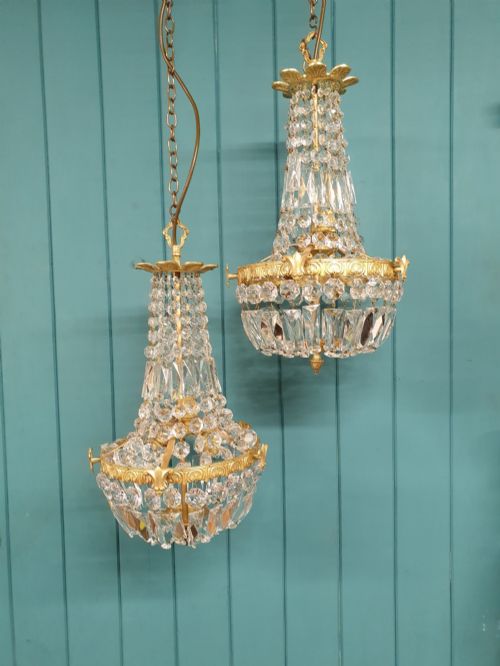
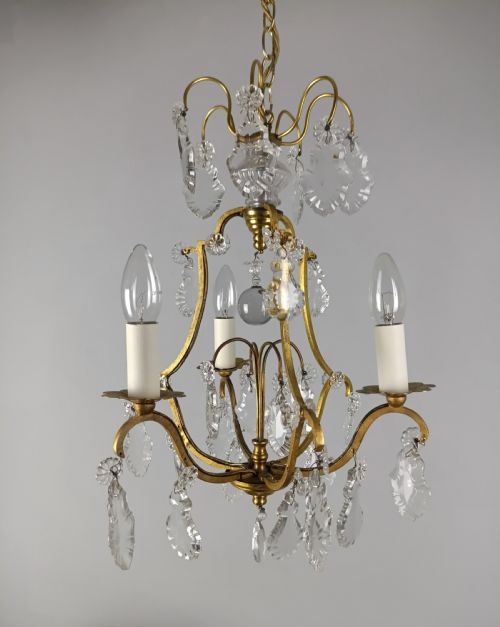
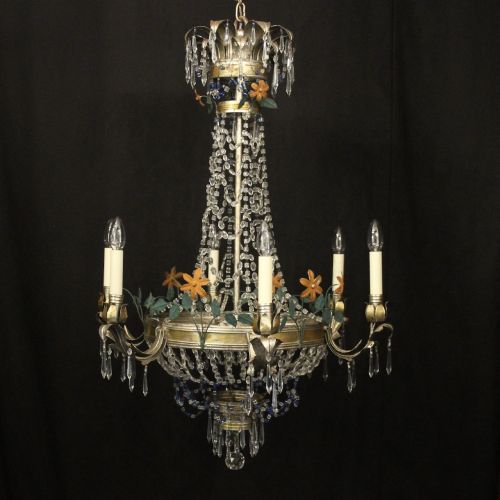
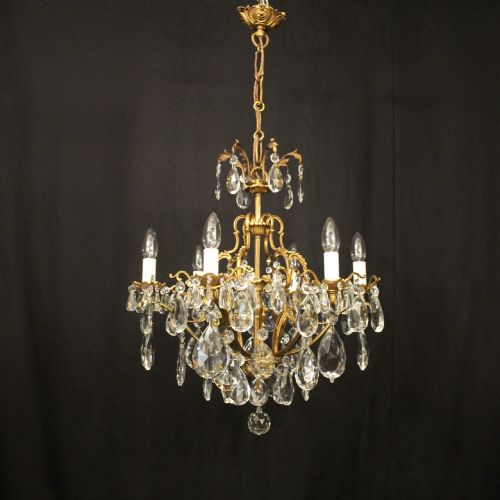
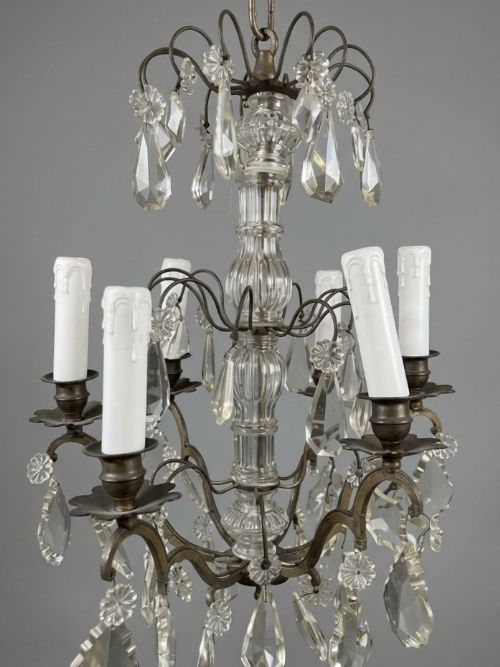
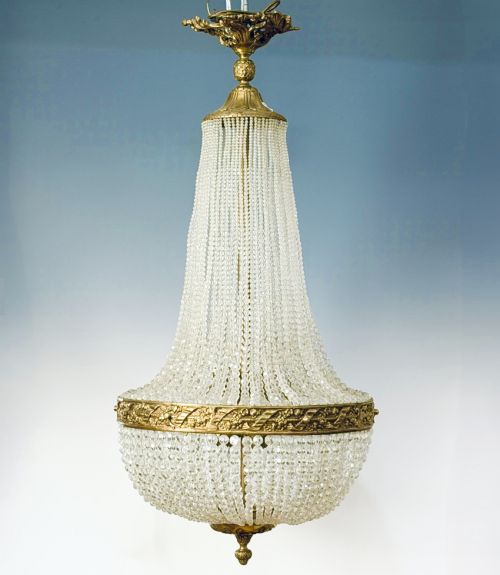
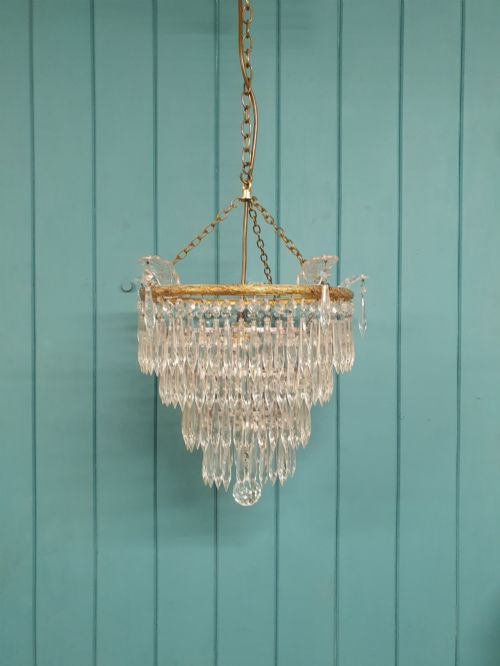
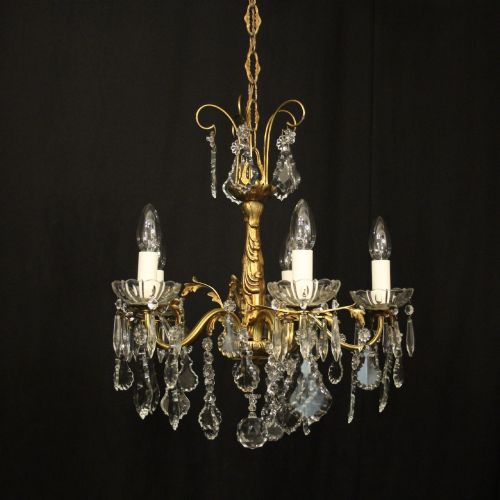
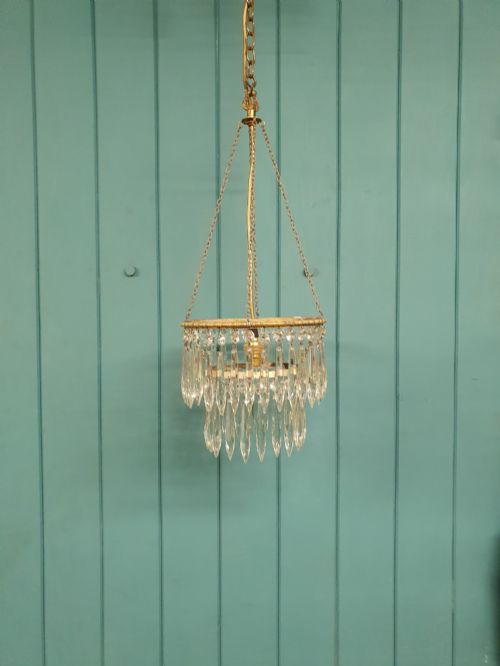
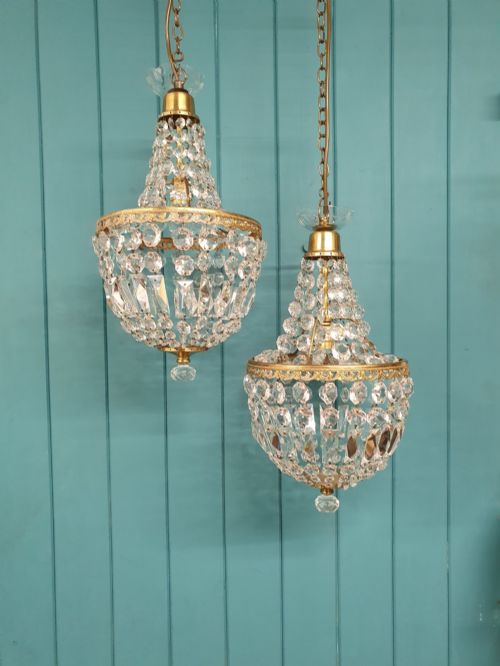
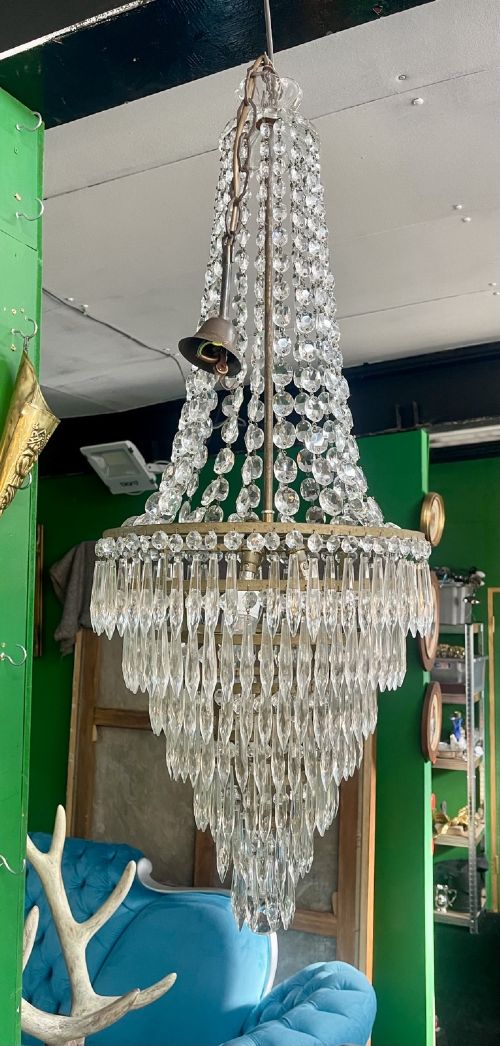
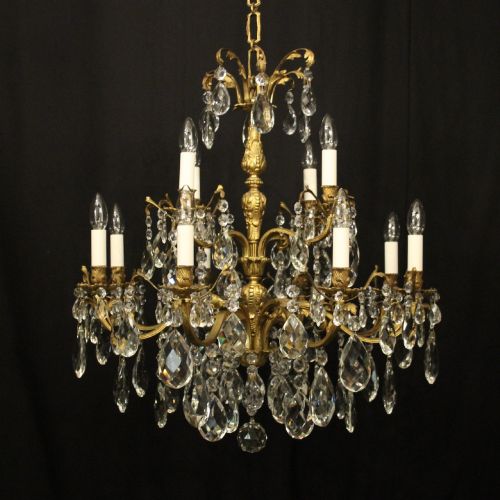
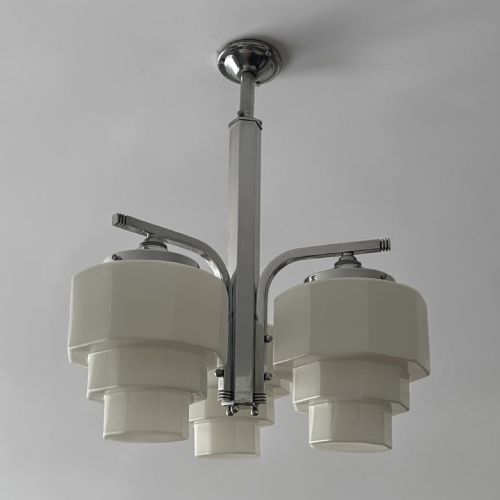
The selections available range from single-bulb Art Deco globes and slip shades to multi-arm French Empire tent and waterfall constructions. Brass, bronze, and gilt frames dominate the forms, supporting cut crystal spikes, lustres, and moulded glass panels.
Origin points lean heavily toward French ateliers and English workshops spanning the nineteenth century through the 1930s. Hall lanterns and basket chandeliers represent common variations alongside single-light drop pendants.
Materials and construction methods
Construction relies upon metal armatures cast in brass, bronze, or spelter to form the structural skeleton. These frames receive gilding or silvering before workers wire the internal channels for illumination.
Glass components combine mould-blown shades, bevelled plate panels, and lead crystal drops shaped by hand cutting and polishing. Metal pins and wire loops suspend individual crystal lustres and beads from the main brass tiers.
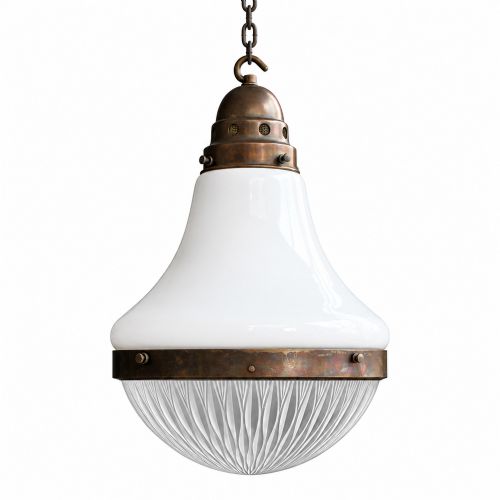
Manchester City Town Hall once housed an Arts and Crafts brass lantern now found among domestic ceiling lights.
Distinctions in execution
Quality separates through the precision of the metal casting and the clarity of the glass components. Finer pieces employ heavy bronze frames with crisp chisel work alongside high-lead crystal that refracts light without internal clouding.
Assembly methods dictate durability, with superior examples utilising threaded pins and secure wire loops rather than glued elements. Original mounting hardware and matching glass drops distinguish well-preserved examples from assembled assemblies.
Émile-Jacques Ruhlmann·Voysey
The Glass Pendant Chandelier Glossary
- Plafonniere
- A ceiling light that mounts flush or hangs closely from a shallow suspension, directing illumination downward through glass bowls or plates.
- Tent and waterfall
- A chandelier configuration where strings of glass beads form an upper cone above a lower cascade of crystal drops.
- Spike chandelier
- A vertical central metal rod surrounded by radiating glass spikes and crystal lustres.
- Slip shade
- A moulded piece of glass that slides into a metal frame to enclose the bulb in Art Deco fixtures.
- Lustre
- A cut crystal pendant hung from a chandelier to reflect and multiply the light output.
Glass Pendant Chandelier: Frequently Asked Questions
How do I hang a heavy brass and crystal chandelier?
Suspension requires a structural ceiling joist capable of supporting the combined weight of the metal frame and glass components. Professional installation ensures the electrical box and hanging chain bear the load safely.
Adjusting the height depends on ceiling clearance and the room function, keeping dining table suspensions lower than general hallway placements.
What is the difference between an antique lantern and a chandelier?
Lanterns enclose the light source within glazed panels fitted into a rigid metal cage or box frame. They suit entrance halls and corridors where directional downward light is necessary.
Chandeliers project light outward from multiple open arms or tiered drops, providing broader illumination for reception rooms.
How do I clean cut glass and crystal components?
Detachable crystal drops require gentle washing in lukewarm water with mild soap, followed by drying with a lint-free cloth. Leaving pieces on the frame risks damaging fragile wire loops during wiping.
Fixed brass and glass sections need careful dusting with a soft brush to prevent moisture from entering vintage lampholders.
How do I date a vintage glass hanging light?
Dating relies upon stylistic markers such as geometric brass frames for Art Deco pieces or cast bronze floral mounts for nineteenth-century French designs. Examining the internal wiring, screw threads, and metal patination provides further chronological clues.
Comparing the cut of the crystal and the method of glass moulding against documented period production confirms the era.