

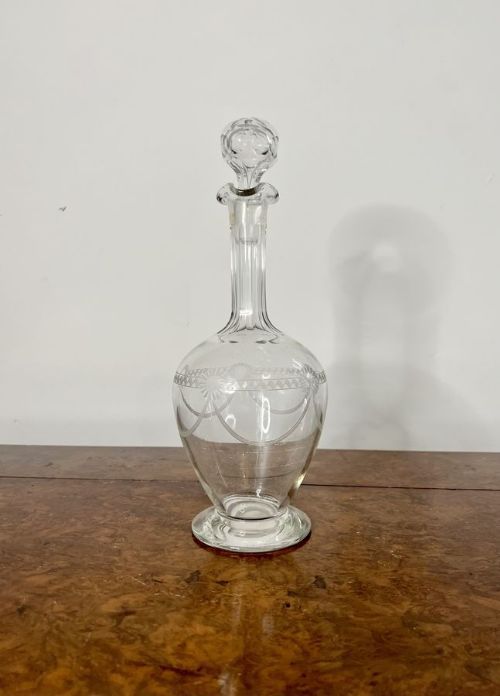


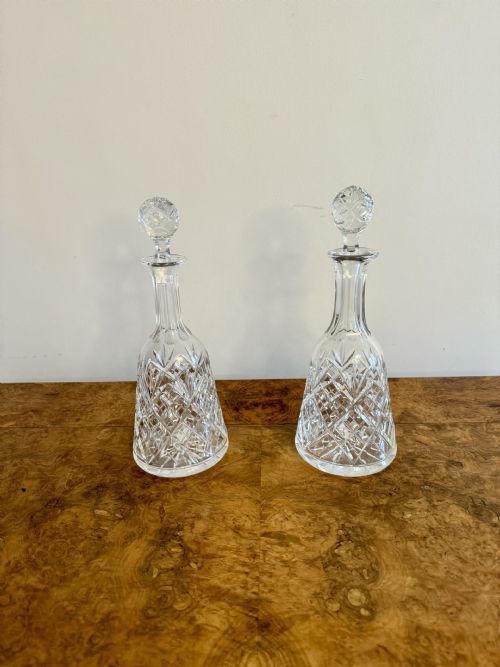


Glass Liquor Carafe
A glass liquor carafe holds spirits in clear or coloured glass, offering a traditional way to serve brandy, whisky, and gin at the table.
Glass Liquor Carafe
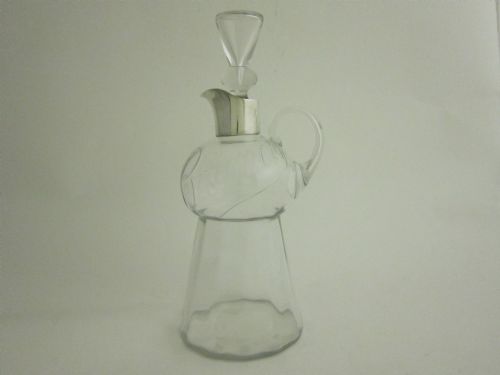
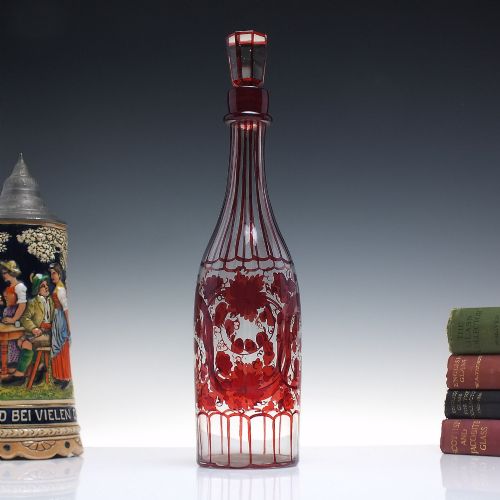
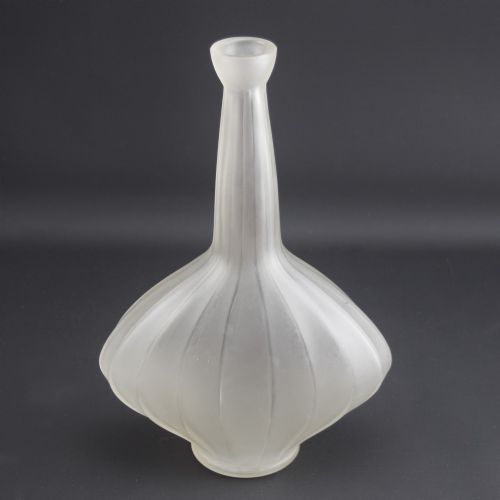
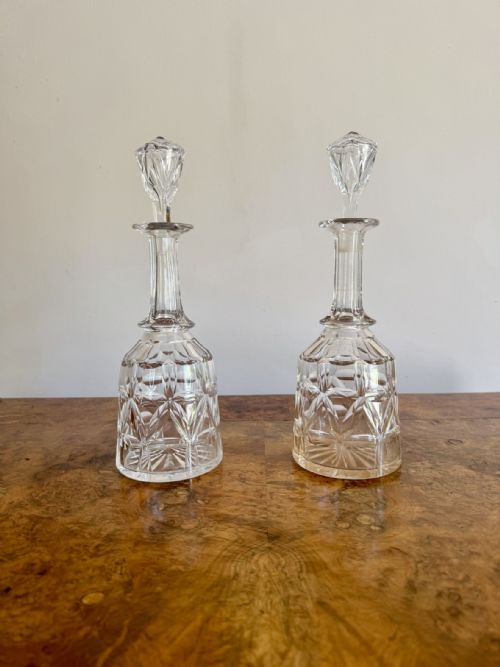
A glass liquor carafe serves as a vessel for spirits, appearing across periods from the Victorian era through the Art Deco years. Buyers searching for a glass liquor carafe encounter forms ranging from simple spirit bottles and whiskey noggins to elaborate claret jugs and bell-shaped decanters.
The pieces on this page span the late nineteenth century into the mid-twentieth century, with strong representation from the Edwardian period. Many examples combine glass bodies with sterling silver collars, mounts, or stoppers.
Materials and construction
Maker operations utilised clear glass, lead crystal, and cut crystal, alongside coloured glass variants in ruby, green, and cranberry hues. Optically blown vessels show subtle internal ripples, while cut glass and cut crystal pieces feature deep geometric facets that catch the light.
Metalwork complements the glass through sterling silver collars, silver plate mounts, and silver gilt additions, often bearing hallmarks that date the hardware. Surface decoration also incorporates hand painting, floral etching, and polychrome enamel work.
Many pieces incorporate sterling silver collars, silver plate mounts, and enamel painting alongside traditional cut glass techniques.
Factors of distinction
Excellence in a glass liquor carafe rests on the clarity of the material and the crispness of any cut facets or engraved details. Heavy lead crystal and well-balanced bell shapes indicate superior manufacturing standards.
The integration of metal mounts influences overall standard, particularly when hallmarked sterling silver collars fit securely to the glass neck. Matching sets that include glasses or retain original stoppers demonstrate greater completeness.
James Powell London·Hukin And Heath·Val Saint Lambert·Freeman And Son Ltd
The Glass Liquor Carafe Glossary
- Decanter
- A vessel used for holding and serving liquor. Most feature a fitted stopper and a wider base tapering to a neck.
- Whiskey noggin
- A small spirit decanter designed for individual service, typically fitted with a single handle and a silver top.
- Claret jug
- A pouring vessel traditionally used for wine, featuring a handle and spout attached to a glass body.
- Hallmark
- An official stamp applied to precious metals indicating purity, maker, and assay office. These marks help date the silver collars on glass bottles.
- Lead crystal
- Glass containing metal oxide that increases weight, brilliance, and refractive index. It allows for deeper, sharper cutting than standard glass.
Glass Liquor Carafe: Frequently Asked Questions
How do I clean an old decanter?
Residue inside a glass liquor carafe dissolves using warm water and specialised cleaning beads rather than harsh abrasives.
Air-dry the vessel thoroughly with the stopper removed to prevent moisture trapping.
Are these decanters safe for daily use?
Most vintage and antique vessels suit serving spirits, provided the glass interior remains free from clouding or staining.
Check that silver collars and mounts are secure before handling.
How do I identify an Edwardian decanter?
Edwardian pieces often feature heavy cut glass patterns, bell shapes, and sterling silver collars bearing early twentieth-century hallmarks.
Stylistic restraint distinguishes them from more ornate late Victorian counterparts.
What is the difference between crystal and glass?
Crystal contains mineral content that adds weight and allows artisans to cut finer geometric facets into the surface.
Standard glass is lighter and often relies on optical blowing or enamel painting for decoration.