




Glass Inkwells Tray
These glass inkwells tray assemblies are practical deskside companions, uniting glass reservoirs with fitted bases to keep writing materials orderly.
Glass Inkwells Tray
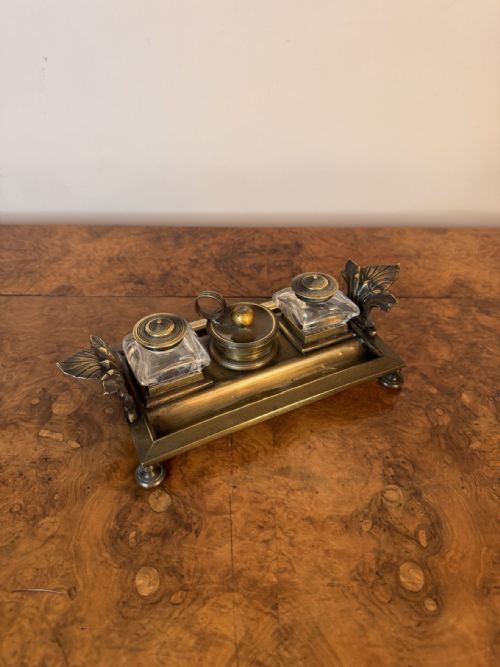
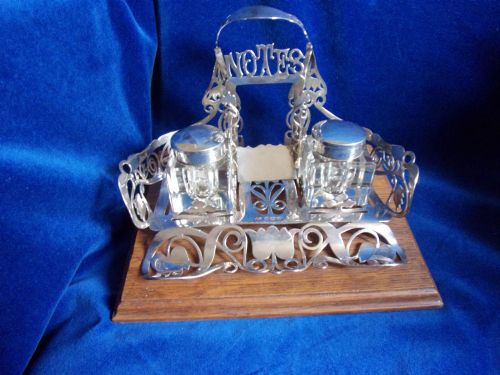
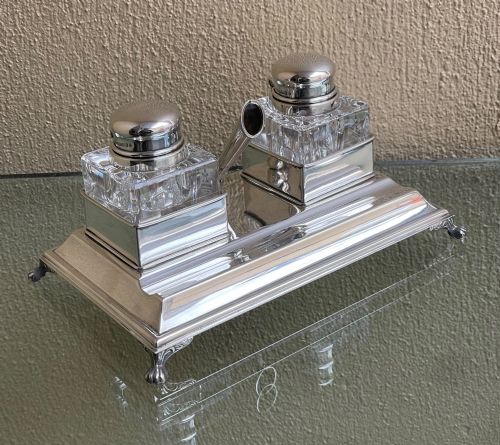
When searching for a glass inkwells tray, a buyer encounters pieces primarily spanning the Victorian and Edwardian eras, alongside earlier Regency and Georgian examples. These objects function as desk stands, standishes, and desk sets that combine inkwells with dedicated trays for pens and accessories.
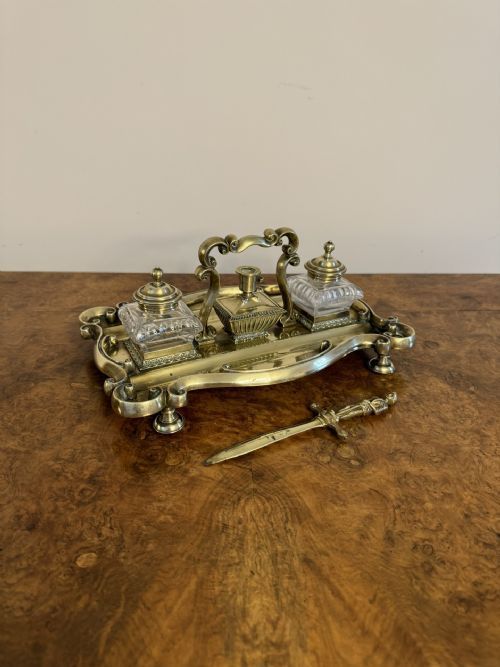
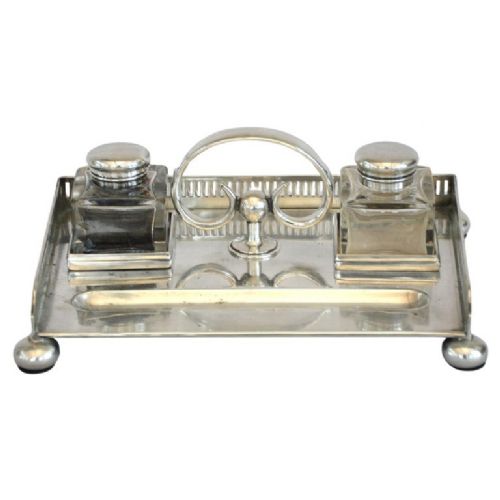
The most frequent variations on this page include wooden bases made from oak, coromandel, and walnut, often fitted with cut glass or sterling silver ink vessels. Metal versions in brass, silver plate, and ormolu also appear frequently, alongside papier-mâché and carved Black Forest woodwork.
Materials and construction
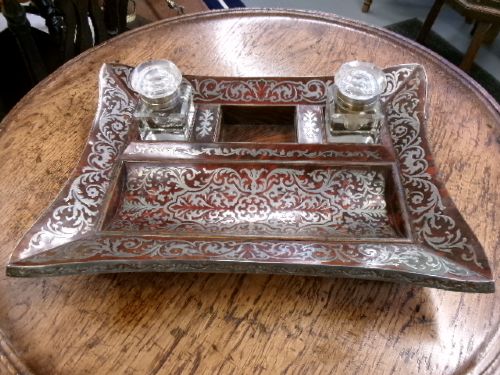
Construction relies on joining sturdy foundation materials like solid oak, mahogany, and coromandel with decorative elements such as brass mounts, mother-of-pearl inlay, and tortoiseshell. Wooden trays are carved, pierced, or inlaid to house glass inkwells securely.
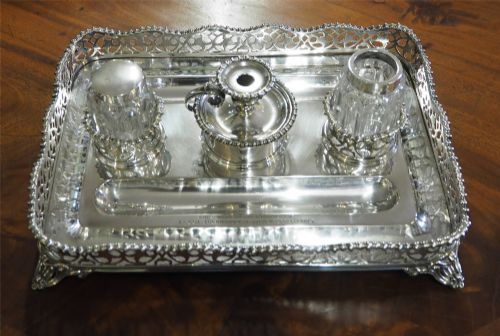
Metal components utilise casting, silver plating, and solid sterling silver fabrication, paired with cut glass reservoirs. Makers often incorporated hinged silver lids and hand-fretted galleries to secure the glass vessels within the tray.
Glass Inkwells Tray Retail Price Guide 2026
Typical asking prices for glass inkwells tray among the pieces listed under this phrase on Sellingantiques today, from the lower quarter to the upper quarter. They describe what is for sale here now, not the wider market.
Distinctions in quality
Quality rests upon the crispness of the metal casting, the depth of the wood grain, and the precision of the brass or mother-of-pearl inlay. Finer examples display heavier gauge metals, fully marked sterling silver mounts, and hand-carved details such as those found on Black Forest woodwork.
The integrity of the glass inkwells and the retention of their original matching lids differentiate standard desk tidies from exceptional standishes. Superior pieces integrate coordinated materials where the glass inserts, tray fittings, and pen rests were designed as a cohesive whole.
Elkington·Walker And Hall·James Cartland And Sons·W M F·Rupert Favell·Daniel Holy
The Glass Inkwells Tray Glossary
- Standish
- A portable desk stand or tray fitted with inkwells, pen holders, and sometimes a chamberstick or sander. It served as the central writing accessory on a desk.
- Sheffield plate
- A fused composite material made by melting a thin sheet of sterling silver onto a thicker copper base. It was widely utilised before modern electroplating techniques.
- Coromandel wood
- A dense, heavily figured timber imported from Asia, prized for its dark brown colour and striking black stripes. It was frequently used for luxury Victorian desk stands.
- Boulle work
- A style of ornate marquetry utilising tortoiseshell and brass inlay, named after the cabinetmaker André-Charles Boulle. Pieces incorporating this technique appear on mid-nineteenth-century stands.
- Ormolu
- Gilded bronze used for decorative mounts and feet on nineteenth-century desk accessories. It provides a bright metallic finish that mimics solid gold.
Glass Inkwells Tray: Frequently Asked Questions
What is a standish?
A standish is an antique writing tray that holds inkwells, pen rests, and sometimes sanders or taper sticks. These pieces sat on formal desks to keep writing implements organised.
The term often refers to more elaborate desk stands featuring precious metals or fitted wooden bases. They served both a practical function and a decorative role in the nineteenth-century study.
How do I date these desk stands?
Dating relies on hallmarks on silver components, the style of the woodwork, and assembly methods. Victorian and Edwardian pieces often feature registration marks or maker stamps that narrow down the year of production.
Earlier Regency and Georgian examples display distinct neoclassical or heavy brass mounts, while mid-nineteenth-century pieces frequently utilise exotic woods like coromandel and tortoiseshell.
Were the glass inkwells replaceable?
Inkwells were removable for cleaning and refilling, which meant original glass inserts were frequently broken or replaced over time. Finding a tray with its matching pair of glass inkwells is a significant benefit.
Collectors look closely at the fit and glass quality to determine whether the inkwells are original to the base or later matched replacements.
How do I maintain wooden trays?
Wooden desk stands benefit from keeping away from direct sunlight and extreme temperature fluctuations to prevent the wood or veneer from warping. Occasional gentle waxing maintains the finish.
Metal mounts and glass inserts should be cleaned carefully without harsh chemical agents that might damage the surrounding wood or corrode silver plating.