

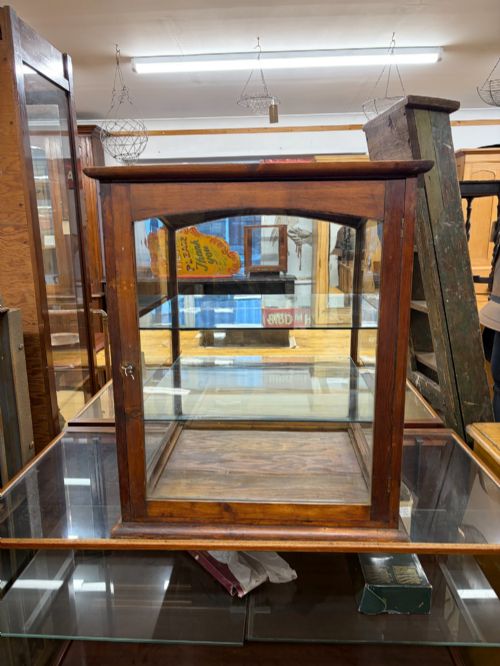
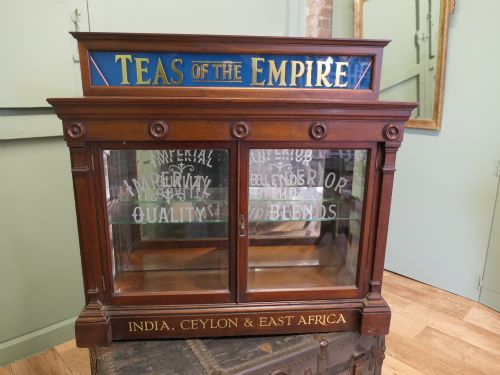

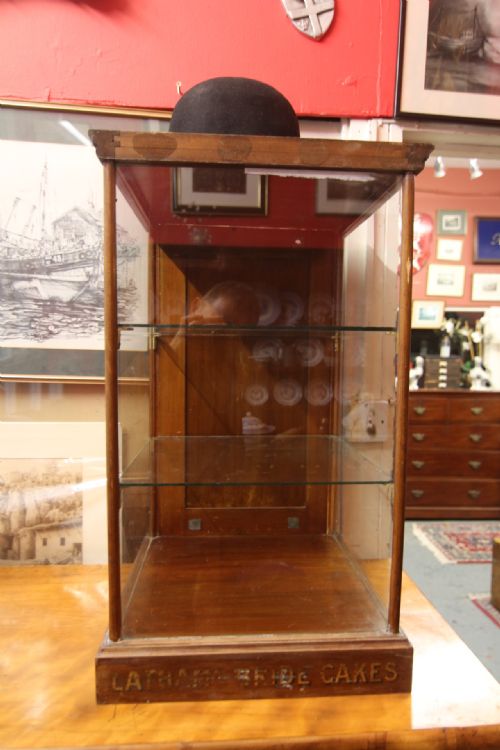



Glass Counter Top Case
A glass counter top case turns everyday retail history into a desktop showcase, bringing period shop display into the home.
Glass Counter Top Case
A glass counter top case provides compact commercial display, originating in Victorian and Edwardian shops for counter service. These pieces range from simple tabletop display cabinets to mechanical dispensing units and branded confectionary showcases.
Most examples found here date from the late nineteenth century through to the nineteen-thirties, reflecting commercial expansion. Common forms include mahogany, oak, and brass-framed countertop cabinets designed for specific goods like soap, chocolate, or pencils.
The domestic appeal lies in tabletop proportions that allow collections to be viewed from above and all sides. Buyers encounter various commercial styles, from plain oak counters to specialised pharmacy and confectionery displays.
Materials and construction
Frames are constructed from dense timbers such as mahogany and oak, alongside brass or ebonised wood. These materials provided the structural rigidity necessary to support glazed panels in busy retail environments.
Interiors frequently retain original linings of felt or velvet to cushion displayed merchandise. Glazing techniques enclose the display area securely, sometimes incorporating hinged rear doors or mechanical dispensing mechanisms.
Glass Counter Top Case Retail Price Guide 2026
Typical asking prices for glass counter top case among the pieces listed under this phrase on Sellingantiques today, from the lower quarter to the upper quarter. They describe what is for sale here now, not the wider market.
Some display cases retain cheeky surviving chocolate brand sign-writing from their bustling days on Victorian and Edwardian shop counters.
Distinctions in quality
Quality rests in the precision of the timber framing and the integrity of the original glazing. Finer cabinets utilise robust hardwoods like mahogany with tight joinery, while simpler commercial pieces rely on straightforward oak or basic metal frames.
Retained original details such as maker plaques, pharmacy lettering, or functional dispensing hardware elevate the piece. The presence of authentic interior linings like velvet or felt further distinguishes superior commercial examples from plain utility cases.
Saml. Elliott & Sons·Quincy Showcase Works Illinois
The Glass Counter Top Case Glossary
- Countertop cabinet
- A miniature display case designed to sit upon a shop counter rather than stand on the floor. These pieces allowed retailers to present small goods near the point of sale.
- Glazing
- The fitted glass panes that enclose the cabinet on multiple sides. This allows maximum visibility for the merchandise while protecting contents from dust and handling.
- Ebonised wood
- Timber treated with a finish to imitate ebony. This dark, uniform surface treatment was popular for achieving a formal appearance in commercial display furniture.
- Hardwood
- Dense timber derived from broad-leaved trees, including mahogany and oak. Such materials were chosen for display frames to withstand the rigours of daily retail use.
Glass Counter Top Case: Frequently Asked Questions
What were glass counter top cases used for originally?
Retailers placed these cabinets on sales counters to showcase small, high-value, or impulse items directly to customers. They protected goods from handling while keeping them in plain view during transactions.
Specific trades utilised tailored designs, from pharmacies displaying optical goods to confectioners housing branded chocolate selections.
How do I date a glass counter top case?
Dating relies on timber choices, construction methods, and any surviving commercial branding or trade labels. Victorian and Edwardian examples often feature solid mahogany or oak frames with hand-finished joinery.
Later pieces from the nineteen-thirties introduce brass framing and more industrial commercial manufacturing techniques. Patent dates or maker plates provide the most precise chronological markers.
How should I clean the interior fabric lining?
Original velvet or felt linings require gentle maintenance to preserve the fabric without causing damage. Light surface dusting with a soft brush is generally sufficient for old textiles.
Avoid moisture and chemical cleaners, as fragile historic fabrics can stain or disintegrate when wet.
Can I use a counter top case for modern collections?
These cabinets suit modern domestic interiors for displaying small items like pocket watches, medals, or ceramics. The glass panels provide protection from dust while offering all-round visibility.
Placing the case on a sturdy table or sideboard ensures the weight of the timber and glass is properly supported.