


Glass Bowl Pendant
These glass bowl pendant lights bring hanging illumination and period character to a room, ranging from Edwardian cut glass to Art Deco opalescent designs.
Glass Bowl Pendant
When you search for glass bowl pendant, you are looking at ceiling hung lighting fixtures that suspend a glass vessel or shade from chains, rods, or cords. These pieces span several decades, crossing Victorian, Edwardian, and Art Deco periods, each bringing distinct decorative qualities to an interior space.
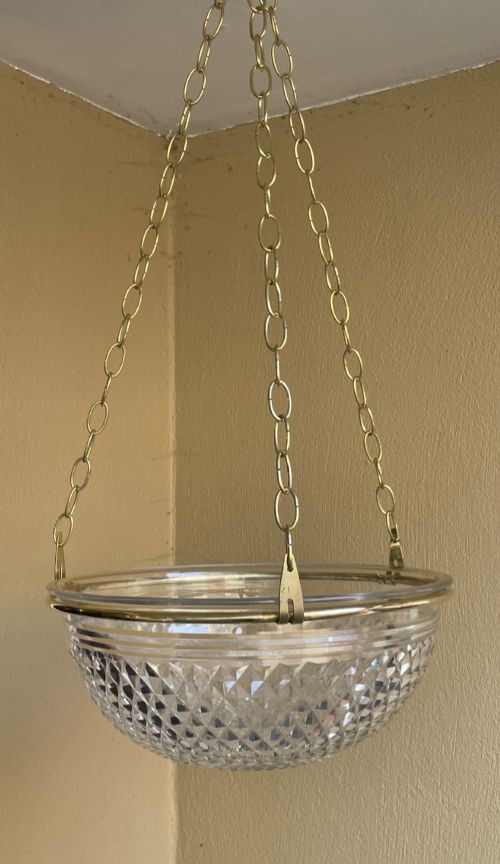
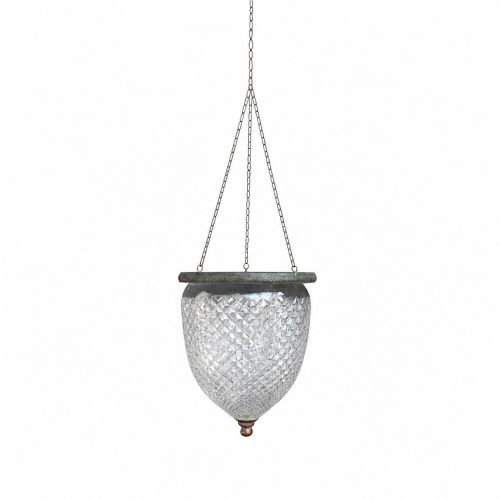
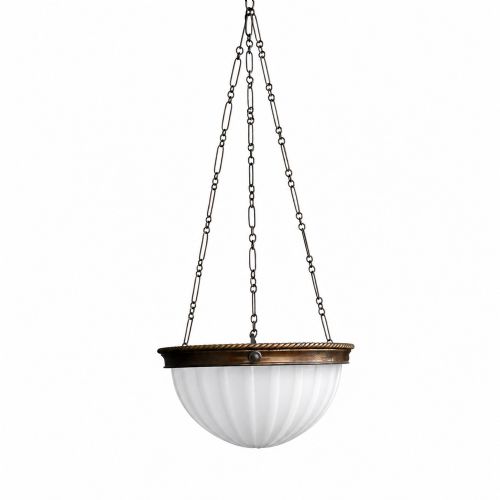
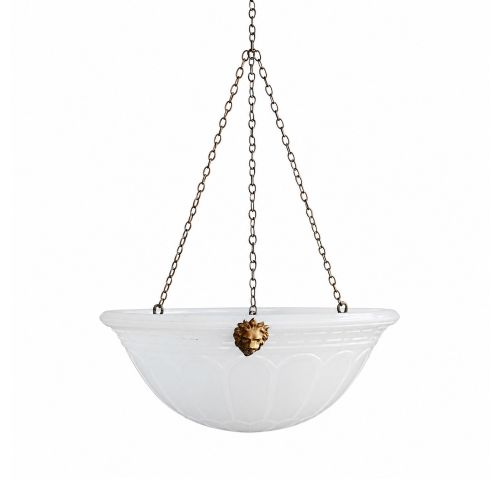
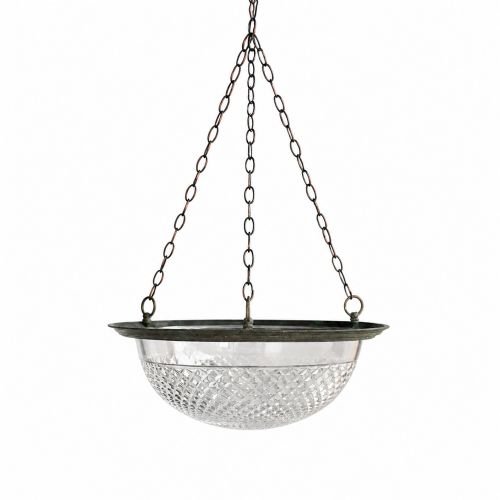
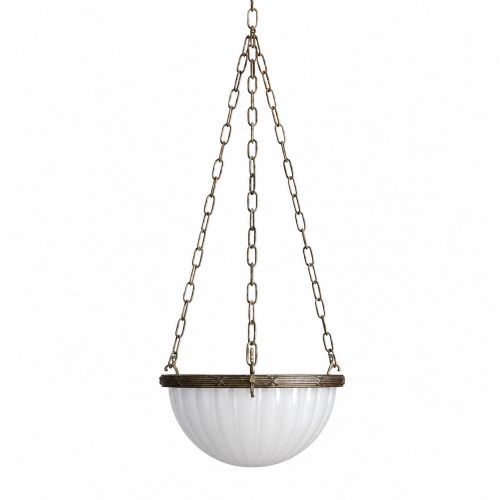
The most common examples you will meet on this page take the form of plafonniers and bowl shaped pendants suspended by metal mounts or chains. They appear in cut glass, frosted glass, moonstone glass, and crystal, often held by brass, bronze, or silver plated frames.
Originating largely from English and French workshops, these lights function as primary or secondary ceiling illumination in domestic settings. Their forms range from simple opal glass dishes to elaborate neoclassical painted shades and heavy crystal bowls.
How they were made
Makers utilised heavy glass casting, pressing, and hand cutting techniques to form the bowls and shades. Cut glass and crystal examples required skilled wheel cutting to achieve deep facets, while opalescent and moonstone pieces relied on specialist glass chemistry to create shifting opacities.
Metal mounts, chains, and galleries were cast and forged from brass, bronze, and silver plated metals. These metal components were frequently decorated with classical motifs, rams heads, or geometric Art Deco lines to complement the glass vessels they secured.
Some Edwardian bowls feature hidden brass claws that grip the glass like tiny metal hands, ensuring the shade stays firmly overhead.
What varies in quality
The distinction between standard and superior pieces rests on the depth and crispness of the glass cutting and the quality of the metal casting. Heavy, resonant crystal or deeply faceted cut glass represents higher production standards than thin, pressed alternatives.
Frame construction also dictates the tier of the piece, with solid cast bronze or heavily silver plated brass mounts showing greater substance than lightweight stamped metal. The integration between the glass bowl and its suspension hardware reveals the original maker's investment in design and engineering.
Verrerie Des Vosges
The Glass Bowl Pendant Glossary
- Plafonnier
- A ceiling light fixture where a bowl shaped shade sits close to the ceiling or hangs on short suspension chains. This French term is frequently applied to Edwardian and Art Deco bowl pendants.
- Moonstone glass
- An opaque, milky white glass with a soft, iridescent sheen resembling the gemstone. It diffuses light evenly without harsh glare.
- Opalescent glass
- Glass that displays milky or pearlescent blue and amber tones when lit from within. It became particularly popular during the Art Deco period.
- Cut glass
- Glass decorated by grinding facets and patterns into the surface using a rotating wheel. Deeply cut examples catch and refract light extensively.
Glass Bowl Pendant: Frequently Asked Questions
How do I hang a glass bowl pendant?
These fixtures typically suspend from a ceiling rose using metal chains or rods attached to a central metal ring or gallery. The weight of the bowl requires secure fixing into ceiling joists rather than plaster alone.
Professional electrical installation is essential to ensure the suspension hardware and wiring meet modern safety standards while supporting the combined weight of the glass and metal.
What rooms suit a bowl pendant light?
Bowl pendants work well in hallways, dining rooms, and bedrooms where ambient, downward facing illumination is desired. Their enclosed or semi enclosed forms cast a soft spread of light across the space.
Ceiling height dictates the drop of the pendant, as larger plafonniers suit rooms with standard heights, while heavily chained versions need higher ceilings to hang correctly.
How do I date a glass bowl pendant?
Dating relies on stylistic clues in the glass and metalwork, such as the geometric lines of Art Deco pieces or the heavy cast mounts of Edwardian and Victorian designs. Examining the wiring methods and metal alloys also helps place a piece within its historical period.
Early twentieth century examples often feature hand finished brass or bronze components, whereas later items may display simpler pressed metal fittings.
How do I clean an antique glass bowl?
Careful removal of the bowl from its metal frame allows for gentle washing in lukewarm water with mild soap. Rinsing thoroughly and drying with a lint free cloth prevents water spots on cut or crystal surfaces.
Harsh chemical cleaners should be avoided to protect aged metal patinas and delicate enameled or painted glass decorations.