



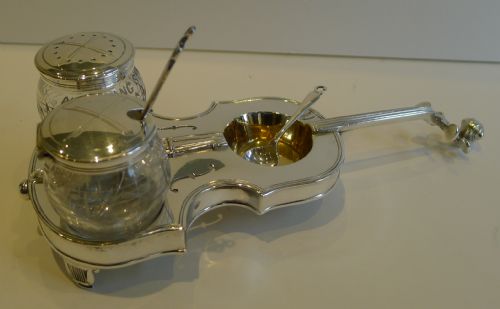


Glass and Silver Decor
Glass and silver decor combines transparent or reflective surfaces with precious or plated metal mounts, offering practical utility and striking visual contrast.
Glass and Silver Decor
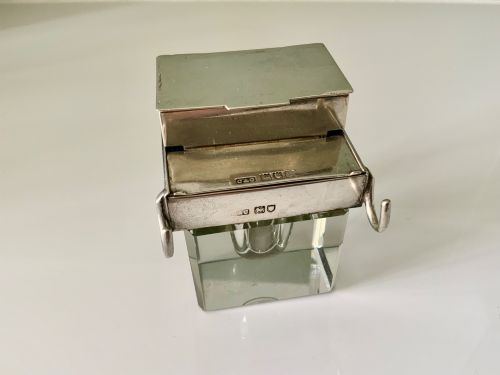
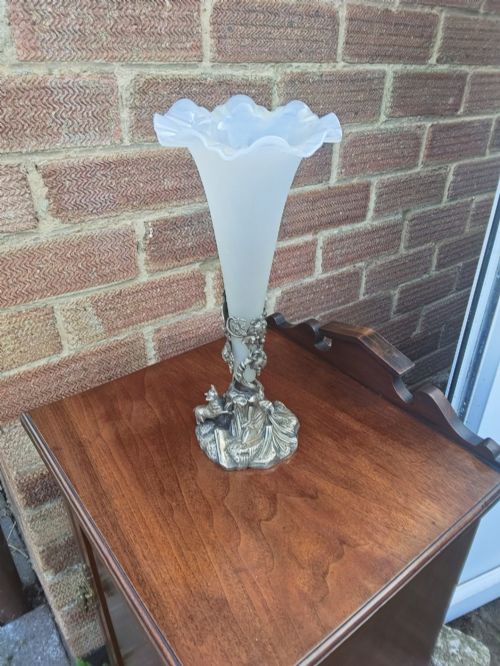
Glass and silver decor encompasses functional household items and decorative objects that combine glass elements with silver, silver plate, or white metal mounts. When exploring glass and silver decor, buyers encounter desk accessories, cruet sets, vases, wall mirrors, and barometers dating from the nineteenth and twentieth centuries.
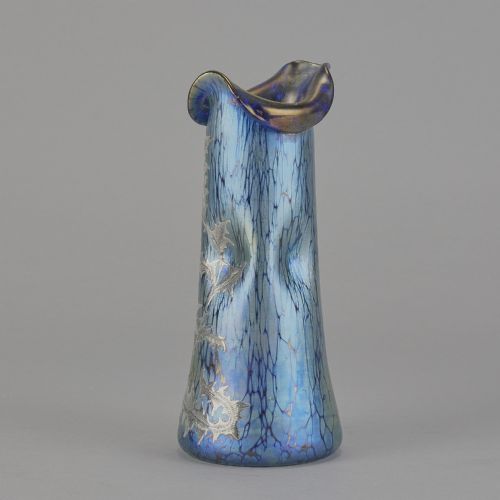
The selection ranges from Victorian novelty cruet sets and Edwardian desk stands to Art Nouveau wheel-carved vases and mid-century pieces. These items demonstrate how makers across different periods integrated reflective glass surfaces with metal craftsmanship to create utilitarian objects of distinct character.
Materials and construction methods
Makers utilised clear cut glass, opaque glass, mercury glass, and silvered glass alongside sterling silver and silver plate to build these pieces. Metal mounts were frequently cast, chased, or hallmarked to secure glass inserts and provide structural framing.
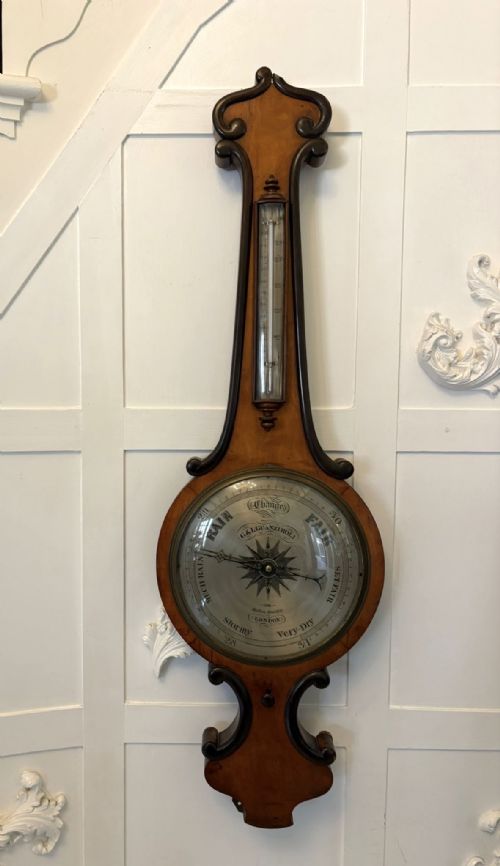
Techniques such as wheel carving decorated the glass components with botanical and abstract motifs, while wooden cases supported mercury barometer tubes and wheel dials alongside mirrored plates.
Glass and Silver Decor Retail Price Guide 2026
Typical asking prices for glass and silver decor among the pieces listed under this phrase on Sellingantiques today, from the lower quarter to the upper quarter. They describe what is for sale here now, not the wider market.
Listings feature items from the 1860s through the 1960s, incorporating sterling silver, brass, opaque glass, and cut crystal.
Distinctions in quality and execution
Quality rests upon the clarity and depth of the glasswork, particularly in wheel-carved or specialised iridescent finishes like Loetz glass. Superior pieces display crisp definition in floral or figurative motifs and substantial weight in their metal mounts.
The integration between the glass body and its silver or plated housing determines the overall coherence of the object. Intact hallmarks, robust mechanical fittings on desk stands, and well-preserved mercury silvering elevate the standing of individual pieces.
Georg Adam Scheid·Loetz Witwey·G & L Guanziroli London·Hermes Paris
The Glass and Silver Decor Glossary
- Sterling Silver
- A silver alloy containing 92.5 percent pure silver by mass, frequently hallmarked on Edwardian desk accessories and mounts to guarantee metal standard.
- Silver Plate
- A base metal layer covered with a thin coating of silver, commonly found on Victorian cruet sets and carriage frames.
- Mercury Glass
- A double-walled blown glass filled with a silvering mixture and sealed at the pontil, creating a reflective mirror-like appearance.
- Cruet Set
- A collection of small glass bottles or jars fitted with metal mounts and stoppers, designed for holding condiments at the dining table.
- Wheel Barometer
- A weather-measuring instrument housed in a wooden case with a circular dial, frequently featuring an exposed hygrometer, thermometer, and convex mirror.
Glass and Silver Decor: Frequently Asked Questions
How do I clean silver mounts on antique glass?
Silver mounts require careful polishing with a soft cloth while keeping polish away from the glass surface to prevent residue accumulation in carved recesses.
Gentle wiping with a dry microfiber cloth preserves both the metal lustre and the integrity of older glass finishes.
What is mercury glass and how is it made?
Mercury glass consists of double-walled blown clear glass with a liquid silvering solution poured inside through a small opening before being sealed.
Despite the historical name, actual mercury was rarely used in later production, replaced instead by safer silver nitrate solutions.
How should I display antique wheel barometers?
Wheel barometers need placement on interior walls away from direct sunlight and excessive moisture fluctuations to protect the wooden casework and internal mechanics.
Secure mounting ensures the heavy glass dial covers and mercury tubes remain stable and correctly oriented for reading.
What distinguishes Edwardian desk stands from Victorian ones?
Edwardian desk stands frequently exhibit lighter proportions and refined neoclassical or Art Nouveau influenced silver mounts alongside fitted inkwells and stamp boxes.
Victorian examples tend towards heavier cast elements and utilitarian novelty designs, such as musical instruments or carriage frames.