

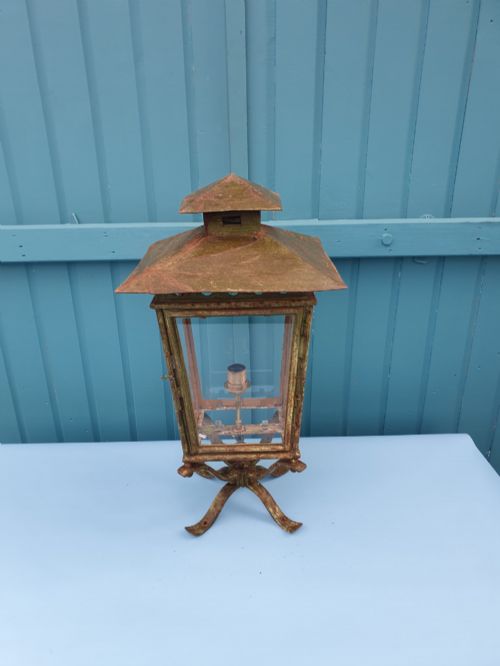
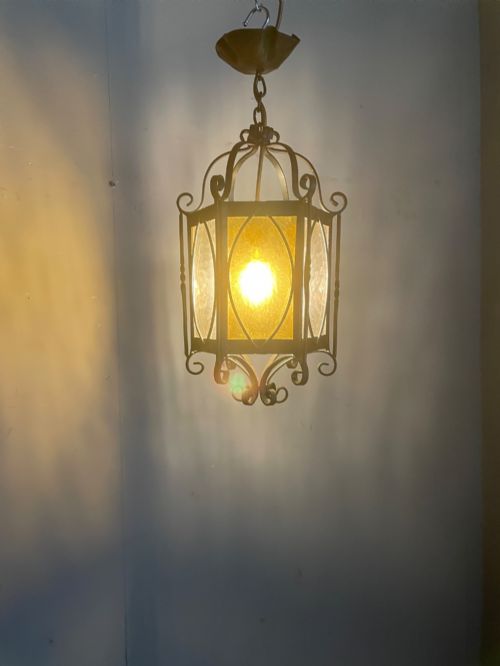


Glass and Iron Lantern
A glass and iron lantern brings weight and architectural character to a hallway or porch, combining robust metalwork with transparent panes.
Glass and Iron Lantern
When you search for a glass and iron lantern, you encounter substantial lighting fixtures designed for halls, porches, and outdoor spaces. These pieces span from the nineteenth century into the mid twentieth century, encompassing Victorian, Edwardian, and later periods.
The most common forms on this page include hanging hall lanterns, ceiling lights, and wall-mounted fixtures. Many originate from French workshops or British makers, utilising durable metals and glass panels to diffuse light.
Makers often drew upon Gothic Revival, Arts and Crafts, and Industrial styles to shape the metal frames. You find hexagonal shapes, circular street lamps, and large castle wall lights among the selection.
How they were made
The construction relies heavily on wrought iron or cast iron frameworks, shaped by blacksmiths to hold individual panes of glass securely. Copper, brass, and painted metal also appear in the framing and decorative mounts.
Glazing techniques range from clear glass to frosted glass, stained glass, and leaded panels. Earlier examples often show conversion evidence from candles or gas to electricity.
Glass and Iron Lantern Retail Price Guide 2026
Typical asking prices for glass and iron lantern among the pieces listed under this phrase on Sellingantiques today, from the lower quarter to the upper quarter. They describe what is for sale here now, not the wider market.
Listings feature items spanning the nineteenth century through the 1940s, utilising wrought iron, cast iron, copper, and various glass types.
What varies in quality
Quality reveals itself in the heft of the metalwork and the precision of the blacksmith's hand in shaping scrolls and joints. Heavy cast iron and hand-wrought iron demonstrate superior structural integrity compared to lighter pressed alternatives.
The treatment of the glass panels also dictates standard, with bevelled, leaded, or stained glass representing higher craftsmanship than plain flat panes. Original surface patinas and intact hardware enhance the integrity of the piece.
The Glass and Iron Lantern Glossary
- Wrought iron
- Iron that has been heated and hammered into shape by hand, resulting in a fibrous structure and visible tool marks. This material allows for delicate scrolls and robust structural frames alike.
- Frosted glass
- Glass treated to scatter light and obscure direct views through the pane, commonly utilised in Art Deco lighting designs. It softens the bulb's glare within enclosed metal frames.
- Gothic Revival
- An architectural and decorative style drawing on medieval ecclesiastical forms, featuring pointed arches and heavy tracery. This aesthetic strongly influences nineteenth century lanterns and wall lights.
- Hall lantern
- An enclosed hanging light fixture traditionally suspended in an entrance hallway or vestibule. These pieces provide directional and ambient illumination from a central ceiling point.
Glass and Iron Lantern: Frequently Asked Questions
How do I hang a heavy iron lantern?
Hanging a heavy iron lantern requires locating a secure ceiling joist or installing a heavy-duty ceiling hook capable of supporting substantial weight. The weight of the iron frame demands proper structural anchoring rather than standard plaster fixings.
Professional electrical installation ensures the internal wiring safely accommodates the fixture's demands. Many antique lanterns have been converted from gas or candles, so checking the lampholder compatibility is essential.
Can these lanterns be used outdoors?
Exterior placement depends on the specific construction and weatherproofing of the individual lantern. Pieces originally designed as porch or street lamps handle exposure better than delicate indoor hall lights.
Over time, outdoor placement naturally alters painted or raw metal surfaces, developing a weathered patina. Checking the seal around the glass panels helps protect the interior electrical components from moisture.
How do I clean the glass inside?
Accessing the interior typically involves opening a hinged door, releasing metal tabs, or removing the bottom finial. Careful handling prevents stress on the leaded or stained glass joints.
Use a mild glass cleaner and a soft cloth on the panes while avoiding harsh chemical contact with the aged iron or brass frame. Regular dusting maintains the clarity of the glass and the condition of the metalwork.
How do I date an antique lantern?
Dating relies on stylistic markers such as Victorian Gothic proportions, Arts and Crafts simplicity, or Art Deco geometric framing. The choice of materials, from early cast iron to later frosted glass, provides further chronological clues.
Manufacturing techniques, including blacksmith hammer marks or gas conversion evidence, help narrow the period. Comparing construction methods against known nineteenth and early twentieth century examples confirms the era.