



Giltwood Triple Mirror
These giltwood triple mirror pieces bring grand proportion and reflective light to a room, spanning Regency, Victorian and 18th-century design.
Giltwood Triple Mirror
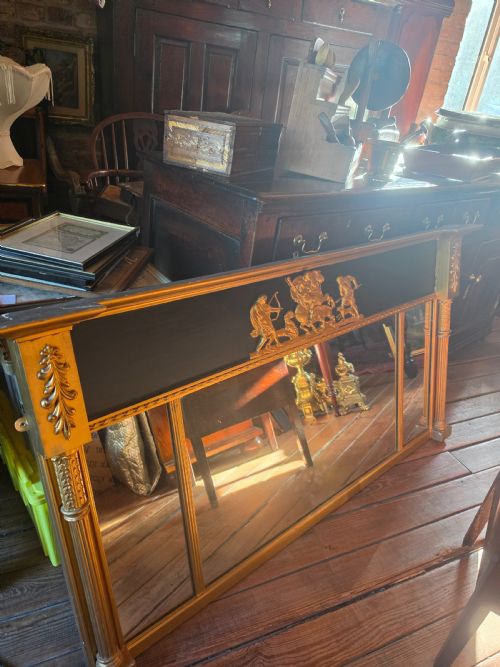
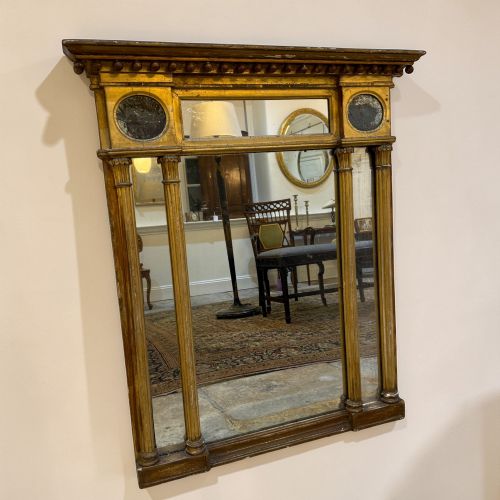
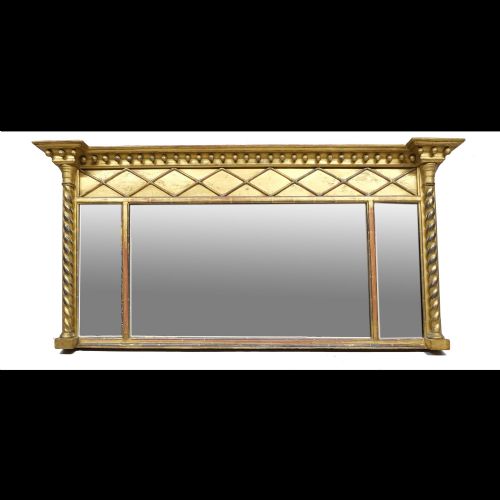
A giltwood triple mirror splits its reflective expanse across three separate glass plates, creating a wide landscape format suited to principal reception rooms and grand chimney breasts. Most examples encountered here take the form of overmantel mirrors, designed to sit directly above a fireplace and anchor the room's decorative scheme.
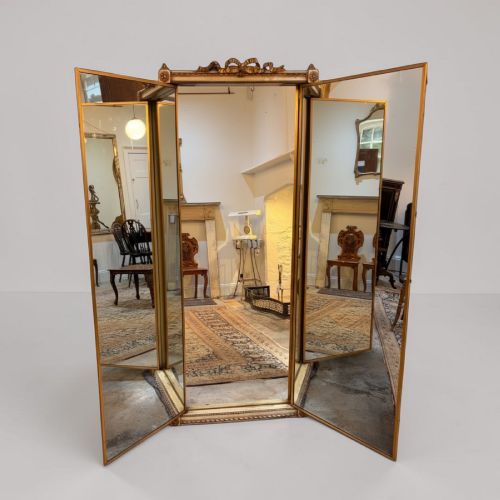
The selection ranges from robust Regency interpretations to lighter 18th-century Georgian Rococo designs and later Victorian revivals. Alongside large overmantel formats, smaller scaled pieces such as early 20th-century folding dressing table mirrors and French triptychs occasionally appear.
Proportions remain resolutely horizontal, with frames divided into distinct vertical sections that multiply reflections and expand the visual breadth of an interior. These objects combine architectural presence with decorative carving, reflecting the changing tastes of the 18th, 19th and early 20th centuries.
Materials and construction
Makers constructed the foundational frames using timber, frequently applying layers of gesso to build up the intricate relief work and carved ornamentation. Composition material was often pressed into moulds to create repetitive decorative motifs such as acanthus leaves and beaded borders.
Gold leaf or liquid gilding was subsequently applied over a prepared bole to achieve the characteristic metallic sheen of giltwood. Separate glass plates were then fitted into the divided rebates behind wooden or ebonised wood mouldings.
Giltwood Triple Mirror Retail Price Guide 2026
Typical asking prices for giltwood triple mirror among the pieces listed under this phrase on Sellingantiques today, from the lower quarter to the upper quarter. They describe what is for sale here now, not the wider market.
Listings incorporate frame styles spanning Georgian Rococo, Regency, French Neoclassical and Victorian Rococo Revival.
What separates the finest examples
The sophistication of the carved wooden ornament and the crispness of the gesso mouldings dictate the visual impact of the piece. Hand-carved depth and undercut details in the giltwood separate finer examples from those relying heavily on pressed composition ornament.
The condition and retention of the original mirror glass plates significantly influence character, alongside the depth and warmth of the underlying gilding. Original backing boards and undisturbed frame construction indicate a high degree of historical integrity.
The Giltwood Triple Mirror Glossary
- Giltwood
- Timber that has been gilded with gold leaf over a prepared ground. It provides a rich, reflective metallic surface central to these frames.
- Gesso
- A plaster-like mixture applied to wood frames to create a smooth surface for carving and gilding. This material allows for sharp decorative relief.
- Composition
- A moulded mixture of whiting, resin and oil used for decorative details. It offers a cost-effective alternative to hand carving.
- Overmantel mirror
- A large horizontal mirror designed specifically to hang above a fireplace mantelpiece. These pieces dominate the wall space of period reception rooms.
- Triptych mirror
- A three-panel mirror where the outer wings are often hinged to adjust the angle of reflection. This form appears across both dressing table and wall-hanging formats.
Giltwood Triple Mirror: Frequently Asked Questions
How were giltwood triple mirrors used?
These mirrors served primarily as functional and decorative centrepieces above fireplace mantelpieces in formal rooms. Their multi-plate design was intended to bounce daylight around the space and create an illusion of greater room width.
Smaller variants, such as triptych dressing table mirrors, were utilised in bedrooms for personal grooming from varied angles. Their positioning capitalized on natural light sources to brighten the interior.
How do I date a giltwood triple mirror?
Dating relies on examining the framing styles, ornament techniques and the construction of the timber backing boards. Regency and Georgian pieces display characteristic classical motifs like ball-stud cornices and reeded pilasters, while Victorian iterations often feature heavier Rococo Revival curves.
The assembly methods of the frame and the bevelling or flatness of the glass plates further help distinguish 18th-century craftsmanship from 19th-century and early 20th-century production.
Where should I hang an overmantel mirror?
An overmantel mirror finds its natural home securely mounted to the wall directly above a fireplace mantelpiece. The wide landscape proportions are specifically scaled to match the width of standard chimney breasts and hearth surrounds.
Ensuring adequate wall fixings is essential due to the combined weight of the timber frame, gesso and multiple glass plates. Placing the mirror opposite a window maximises the reflection of natural light into the room.
What is the difference between Regency and Victorian styles?
Regency style draws heavily on classical antiquity and restrained neoclassical symmetry, featuring architectural elements like columned sides and ball ornamentation. These frames tend to present clean horizontal lines and disciplined proportions.
Victorian pieces, particularly those from the Rococo Revival, favour exuberant, asymmetrical scrollwork, heavily moulded cartouches and deep floral relief. The decoration on Victorian examples is often bolder and more voluminous than earlier Regency work.