
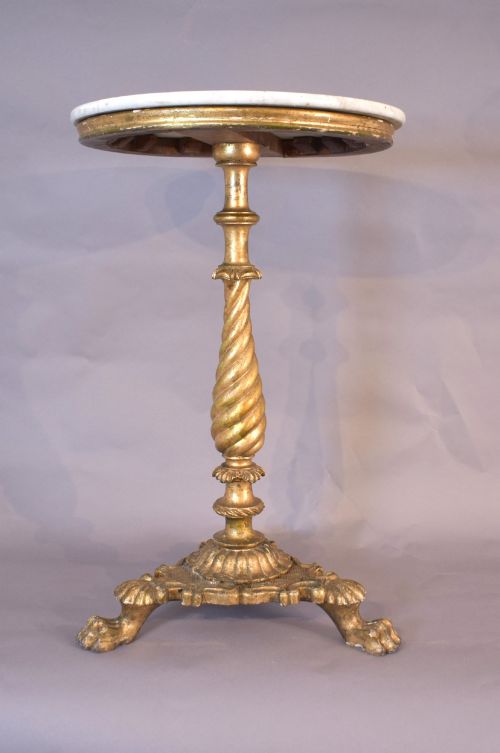


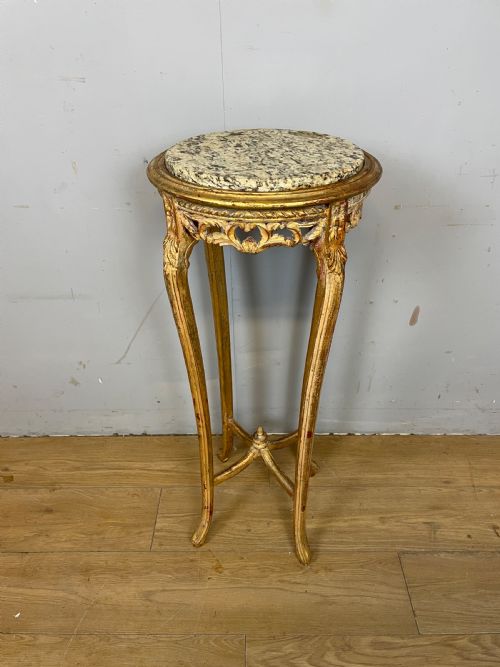
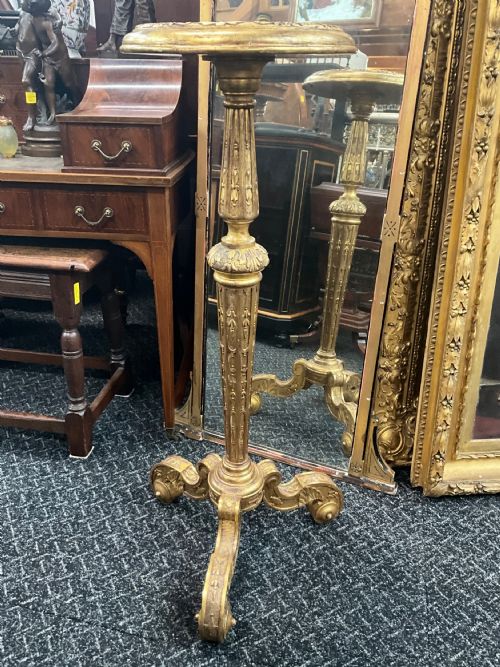
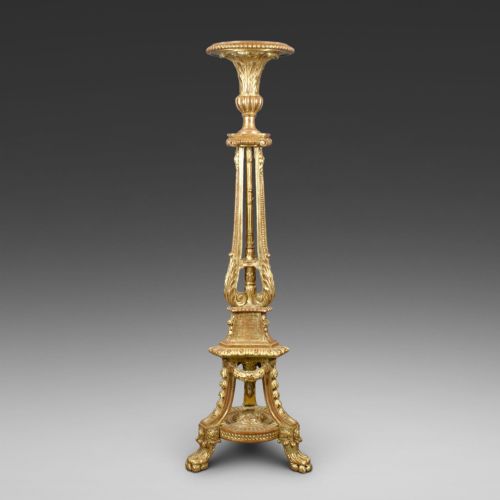


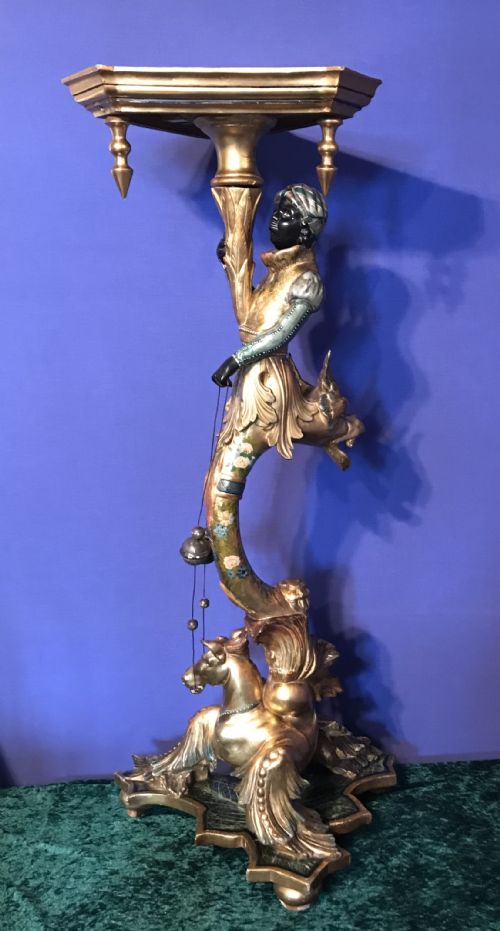


Giltwood Column Pedestal
A giltwood column pedestal brings golden architectural weight and height to a room, lifting sculpture or plants with continental theatre.
Giltwood Column Pedestal
A giltwood column pedestal stands as a tall vertical support for display, taking the form of a column, triform stand, or slender torchere. The pieces meeting this description span the eighteenth and nineteenth centuries, alongside Edwardian and later revivals.
Continental forms dominate the selection, drawing on French Neoclassical, Louis XVI, and Italian Baroque or Rococo vocabulary. Many carry circular tops in marble or onyx, while others function as occasional tables, plant stands, or cylindrical display cabinets.
Makers and workshops of the period turned to architectural orders and decorative mouldings to give these supports structural presence. They serve primarily to elevate objects of importance within domestic interiors.
Materials and construction
Carved wood provides the structural core for these stands, shaped into fluted columns, tripod legs, and intricate floral motifs. Artisans applied layers of gesso over the timber base to build up smooth surfaces for subsequent gilding.
Gold leaf or applied gold paint creates the luminous metallic finish characteristic of giltwood, catching candlelight or daylight in a room. Inset tops of marble or onyx add contrasting weight and cool surface texture to the golden framework.
Several stands double as cylindrical display cabinets, hiding small treasures inside golden columns.
Assessing craftsmanship and finish
Depth and sharpness of the carved woodwork separate standard production from superior pieces, particularly in the rendering of acanthus leaves and floral mouldings. Hand-applied gesso and gold leaf demonstrate finer control over surface texture than simpler painted finishes.
The integration of heavy inset marble or onyx tops requires precise joinery within the timber column to ensure stability. Proportion and classical balance dictate the visual success of the piece, distinguishing restrained neoclassical design from heavier revival work.
The Giltwood Column Pedestal Glossary
- Giltwood
- Timber coated with gold leaf or gold paint. This finish creates a reflective metallic surface that defines the visual character of the piece.
- Torchere
- A tall stand designed to hold a light or a decorative object. These slender supports often feature circular tops and elaborate carved bases.
- Gesso
- A plaster mixture applied to wood surfaces as a preparation for gilding. It allows artisans to carve crisp decorative details before applying gold leaf.
- Triform
- Having three sides or three supporting legs. This structural arrangement provides steady footing for tall columns and occasional tables.
Giltwood Column Pedestal: Frequently Asked Questions
What were these pedestals used for originally?
These tall stands were built to elevate candelabra, sculpture, or prized decorative objects in grand reception rooms. They placed items at eye level to draw attention within domestic interiors.
Over time, many adapted to hold large indoor plants or served as occasional tables beside seating. Their primary role remained decorative elevation and architectural punctuation.
How do I style a giltwood pedestal at home?
Position a single torchere or column in an empty corner to introduce vertical line and golden warmth. Keep the surface load modest so the carved timber remains visible.
Pairing a marble-topped column with a bronze sculpture or trailing plant balances the heavy ornamentation. Ensure the height complements surrounding furniture without crowding the room.
How can I tell the period of a pedestal?
Examine the decorative vocabulary, noting whether the carving leans towards restrained neoclassical lines or exuberant baroque curves. Eighteenth-century pieces and strict revivals display distinct hand-tool marks beneath the gesso.
Later Edwardian and twentieth-century interpretations often simplify the joinery and timber preparation. The weight of the wood and the handling of the gold leaf offer further clues to age.
Are marble and onyx tops original?
Many pedestals paired stone tops with carved wooden bases from the outset, particularly French and Italian neoclassical designs. Onyx and marble provided a durable, cool surface that contrasted with the warm gilt finish.
Replacements do occur due to the fragile nature of stone over centuries. Inspect the fit where the top meets the wooden collar to check for later alterations.