

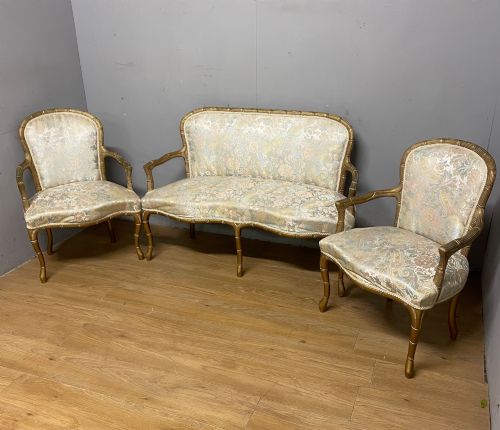

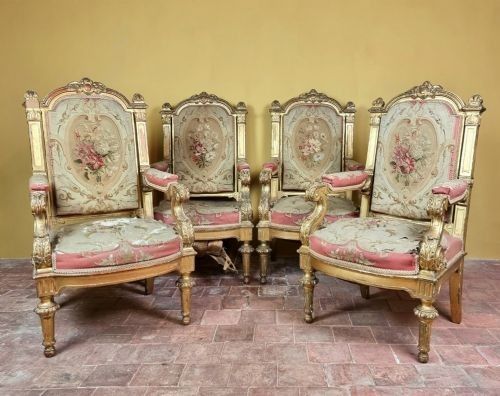


Giltwood Armchairs Set
These giltwood armchairs set selections bring together French period seating upholstered in rich textiles, offering substantial presence for formal interiors.
Giltwood Armchairs Set
A giltwood armchairs set typically comprises matching seating designed for formal reception rooms, ranging from pairs to larger groups of dining chairs or salon suites. These pieces reflect French decorative traditions, notably originating from periods associated with Louis XVI, Louis Philippe, and broader revival movements.
Buyers encountering this search phrase find items spanning the eighteenth through to the early twentieth century, including sets featuring matching stools or larger multi-piece salon configurations. The most common manifestations on this page are nineteenth-century French salon suites and sets of four armchairs executed in the Louis XVI style.
Forms vary from bergère armchairs with enclosed upholstered sides to open-arm salon chairs and dining chairs designed for grand interiors. Many examples incorporate distinct stylistic markers such as neoclassical straight tapered legs or organic Rococo curves.
How they were made
The underlying frames of these chairs are constructed primarily from timber such as beech and mahogany, providing the structural rigidity required for carved decoration. Woodworkers shaped and joined these hardwoods before applying the delicate gesso layers necessary to prepare the surface for gilding.
Giltwood surfaces are created by applying thin sheets of metal leaf over a prepared base, catching the light and defining the carved details of the frame. Upholstery techniques complete the construction, utilising traditional materials including canvas foundations paired with contemporary or period-appropriate coverings like damask fabric, velvet, and tapestry.
Giltwood Armchairs Set Retail Price Guide 2026
Typical asking prices for giltwood armchairs set among the pieces listed under this phrase on Sellingantiques today, from the lower quarter to the upper quarter. They describe what is for sale here now, not the wider market.
The recorded styles include French Rococo, Louis Philippe, and multiple iterations of the Louis XVI aesthetic.
What varies in quality
Quality in these seating sets is dictated by the crispness of the wood carving and the depth of the gilding applied to the frame. Superior examples display hand-carved ornamentation with sharp definition, whereas lesser pieces rely on shallow moulding or later surface treatments that obscure the underlying timber.
The integrity of the structural joinery and the matching consistency across larger sets determine the overall standing of the pieces. Complete salon suites that retain their original harmonious upholstery and uniform frame wear represent the upper tier of survivals.
The Giltwood Armchairs Set Glossary
- Giltwood
- Timber carved and surfaced with a thin layer of gold leaf or metallic foil. This finish creates a luminous metallic sheen characteristic of formal European furniture.
- Bergère
- An enclosed upholstered armchair featuring solid wooden sides and an upholstered back. This French form prioritises comfort alongside formal elegance.
- Salon Suite
- A matched group of seating furniture designed for a formal drawing room or reception space. These groupings typically include a settee accompanied by matching armchairs.
- Damask
- A reversible figured fabric traditionally woven on a jacquard loom with patterns formed by contrasting warp and weft threads. It is frequently utilised for period upholstery.
- Louis XVI Style
- A neoclassical design movement characterised by straight tapered legs, geometric symmetry, and classical ornamentation. It emerged in France during the eighteenth century and saw major revivals later.
Giltwood Armchairs Set: Frequently Asked Questions
How were giltwood armchairs used?
These armchairs were positioned in formal reception rooms and drawing rooms to accommodate guests during social gatherings. They served as both functional seating and visual markers of status within aristocratic and bourgeois interiors.
Larger sets allowed homeowners to create a cohesive seating arrangement around a room, often matching a settee or central table. Their decorative gilt surfaces were intended to catch the candlelight or natural daylight of grand salons.
How do I clean giltwood frames?
Giltwood requires careful maintenance because the thin metal leaf can be easily abraded or stripped by moisture and aggressive cleaning agents. Dusting should be performed gently using a soft, dry brush without applying pressure.
Liquid cleaners and polishes must be strictly avoided as they penetrate the gesso and lift the gold leaf from the timber frame. Professional conservation is recommended for any significant accumulation of grime.
How do I distinguish eighteenth-century pieces from later revivals?
Differentiating period pieces from nineteenth-century revivals requires close inspection of the timber joints, tool marks, and the ageing of the gesso beneath the gold leaf. Eighteenth-century frames often exhibit hand-cut joinery methods and patination consistent with extended use.
Revival pieces, such as those produced during the nineteenth or early twentieth centuries, frequently utilise machine-sawn components while still employing traditional hand-carved detailing and gilding methods.
Can I reupholster a historic salon suite?
Reupholstering historic seating is a common practice when the existing fabric has degraded beyond preservation. Traditional materials like canvas and webbing should be replicated to maintain the correct profile and sit of the upholstery.
Care must be taken during the process to protect the fragile giltwood frame from impact and tool damage. Selecting textiles appropriate to the period ensures the visual integrity of the set is maintained.