



Gilt Wood Putti
Gilt wood putti bring winged figures and carved cherubs into a room with rich surface gilding.
Gilt Wood Putti
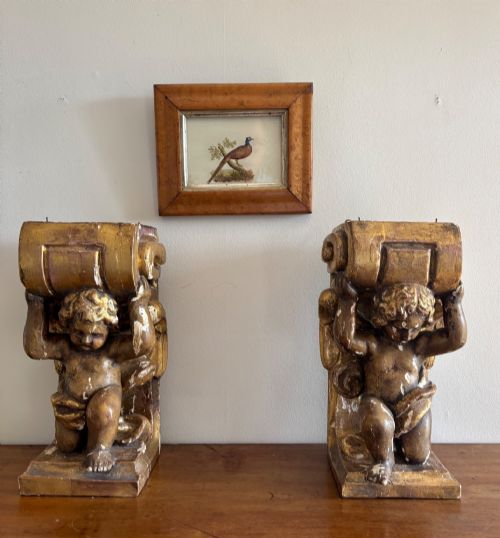
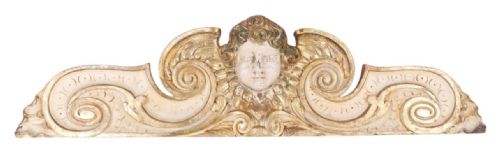
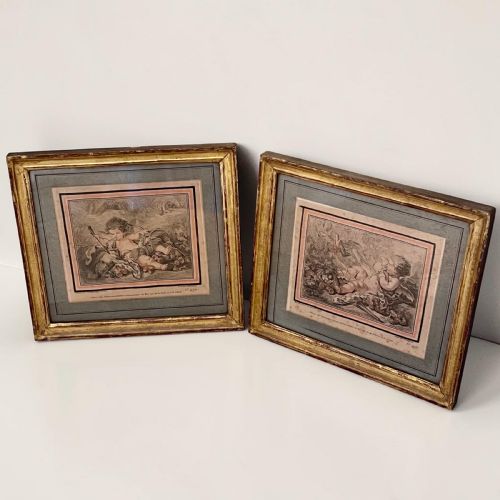
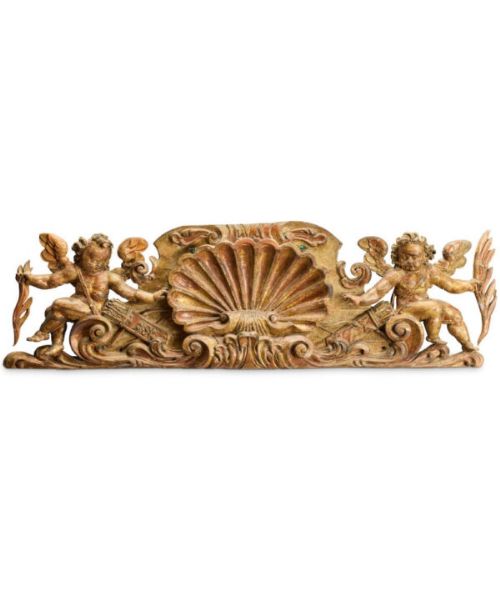
When you search for gilt wood putti, you encounter sculptural figures and architectural ornaments depicting winged cherubs from the seventeenth, eighteenth and nineteenth centuries. These pieces appear as wall brackets, candelabra, overmantel mirrors, architectural fragments and standalone limewood or carved wooden sculptures originating from French, Italian and English traditions.
The most common examples on this page are nineteenth century carvings and wall brackets, alongside earlier seventeenth century limewood panels and eighteenth century architectural pediments. Baroque and Rococo revivals heavily influence the forms, bringing theatrical movement and classical ornamentation to mirrors and architectural salvage.
Makers and workshops across Europe produced these items to adorn chateaux, grand reception rooms and ecclesiastical spaces. They function today as focal points above doorways or as sculptural pairs flanking mirrors and architectural elements.
Materials and construction methods
Craftsmen carved these figures from timber substrates such as limewood and general carved wood, applying layers of gesso to smooth the surface before laying gold leaf or parcel gilt. This traditional water or oil gilding technique creates the reflective metallic sheen characteristic of period giltwood.
Many items incorporate structural wooden frames and carved architectural panels, sometimes paired with glass plates for mirrors or metal components for candelabra arms. The interplay between the carved wooden depth and the applied gold leaf defines the visual weight of each piece.
Gilt Wood Putti Retail Price Guide 2026
Typical asking prices for gilt wood putti among the pieces listed under this phrase on Sellingantiques today, from the lower quarter to the upper quarter. They describe what is for sale here now, not the wider market.
These chubby wooden angels have spent centuries watching over grand rooms with permanently surprised expressions.
Distinguishing quality across the range
The sophistication of the carving dictates the visual success of the piece, distinguishing lively, anatomically convincing cherub faces from stiffer, more generic nineteenth century interpretations. Early seventeenth century limewood carvings demonstrate a depth of execution and subtlety in facial expression that simpler decorative items lack.
The preservation of the original gold leaf and gesso surface determines the integrity of the object, as later overpainting or heavy restoration obscures the crispness of the underlying carved wood. Pieces retaining their original parcel gilt or gold leaf finish possess a richer tonal variation and historical honesty.
The Gilt Wood Putti Glossary
- Putto
- A figure of a small chubby male child, often winged, common in classical and Renaissance art. These figures appear frequently in baroque architectural fragments and wall sculptures.
- Giltwood
- Wood that has been treated with gesso and covered with gold leaf or metallic powder. This finish provides the bright reflective surface seen on mirrors and brackets.
- Gesso
- A plaster mixture applied to wood surfaces as a base for gilding and painting. It allows carvers to achieve sharp details before applying gold leaf.
- Parcel Gilt
- An object partially gilded, leaving areas of the natural wood or painted ground visible alongside the gold leaf. This technique highlights specific carved details.
- Pediment
- A triangular or decorative architectural element placed above doors, windows or mirrors. Period examples often feature carved cherubs and scrolling woodwork.
Gilt Wood Putti: Frequently Asked Questions
Where should I place a gilt wood putti?
These decorative elements suit placement above doorways, as architectural pediments, or mounted on walls as brackets and mirrors.
They also work well as paired figures flanking larger artworks or positioned within period interior schemes.
How do I clean gilt wood?
Dust the surface gently with a soft dry brush to prevent damage to the delicate gold leaf and gesso layers.
Avoid using water, liquid cleaners or chemical polishes, as moisture lifts the historical gilding.
What is the difference between a putto and a cherub?
Art historical terminology often uses putto for classical pagan figures and cherub for biblical winged infants, though the terms frequently overlap in antique descriptions.
Both describe the small child figures carved into wood and gilt surfaces across European decorative arts.
How can I tell the period of a carved wooden figure?
Examine the tool marks, timber choice such as limewood for seventeenth century works, and the composition of the gesso beneath the gold leaf.
Stylistic cues like Baroque theatricality or Rococo asymmetry also point toward specific centuries of manufacture.