





Gilt Wood Bullseye Mirror
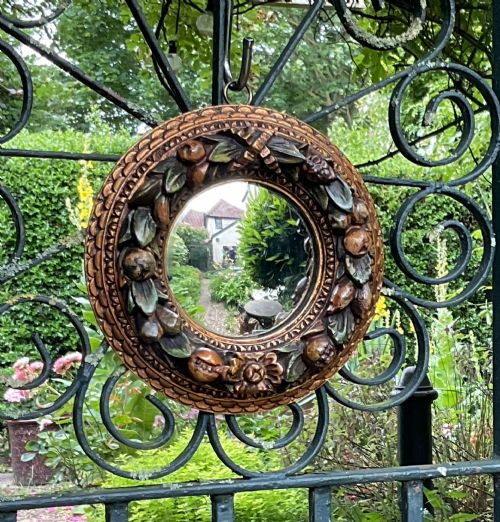
A gilt wood bullseye mirror brings genuine optical depth and period warmth to a room, catching the light across a curved convex glass.
Gilt Wood Bullseye Mirror
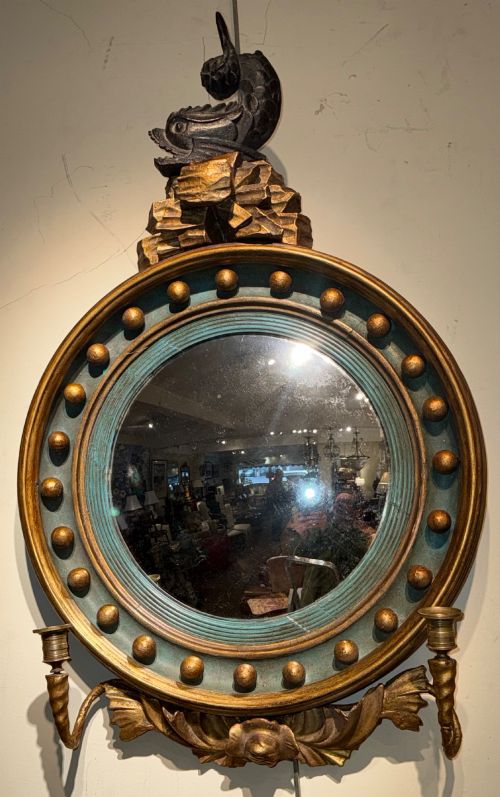
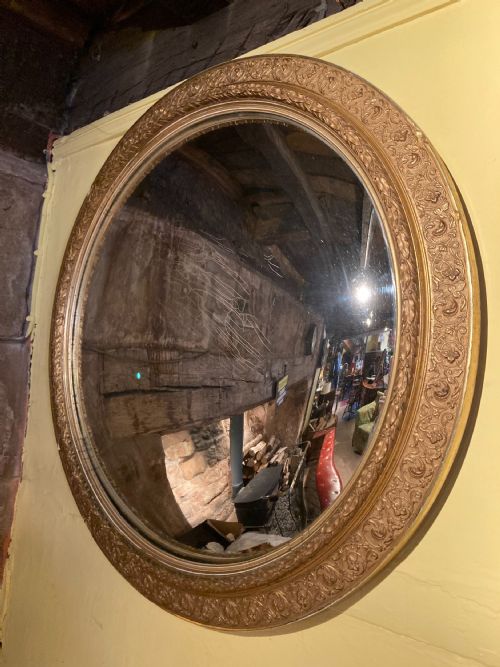
A gilt wood bullseye mirror centres the wall with a circular convex plate that reflects a wide, curved view of the interior. These pieces appear most frequently from the Regency era, alongside later interpretations from the nineteenth century and the nineteen-twenties.
The form typically combines a round wooden frame finished in bright or burnished gilding with an inner ebonised slip. Wall mirrors of this design function as both optical instruments and striking focal points in hallways and reception rooms.
How they were made
Makers shaped the frames from carved wood and applied layers of gesso to build up decorative moulding and detail before gilding. The reflective surface relies on blown or cast convex glass that curves outward to capture the room.
Selected examples incorporate carved wooden ornaments such as cresting eagles, whilst other versions utilise simpler reeded or moulded frames. Ebonised wood slips often frame the glass directly to create a sharp contrast against the outer gold leaf.
Gilt Wood Bullseye Mirror Retail Price Guide 2026
Typical asking prices for gilt wood bullseye mirror among the pieces listed under this phrase on Sellingantiques today, from the lower quarter to the upper quarter. They describe what is for sale here now, not the wider market.
Current listings feature pieces spanning the Regency period, the nineteenth century, and the year nineteen-twenty.
What varies in quality
The refinement of the carved wood detail and the depth of the original gesso work set finer examples apart from simpler pieces. Crisp execution in the cresting and frame decoration signals the hand of a skilled maker.
The preservation of the antique gilt surface and the clarity of the convex glass plate determine the visual impact of the mirror. Untouched gilding with natural ageing holds greater character than heavily restored surfaces.
The Gilt Wood Bullseye Mirror Glossary
- Convex glass
- A curved glass plate that bulges outward to create a panoramic reflection of the surrounding space. This curved form gathers light from across the entire room.
- Gesso
- A plaster-like mixture applied to wood frames to create a smooth surface for gilding and carved relief detail. It allows for crisp ornamentation.
- Ebonised wood
- Timber stained or treated to imitate dense, dark ebony. This dark finish frequently appears on the inner slip surrounding the mirror glass.
- Regency
- A British design period spanning the early nineteenth century defined by classical restraint and bold decorative forms. Pieces from this era often feature classical motifs.
Gilt Wood Bullseye Mirror: Frequently Asked Questions
Where should I hang a convex mirror?
These mirrors suit principal reception rooms, hallways and dining spaces where they can draw light and reflect the interior. Hang them at eye level to make the most of the curved perspective.
Because the glass pulls in a wide angle of the room, they perform particularly well opposite a window or an architectural feature.
What is the difference between Regency and later revival pieces?
Authentic Regency mirrors date from the early nineteenth century and carry the specific craftsmanship and material patination of that period. Revival pieces appeared later, including work from the late nineteenth century and the nineteen-twenties.
Later pieces often adopt the classic bullseye shape whilst exhibiting the construction methods of their own decades.
Why do these mirrors have black inner rings?
The black inner ring, known as an ebonised slip, creates a visual boundary between the gilt frame and the reflective glass. This dark border frames the convex plate clearly.
Designers utilised this contrast to make the curved reflection appear even more luminous.