






Gilt Silver Cutlery
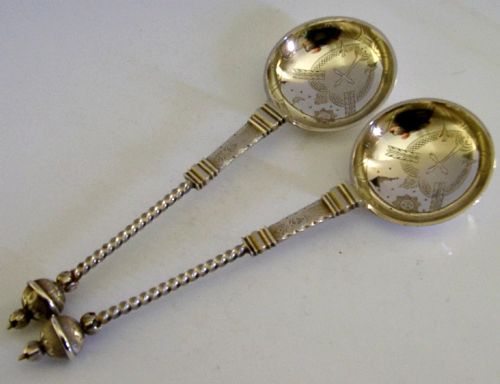
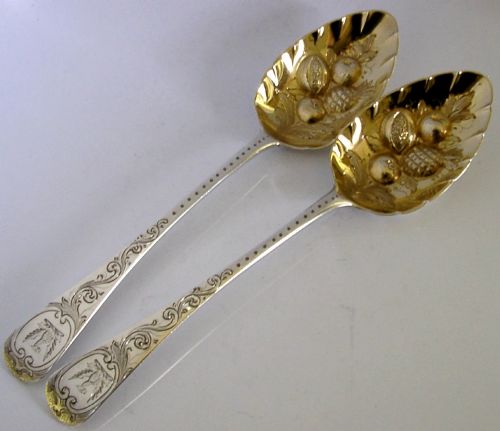
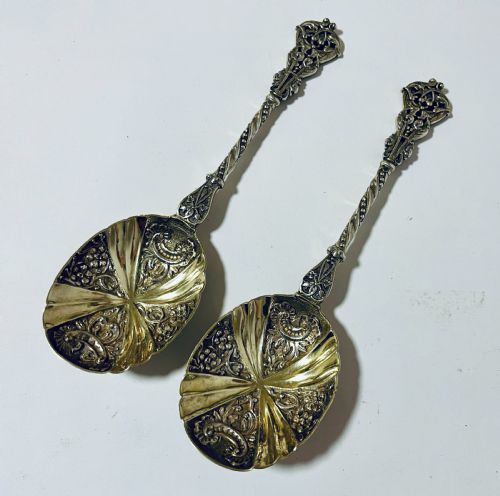
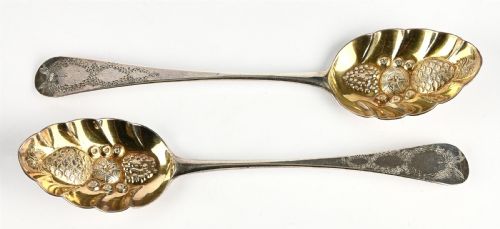
These gilt silver cutlery pieces bring gilded shine to the table, offering everything from Victorian berry spoons to Russian enamel sets.
Gilt Silver Cutlery
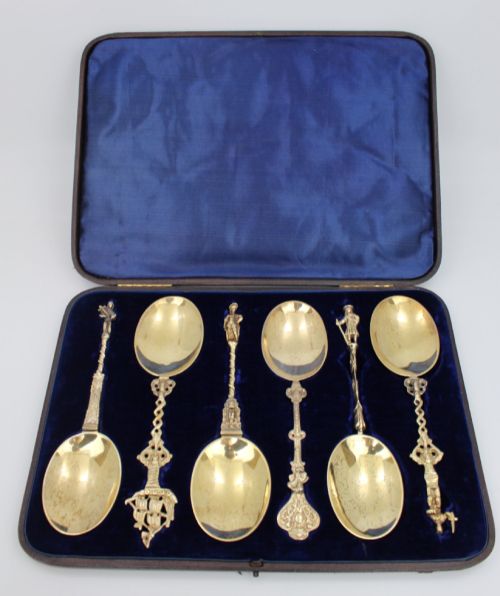
When searching for gilt silver cutlery, buyers encounter a range of tablewares, primarily consisting of spoons, serving sets, and fruit knives spanning the Georgian, Victorian, and early twentieth-century periods. The most common finds on this page are berry spoons, teaspoons, and cased sets originating from British, Russian, Scandinavian, and Ottoman makers.
How they were made
The pieces rely on solid sterling silver or base metals coated in silver-gilt, finished with a layer of gold gilt to create the characteristic warm, yellow-silver lustre. Makers applied techniques such as chasing, engraving, and cloisonne enamel to decorate the handles and bowls.
Handles incorporate materials like mother-of-pearl alongside the metalwork, while fitted presentation boxes utilise velvet and silk linings to house the cutlery sets securely.
Gilt Silver Cutlery Retail Price Guide 2026
Typical asking prices for gilt silver cutlery among the pieces listed under this phrase on Sellingantiques today, from the lower quarter to the upper quarter. They describe what is for sale here now, not the wider market.
Materials documented across the pieces include sterling silver, silver-gilt, enamel, mother-of-pearl, velvet, and silk.
What varies in quality
The distinction between standard items and finer examples rests upon the crispness of the chased or engraved detailing on the handles and bowls. Superior pieces display deep, precise hand-engraving and intact cloisonne enamel work rather than shallow or worn surface decoration.
The presence of original, fitted cases lined in silk or velvet elevates the standing of a set, as does the completeness of matched spoons and forks bearing clear hallmarks.
Deakin & Francis·Peter & Anne Bateman·William Chawner II·David Andersen·Vasily Agafonov·Sebastian Crespell
The Gilt Silver Cutlery Glossary
- Silver-gilt
- Silver that has been coated with a thin layer of gold, often referred to as vermeil. This technique protects the underlying silver from tarnishing while providing a rich golden appearance.
- Berry spoon
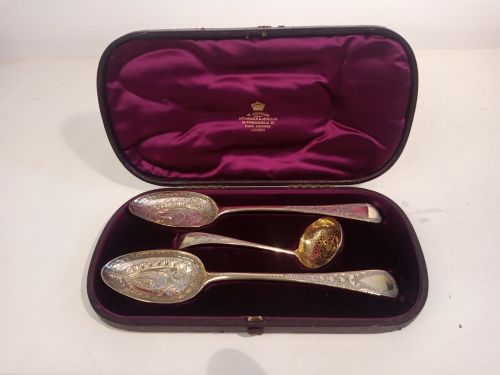
- A large serving spoon, typically Georgian or Victorian in origin, featuring fruit and leaf motifs chased onto the bowl. These were originally designed for serving fresh berries.
- Cloisonne
- An enamelwork technique where thin metal wires are soldered to the metal base to create compartments filled with coloured enamel paste. This method appears on Russian and Scandinavian spoon sets.
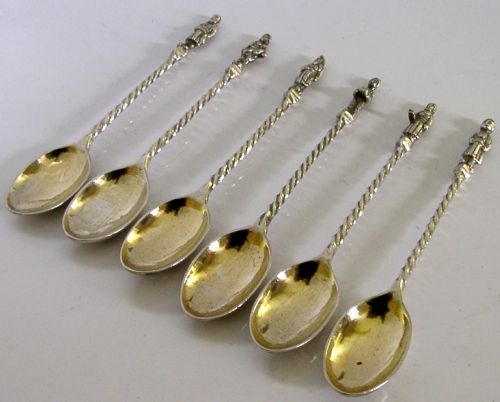
- Apostle spoon
- A spoon featuring the figure of an apostle or saint cast at the terminal of the handle. Complete sets of twelve were traditional baptismal gifts.
- Sugar sifter
- A specialised spoon with a perforated bowl used for sprinkling sugar over desserts or fruit. They frequently appear alongside berry spoons in cased presentation sets.
Gilt Silver Cutlery: Frequently Asked Questions
How do I clean gilt silver cutlery?
Use a soft cloth and warm soapy water, avoiding abrasive polishes that can wear away the delicate gold layer over the silver.
Pat the pieces completely dry after washing to prevent moisture spots from forming on the metal surface.
Were these spoons used daily?
Most ornate gilt silver pieces were reserved for formal dining, dessert courses, or special serving duties rather than everyday meals.
Many survive in pristine condition because they spent decades stored safely inside their original velvet or silk-lined presentation cases.
What is the difference between silver gilt and solid gold?
Silver gilt consists of a solid silver base covered with a microscopic or thin layer of gold applied through fire-gilding or electrolysis.
This method offered the luxurious appearance of solid gold while utilising the more accessible structural strength and weight of silver.
How do I date a set of spoons?
Examine the stamped hallmarks on the reverse of the stems, which typically indicate the assay office, maker's mark, and a specific date letter.
Stylistic clues, such as Art Nouveau curves or Georgian chasing patterns, also help narrow down the manufacturing decade when hallmarks are absent or unclear.