


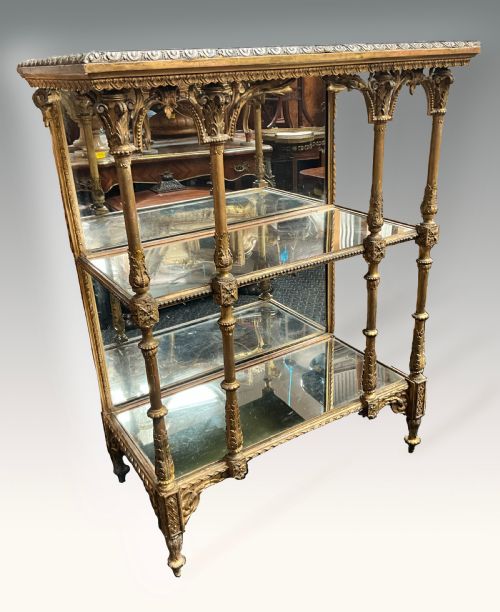

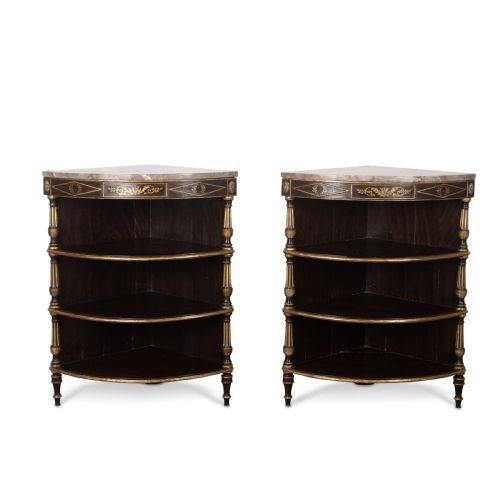


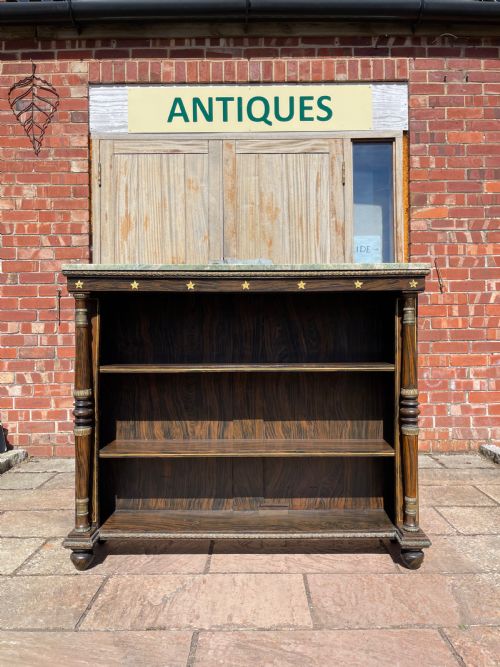
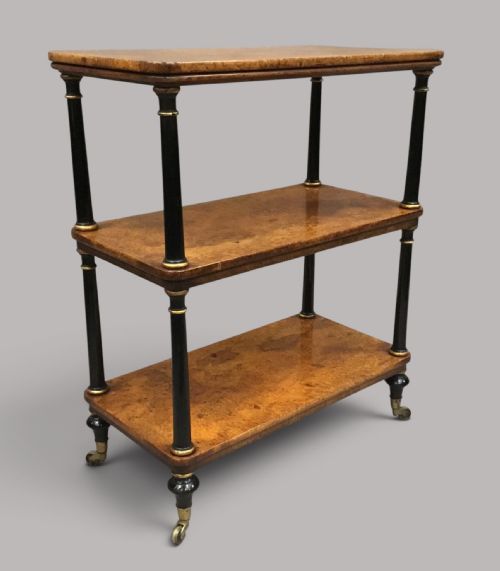
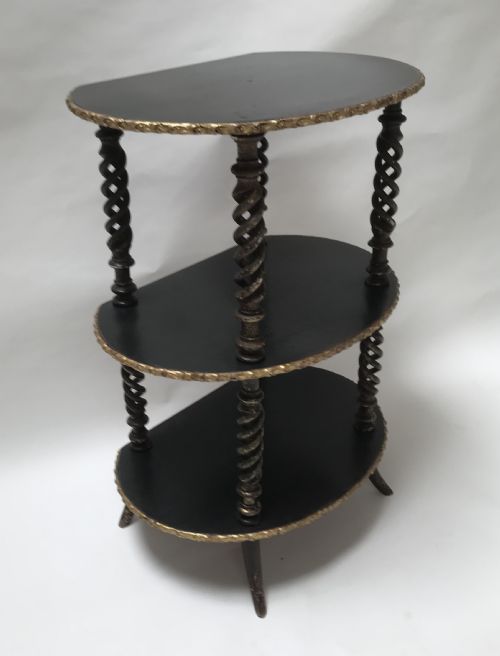
Gilt Shelf Unit
These gilt shelf unit pieces bring gleaming surfaces and practical tiering to a room, offering both display and storage.
Gilt Shelf Unit
A gilt shelf unit takes many forms across the nineteenth century, ranging from open display shelves and étagères to corner cabinets and glazed bookcases. You will frequently encounter nineteenth-century pieces alongside Regency, Georgian, and early twentieth-century examples on this page.
The materials span wood, painted surfaces, gold leaf, giltwood, marble tops, and gesso, often paired with rosewood, burr elm, or kingwood. Styles stretch from Regency and grand Regency to Rococo Revival, French Chateau, and Italian Rococo.
Forms vary from floor-standing shelves and breakfront open bookcases to three-tier étagères and mirrored display shelves. Each piece serves to elevate an interior through metallic highlights and traditional cabinet-making forms.
Construction and materials
Giltwood and carved wooden frames form the structural core of these pieces, often enhanced with applied gesso to receive layers of gold leaf. Skilled artisans shaped the timber before applying paint, parcel gilt details, or ormolu mounts.
Cabinet makers incorporated varied woods such as rosewood, burr elm, and kingwood, occasionally topping corner cabinets with fitted marble slabs. Surface decoration relied on simulated paint, original paintwork, and meticulous parcel gilding to achieve the characteristic metallic sheen.
Gilt Shelf Unit Retail Price Guide 2026
Typical asking prices for gilt shelf unit among the pieces listed under this phrase on Sellingantiques today, from the lower quarter to the upper quarter. They describe what is for sale here now, not the wider market.
Some nineteenth-century makers snuck secret tiers into étagères just so homeowners could hide their favourite miniature porcelain tea sets.
Assessing quality
The refinement of the carving distinguishes finer examples, where crisp detail in the giltwood or gesso ornament shows the hand of a skilled artisan rather than a hurried press-moulded finish. Proportion and balance in architectural elements like breakfront cornices or tiered étagères also separate standard items from superior works.
The integrity of the original surface finish matters greatly, with genuine gold leaf and undisturbed period paint holding more character than later interventions. Quality reveals itself in the choice of underlying timber, such as figured rosewood or burr elm, and the precise mounting of ormolu and porcelain elements.
The Gilt Shelf Unit Glossary
- Giltwood
- Wood that has been coated with gold leaf or gold paint. This finish creates a bright metallic appearance on frames and mouldings.
- Gesso
- A plaster-like mixture applied to wood surfaces as a base for gilding. It allows craftsmen to carve intricate relief details before applying gold leaf.
- Etagere
- A set of open shelves for displaying small objects or books. These freestanding tiers became popular in the nineteenth century for drawing rooms.
- Ormolu
- Gilded bronze mounts used decoratively on furniture. The technique involves applying a gold amalgam to bronze.
- Parcel Gilt
- A decorative treatment where only specific portions of an object are gilded. The remaining surface shows painted wood or natural grain.
Gilt Shelf Unit: Frequently Asked Questions
Where should I place a gilt shelf unit?
These pieces suit living rooms, studies, or hallways where open shelving or display cabinets can catch natural light. Their reflective metallic surfaces help brighten darker corners of a room.
Ensure the unit is positioned away from direct heat sources to protect historic wood finishes and delicate gilding over time.
How do I care for nineteenth-century giltwood?
Dust the surfaces gently with a soft, dry brush to prevent accumulation without disturbing the delicate gold leaf. Avoid liquid cleaners or polishes that can strip historic finishes.
Keep the piece in a stable environment with moderate humidity to prevent the underlying wood and gesso from cracking.
What is the difference between an étagère and a bookcase?
An étagère consists of open tiers designed primarily for displaying decorative items rather than holding a large library. Bookcases feature enclosed or open shelving specifically built for storing bound volumes.
Many nineteenth-century examples blur these lines, offering combination formats with mirrored backs or small cupboards.
How can I date a painted gilt shelf unit?
Examine the underlying timber construction, joinery methods, and the wear patterns on the painted or gilded surfaces. Regency and Victorian pieces often show distinct proportions and decorative motifs like Rococo scrolls.
Checking for original backboards and fixings helps confirm the period of manufacture.